Author: Jitendra Singh

  • Loktak Lake: A Jewel of Manipur’s Culture and Biodiversity

    If there is one lake which has impacted the history and culture of a region the most then it is the Loktak Lake. Loktak Lake, located in the Indian state of Manipur, is the largest freshwater lake in northeastern India. It is renowned for its unique floating islands, rich biodiversity, and cultural importance. Although Manipur at present is in news due to ongoing conflict, however Loktak lake is one of the most beautiful and pristine water bodies I have been to till today.

    A View of Loktak Lake

    History of Loktak Lake

    1. Ancient Times: Loktak Lake has been an integral part of Manipur’s history for centuries. The lake and its surroundings have supported local communities through fishing and agriculture.
    2. Mythological Significance: Loktak Lake holds an important place in Manipuri mythology and folklore. It is often mentioned in the legends and stories of the Meitei people, the dominant ethnic group in Manipur.
    3. Recent History: In the mid-20th century, the construction of the Ithai Barrage for the Loktak Hydroelectric Project significantly altered the lake’s ecosystem. While the project provided electricity and irrigation benefits, it also led to ecological challenges and displacement of local communities.

    Geography

    1. Location: Loktak Lake is located in the Bishnupur district of Manipur, approximately 53 kilometers southwest of the state capital, Imphal.
    2. Floating Phumdis: The lake is famous for its phumdis, which are floating islands made of a heterogeneous mass of vegetation, soil, and organic matter. The largest phumdi hosts the Keibul Lamjao National Park, the only floating national park in the world.
    3. Hydrology: The lake covers an area of about 287 square kilometers and is fed by several streams and rivers, including the Manipur River. It drains into the Manipur River, which eventually flows into the Bay of Bengal.

    Tourism

    • Boating and Sightseeing: Tourists can enjoy boat rides on the lake, which offer scenic views of the floating phumdis and local fishing activities. Traditional canoes and modern boats are available for hire.
    Boating in Loktak Lake
    • Keibul Lamjao National Park: This unique national park, located on the southeastern shore of the lake, is home to the endangered Sangai deer (Manipur brow-antlered deer). The park’s floating meadows provide a unique habitat for this rare species.
    • Loktak Lake Tourist Complex: Located at Sendra Island, this tourist complex offers panoramic views of the lake and its surroundings. It features accommodation, restaurants, and a watchtower for bird watching and enjoying the scenic beauty.
    • Bird Watching: Loktak Lake is a haven for bird watchers, as it attracts a variety of migratory and resident bird species. Winter months are particularly good for spotting migratory birds.

    Cultural Significance

    1. Fishing Communities: Loktak Lake supports a large number of fishing communities who live in traditional huts on the phumdis. These communities have developed unique fishing techniques and cultural practices centered around the lake.
    2. Local Festivals: The lake plays a significant role in local festivals and rituals. The Loktak Day festival celebrates the cultural and ecological importance of the lake, promoting awareness and conservation efforts.
    3. Economic Importance: The lake is crucial for the local economy, providing livelihoods through fishing, agriculture, and tourism. It also supplies water for irrigation and hydropower generation.
    4. Folklore and Traditions: Loktak Lake is woven into the cultural fabric of Manipur, featuring in various folk songs, dances, and stories. It is considered a symbol of natural beauty and ecological richness in the region.

    Conclusion

    Loktak Lake is not just a natural wonder but also a vital part of Manipur’s ecological, economic, and cultural landscape. Its unique floating islands, rich biodiversity, and cultural heritage make it a fascinating destination for tourists and a precious resource for local communities. Preservation efforts are essential to maintain the ecological balance and sustain the livelihoods of those who depend on this extraordinary lake.

  • Doctor Zhivago: Epic Romantic Drama Set in Russian Revolution

    Doctor Zhivago: Epic Romantic Drama Set in Russian Revolution

    The finest of all the movies I have watched till date, Dr Zhivago is certainly a masterpiece created by David Lean. The movie can be put into historical drama category, however it is much more than that. It is a tale of love, loyalty, ideology and family values. The movie starts right before the First World War and goes till the Russian Revolution and the subsequent civil war. The duration of the movie is 3 hrs 17 minutes which is on the little higher side considering the current movies length.

    The prime character in the movie is Yuri Zhivago who is a doctor by profession and a poet by heart. The entire story of the movie if told through the eyes of Yuri Zhivago.

    Overview

    “Doctor Zhivago,” directed by David Lean and based on Boris Pasternak’s Nobel Prize-winning novel, is an epic tale set against the backdrop of the Russian Revolution and World War I. The film is a sweeping romantic drama that follows the life of Yuri Zhivago (Omar Sharif), a poet and physician, as he navigates love, loss, and the tumultuous changes in Russian society.

    Plot Summary

    The story begins in pre-revolutionary Russia, where Yuri Zhivago, an orphan, is raised by a wealthy family. As a young man, Yuri becomes a doctor, marries Tonya (Geraldine Chaplin), the daughter of his adoptive family, and starts a family of his own. Despite his domestic life, Yuri is also a poet, and his creative spirit is central to his character.

    During this period, Yuri encounters Lara (Julie Christie), a beautiful and strong-willed woman who becomes his muse. Lara is involved with the manipulative and powerful Komarovsky (Rod Steiger) but eventually marries Pasha (Tom Courtenay), a revolutionary. Yuri and Lara’s paths cross several times throughout the story, and they develop a deep, albeit tragic, love for each other.

    As Russia descends into the chaos of revolution and civil war, Yuri is conscripted into the Red Army and separated from his family. After enduring the harsh realities of war and revolution, Yuri eventually reunites with Lara in the town of Yuriatin. They live together briefly in the countryside, away from the turmoil, but their happiness is short-lived.

    The revolution and the rise of the Bolsheviks dramatically alter Russian society, and Yuri finds himself caught between his duty to his family and his love for Lara. Ultimately, Yuri is separated from both women by the relentless forces of history. Lara disappears, and Yuri is left to live out his days in relative obscurity, a shadow of the man he once was.

    The film concludes with Yuri’s death years later, in a bleak, post-revolutionary Moscow. His half-brother, Yevgraf (Alec Guinness), narrates the story and reflects on the tragedy of Yuri’s life, recognizing him as a man who was swept away by the tides of history, yet remained true to his poetic soul.

    Themes and Significance

    “Doctor Zhivago” explores themes of love, loss, and the individual’s struggle against the overwhelming forces of history. It illustrates how personal passions and relationships are often at the mercy of larger societal changes, portraying the Russian Revolution not just as a political event but as a deeply personal tragedy for those caught in its wake. The film’s romantic and tragic elements, combined with its historical setting, make it a poignant and enduring cinematic classic.

    Performances

    Omar Sharif delivers a poignant performance as Yuri Zhivago, capturing the character’s quiet strength and deep sense of humanity. Sharif’s portrayal is subtle, relying on expressions and body language to convey Zhivago’s inner turmoil. His chemistry with Julie Christie, who plays Lara, is one of the film’s highlights. Christie embodies Lara with a mix of vulnerability and resilience, making her a memorable and complex character.

    Geraldine Chaplin is also notable as Tonya, Zhivago’s devoted wife. Her performance is understated yet powerful, providing a strong counterpoint to the passionate affair between Zhivago and Lara. Rod Steiger as the manipulative Komarovsky and Alec Guinness as Zhivago’s half-brother, Yevgraf, add depth to the film’s portrayal of the political and social forces at play.

    Themes and Interpretation

    “Doctor Zhivago” is not just a love story; it’s also a meditation on the impact of historical events on individual lives. The film explores themes of love, loss, and the clash between personal desires and societal expectations. It also delves into the nature of revolution, examining how the promise of change can often lead to unforeseen consequences and suffering.

    The film’s pacing is deliberate, allowing the audience to immerse themselves in the characters’ lives and the historical context. However, some may find the film’s length (over three hours) challenging, as it requires patience and a willingness to engage with its slow-burning narrative.

    Conclusion

    “Doctor Zhivago” remains a towering achievement in cinema, combining grand historical sweep with intimate, personal drama. It is a film that transports viewers to a different time and place, immersing them in the beauty and tragedy of its story. Despite some criticisms, the film’s emotional depth, stunning visuals, and memorable performances make it a must-see for fans of classic cinema and epic storytelling.

    If you appreciate films that offer a blend of history, romance, and breathtaking cinematography, “Doctor Zhivago” is a cinematic experience that should not be missed.

  • Globalisation and India’s Forgotten festivals

    Globalisation and India’s Forgotten festivals

    India is a land of Unity in diversity. The diversity of India is so immense that a single festival is celebrated in the country with different names in different ways. The most apt example being festival of “Lohri”/Makar Sankranti. The festival is celebrated across India with different names.

    Indian villages are the actual repository of India’s culture and traditions. It is the villages where many of the festivals are celebrated in its original form. Right since my childhood I have seen most of these festivals being celebrated in India especially in the northern part of the country. The festivals had profound impact on the lifestyle of the common people.

    Globalization has had profound impacts on cultures around the world, including those in India. One significant effect has been on the traditional festivals of India, many of which have been marginalized or forgotten in the face of rapid cultural changes. The festivals which used to be the fabric of village society are being forgotten at a very fast pace. Emergence of Social Media like Facebook, Instagram has further accentuated that matter.

    Impact of Globalization

    1. Cultural Homogenization: Globalization promotes the spread of a dominant global culture, often overshadowing local traditions. Western festivals like Halloween, Valentine’s Day, and Christmas have become popular in urban India, often at the expense of local festivals.
    2. Urbanization: As more people move to cities, the community-based nature of many traditional festivals is lost. Urban life often leads to the neglect of smaller, rural festivals that do not have the commercial appeal of larger, more recognized celebrations.
    3. Economic Pressures: Globalization has brought economic changes that prioritize productivity and modern lifestyles. Traditional festivals that require time and communal effort may be seen as less important in a fast-paced, economically driven society.
    4. Media Influence: The global media promotes certain festivals extensively, leading to increased visibility and popularity. This often results in lesser-known local festivals being ignored.

    Forgotten Festivals of India

    1. Ganga Dussehra: Celebrated in North India, particularly in Uttar Pradesh and Bihar, this festival marks the descent of the Ganges River from heaven to earth. Once a major event, it has lost prominence as urban lifestyles and globalized media favor more mainstream festivals.
    2. Basant Panchami: While still celebrated, the significance of Basant Panchami, which marks the arrival of spring and is dedicated to the goddess Saraswati, has diminished, particularly in urban areas where Western New Year and Valentine’s Day overshadow it.
    3. Chhath Puja: Although still celebrated in parts of Bihar, Jharkhand, and Uttar Pradesh, Chhath Puja has not received the same attention or recognition on a national level compared to festivals like Diwali and Holi. The festival has been revived by the people from Bihar residing all over the World. However the festival is largely being forgotten in the villages of UP especially the Awadh region.
    4. Bhagoria Festival: This tribal festival of the Bhil and Bhilala tribes in Madhya Pradesh involves traditional music, dance, and a unique form of matchmaking. Modernization and migration have led to a decline in its traditional practices.
    5. Karva Chauth: While Karva Chauth has gained some media attention, especially through Bollywood, the commercialization has altered its traditional essence, and in many urban areas, it is celebrated more for its media-driven romantic narrative rather than its traditional roots.
    6. Nag Panchami: A traditional festival celebrated in parts of UP is now largely forgotten. Earlier there used to be many activities on this day.

    Efforts to Revive and Preserve

    1. Cultural Organizations: Various cultural organizations and NGOs are working to revive these festivals by organizing events, workshops, and educational programs that highlight their significance.
    2. Government Initiatives: The Indian government, through bodies like the Ministry of Culture, has been promoting regional festivals to preserve the country’s diverse cultural heritage.
    3. Community Efforts: In many rural areas, local communities continue to celebrate their traditional festivals with zeal, keeping their cultural heritage alive despite external influences.
    4. Media and Social Media: Increasingly, social media platforms are being used to promote and share information about lesser-known festivals, helping to raise awareness among younger generations.

    Conclusion

    Globalization has undoubtedly influenced the cultural landscape of India, leading to the marginalization of many traditional festivals. However, through concerted efforts by cultural organizations, government initiatives, and community participation, there is hope for the revival and preservation of these important cultural practices. Embracing globalization while maintaining a connection to traditional roots can help ensure that India’s rich tapestry of festivals continues to thrive.

  • Lohagad Fort: Historical Marvel and Trekking Paradise in Maharashtra

    Lohagad Fort: Historical Marvel and Trekking Paradise in Maharashtra

    Lohagad Fort is located near Lonavala in Maharashtra. It is a significant historical fort with a rich past that dates back several centuries. The fort is perched on a hilltop at an elevation of around 1,033 meters (3,389 feet) above sea level. It offers a commanding view of the surrounding region.

    History of Lohagad Fort

    Ancient and Medieval Period

    • Initial Construction: The exact date of Lohagad fort’s construction is uncertain. However, it is believed to have been built during the Satavahana period, around the 1st or 2nd century BCE. The fort has seen numerous rulers and dynasties over the centuries, including the Satavahanas, Chalukyas, and Rashtrakutas.

    Maratha Period

    • Shivaji Maharaj’s Era: Lohagad gained prominence during the Maratha Empire, particularly under the rule of Chhatrapati Shivaji Maharaj. He captured the fort in 1648 from the Adil Shahi dynasty of Bijapur. The fort was strategically important due to its location. It was used to store loot from Shivaji’s successful campaigns. These included his raid on Surat in 1665.
    • Battle and Defense: Lohagad played a crucial role in defending the Maratha territories against the Mughal Empire and other enemies. The fort’s natural defenses, with steep cliffs on three sides, made it difficult to conquer.

    British Era

    • Capture by the British: After the fall of the Maratha Empire, Lohagad Fort eventually came under British control in 1818. This occurred following the Third Anglo-Maratha War. The British used the fort primarily as a garrison and a place to store ammunition.

    Architecture and Features

    • Design and Structure: Lohagad Fort is known for its robust architecture. It features four large gates, namely Ganesh Darwaja, Narayan Darwaja, Hanuman Darwaja, and Maha Darwaja. The fort also has several cisterns and water tanks, as well as a step-well.
    • Vinchu Kata: One of the most striking features of Lohagad is the “Vinchu Kata” (Scorpion’s Tail). It is a long and narrow wall-like structure that extends from the fort. It resembles a scorpion’s tail. This part of the fort offers breathtaking views of the surrounding landscape.
    Scorpion’s Tail

    Lohagad Fort stands as a testament to the rich history of Maharashtra and the Maratha Empire. It embodies the architectural brilliance and strategic acumen of the period.

    Trekking to Lohagad Fort

    Lohagad Fort is one of the most popular trekking destinations in Maharashtra, particularly for those seeking a relatively easy and scenic trek. The fort is located near Lonavala and is easily accessible from both Lonavala and Malavli.

    Starting Point

    • Malavli Station: The most common starting point for the trek is Malavli. It’s a small railway station located on the Mumbai-Pune route. Malavli is about 9 kilometers from Lonavala, and the trek to Lohagad begins here.
    • Reaching Malavli: You can reach Malavli by taking a local train from either Mumbai or Pune. From Malavli station, it’s a short walk through the village before you start the actual trek.

    Trekking Route

    • Route Overview: The trek from Malavli to Lohagad Fort is around 5 kilometers one way and takes about 1.5 to 2 hours, depending on your pace. The trail is well-marked and frequently trekked, making it easy to navigate. On the way to the fort there are proper steps making it easy to walk.

    Trail Description

    • Initial Walk: The trek begins with a walk along a mud road that gradually ascends towards the fort. You will pass through scenic landscapes, including green fields, small villages, and lush vegetation, especially beautiful during the monsoon season.
    • Bhaje Caves: En route, you will come across the Bhaje Caves. These are ancient Buddhist rock-cut caves. They date back to the 2nd century BCE. These caves are worth a visit if you have time and add a cultural element to the trek.
    • Final Ascent: After passing the Bhaje Caves, the trail becomes steeper as you approach the fort. The path is rocky but manageable, with stone steps leading up to the fort’s main entrance. The stone steps make this trek and easy and safe one. However, during heavy rain these steps become a drain for the water coming from the top of the fort. This makes it dangerous at times.

    Highlights of the Trek

    • Scenic Views: The trek offers breathtaking views of the surrounding Sahyadri mountain range. It also offers views of the Pawna Lake and the lush green valleys. This is particularly true during the monsoon season when the landscape is vibrant and the weather is cool.
    • Historical Significance: As you reach the fort, you’ll encounter the ancient gateways, walls, and structures. These tell the story of the fort’s historical importance. The Vinchu Kata, a narrow wall extending from the fort, offers panoramic views and is one of the trek’s highlights.
    • Monsoon Experience: Trekking to Lohagad during the monsoon is especially popular. The fort is enveloped in mist. The surrounding greenery is at its peak. However, the trail can be slippery, so trekkers need to be cautious especially the beginners.

    Difficulty Level

    • Easy to Moderate: The Lohagad trek is considered easy to moderate and is suitable for beginners, families, and even children. The well-paved trail and gentle gradient make it accessible for most people.

    Best Time to Trek

    • Monsoon Season (June to September): The best time to trek Lohagad is during the monsoon. The area is lush and the waterfalls are in full flow. However, the trail can be slippery, so proper footwear is essential. I will personally advise not to wear slippers and high heels.
    • Winter (October to February): Winter offers clear skies and cool weather, making it another excellent time for the trek. The visibility is good, providing stunning views of the surrounding landscape.

    What to Carry

    • Essentials: Comfortable trekking shoes. Water (at least 2 liters). Snacks. A raincoat or windcheater (during monsoon). A hat or cap. A small first aid kit.
    • Camera/Phone: To capture the scenic beauty and historic structures.
    • Light Jacket: If trekking in winter, a light jacket or sweater might be necessary.

    Reaching the Fort

    • Fort Exploration: Once you reach the top, you can explore various parts of the fort. This includes the four gates, water tanks, ancient temples, and the Vinchu Kata. The fort offers numerous vantage points to enjoy the breathtaking views. The fort also offers great view of Visapur Fort which is located in the vicinity. There are many good resorts located nearby and one can go and stay in these resorts for a relaxing time.

    Trekking to Lohagad Fort is a fulfilling experience, blending natural beauty with historical intrigue. Whether you’re a seasoned trekker or a beginner, Lohagad offers a rewarding journey. It is both physically manageable and spiritually enriching.

  • Discovering the Enchanting Araku Valley: A Hidden Gem in Andhra Pradesh

    Discovering the Enchanting Araku Valley: A Hidden Gem in Andhra Pradesh

    Araku Valley is a picturesque hill station located in the Eastern Ghats of Andhra Pradesh, India. Known for its breathtaking landscapes, coffee plantations, and rich cultural heritage, Araku Valley is a popular destination for tourists seeking natural beauty and tranquility. Located in Alluri Sitarama Raju District of Andhra Pradesh, Araku Valley is a beautiful but lesser known hill station in India. The place is located around 110 km from the city of Visakhapatnam and and is well connected from the city of Visakhapatnam via road and Rail transport.

    Araku Valley is home to many of the indigenous tribes and is mainly inhabited by the tribal population. The maximum population in Araku Valley is of Araku Tribes and that is the reason it is known as Araku Valley. The place is frequently visited by many tourists mainly from the Visakhapatnam city to get a respite from the scorching heat of the area as well as hustle and bustle of the city life.

    Geography and Climate

    • Location: Araku Valley is situated in the Visakhapatnam district of Andhra Pradesh, approximately 110 kilometers (about 75 miles) from the city of Visakhapatnam.
    • Altitude: The valley is located at an altitude of about 900 to 1,400 meters (2,953 to 4,593 feet) above sea level, providing a cool and pleasant climate throughout the year.
    • Climate: The region experiences a moderate climate, with temperatures ranging from 15°C to 25°C (59°F to 77°F) in summer and dropping to around 5°C to 18°C (41°F to 64°F) in winter. The monsoon season brings moderate to heavy rainfall, enhancing the valley’s lush greenery.

    Attractions and Activities

    • Coffee Plantations: Araku Valley is renowned for its coffee plantations. The coffee grown here, particularly the organic Araku Coffee, is famous for its unique flavor and aroma. Visitors can tour the plantations and learn about the coffee production process.
    • Borra Caves: Located about 35 kilometers from Araku, these limestone caves are one of the deepest caves in India. They feature impressive stalactites and stalagmites and are a major tourist attraction.
    • Tribal Museum: This museum showcases the culture, artifacts, and lifestyle of the indigenous tribes of the region, offering a glimpse into the rich tribal heritage of the Eastern Ghats.
    • Padmapuram Gardens: A beautiful botanical garden featuring exotic plants, tree-top huts, and a toy train. It’s a perfect spot for nature lovers and families.
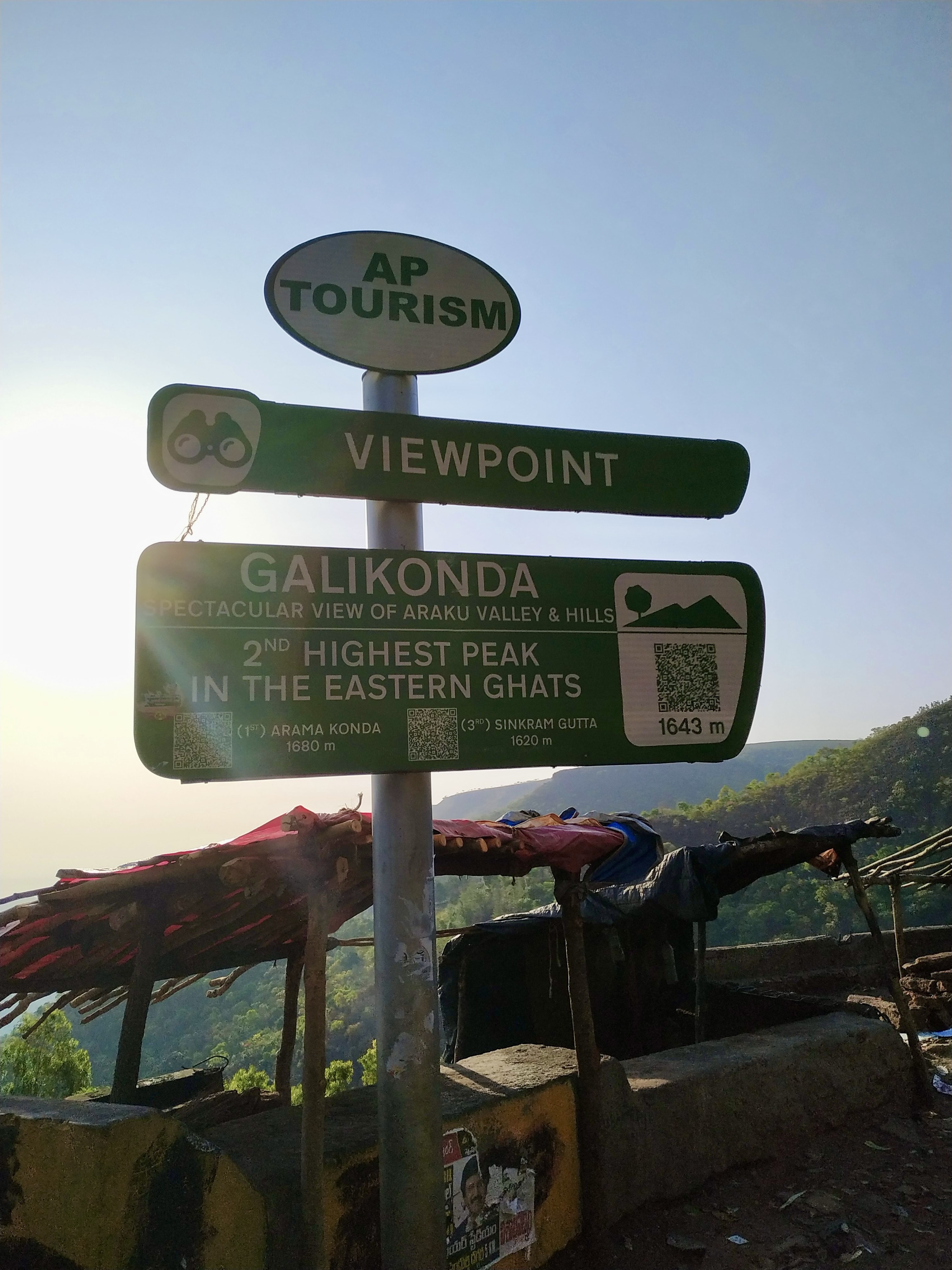
    • Galikonda Viewpoint: Offering panoramic views of the valley, this viewpoint is one of the highest points in the Eastern Ghats. It provides stunning vistas of the surrounding hills and forests.
    • Dumbriguda Waterfalls (Chaaparai): A scenic spot with cascading waterfalls, surrounded by lush greenery, ideal for picnics and nature walks.
    • Katiki Waterfalls: Located near Borra Caves, this waterfall is accessible via a short trek, offering a refreshing experience amidst nature.
    • Coffee Museum: A place dedicated to exploring the history of coffee and its various varieties. This was the best place that I visited in Araku Valley. The history and significance of various types of coffee is displayed on the walls beautifully.

    Cultural Heritage

    1. Tribal Culture: Araku Valley is home to several tribal communities, including the Araku, Gadaba, and Jatapu tribes. The region’s cultural heritage is rich with traditional dances, music, and crafts.
    2. Dhimal Dance: This traditional dance form is performed by the tribal women during festivals and special occasions, showcasing their vibrant culture.
    3. Local Markets: The weekly shandies (markets) are a great place to experience the local culture, where tribal people sell their handmade crafts, fresh produce, and traditional items.

    Accessibility

    • By Road: Araku Valley is well-connected by road. Regular buses and taxis are available from Visakhapatnam and other nearby towns.
    • By Rail: The Araku Valley Railway Station is part of the Visakhapatnam-Kirandul passenger line. The train journey from Visakhapatnam to Araku is particularly scenic, passing through tunnels, bridges, and lush landscapes. I would personally suggest to take the train journey via Vistadom coach to enjoy the lush green hills on the way.
    • By Air: The nearest airport is Visakhapatnam International Airport, about 115 kilometers away. From there, travelers can take a taxi or bus to reach Araku Valley.

    Conclusion

    Araku Valley is a hidden gem in Andhra Pradesh, offering a perfect blend of natural beauty, cultural richness, and serene ambiance. Whether you are a nature enthusiast, a coffee lover, or someone looking to experience tribal culture, Araku Valley has something for everyone.

  • Unveiling Puducherry: French Colonial Heritage and Coastal Tranquility

    Unveiling Puducherry: French Colonial Heritage and Coastal Tranquility

    Puducherry, commonly known as Pondicherry, is a charming coastal town in southern India, renowned for its French colonial architecture, serene beaches, and spiritual retreats. The town as seen today was primarily developed during the French Rule and due to the predominant French influence the town is also called as “India’s Little France”. Puducherry has a rich and varied history shaped by its colonial past, cultural amalgamation, and strategic coastal location.

    Early History

    1. Ancient Period: The region of Puducherry was part of the Pallava Kingdom in the 4th century AD. Archaeological findings suggest that it was a hub for Roman trade during ancient times.
    2. Chola and Pandya Dynasties: From the 10th to the 13th centuries, Puducherry was under the control of the Chola dynasty, followed by the Pandyas. It was an important port for maritime trade during these periods.

    European Colonization

    1. Portuguese and Dutch Influence: Before the French established their presence, the Portuguese and Dutch had control over the area briefly in the 16th and 17th centuries, respectively.
    2. French Establishment: In 1674, the French East India Company set up a trading center in Puducherry under François Martin, the first Governor of French India. This marked the beginning of French colonial rule, which lasted for nearly 280 years.
    3. Development under French Rule:
      • Urban Planning: The French meticulously planned the city, dividing it into the French Quarter (White Town) and the Indian Quarter (Black Town). They introduced French architectural styles, wide boulevards, and grid-patterned streets.
      • Cultural Exchange: Puducherry became a center for cultural exchange, blending French and Indian traditions in language, cuisine, and lifestyle.

    Key Attractions in Puducherry

    French Quarter (White Town)

      • Architecture: Stroll through streets like Rue Dumas and Rue de la Marine, lined with colonial buildings painted in pastel shades, featuring bougainvillea-laden balconies.
      • Cafés and Restaurants: Enjoy French cuisine and coffee at charming cafes like Café des Arts and Le Café.

      Promenade Beach

        • A long stretch along the Bay of Bengal, ideal for a leisurely walk. Key landmarks include the War Memorial, the statue of Mahatma Gandhi, and the old lighthouse.

        Auroville

          • An international township founded in 1968, dedicated to the ideals of human unity. The Matrimandir, a golden dome, is a meditation center and architectural marvel.

          Churches

            • Immaculate Conception Cathedral: Known locally as Samba Kovil, it dates back to 1791.
            • Basilica of the Sacred Heart of Jesus: A Gothic-style church with stunning stained glass panels.

            Beaches

              • Paradise Beach: Accessible by boat from Chunnambar Boat House, it’s known for its pristine sands and clear waters.
              • Serenity Beach: A quieter spot, ideal for surfing and relaxing. However during my visit to Puducherry I could not visit this beach.

              Museums and Galleries

                • Puducherry Museum: Houses artifacts from the colonial period and ancient times.
                • Bharati Government Park: A green oasis with sculptures and a charming gazebo.

                Activities and Experiences

                1. Cycling Tours: Explore the town on a bicycle, a popular way to navigate the narrow lanes and discover hidden gems.
                2. Yoga and Wellness: Many centers offer yoga classes and wellness retreats, taking advantage of the peaceful surroundings.
                3. Shopping:
                • Local Markets: Visit Goubert Market for fresh produce, spices, and local goods.
                • Boutiques and Handicrafts: Explore shops selling handmade candles, pottery, and textiles.

                Cuisine

                  • Enjoy a mix of Tamil and French cuisines. Must-try dishes include French pastries, Creole cuisine, and South Indian delicacies. There are few famous Pizza shops where you can enjoy a delicious slice of Pizza.

                  Practical Information

                  1. Best Time to Visit: The ideal time to visit is from October to March when the weather is pleasant.
                  2. How to Reach:
                  • By Air: The nearest airport is in Chennai, about 135 kilometers away. From there, you can hire a taxi or take a bus.
                  • By Train: Puducherry has its own railway station with connections to major cities.
                  • By Road: Well-connected by road, with regular bus services from Chennai, Bangalore, and other cities. If you are travelling via road from Chennai then take the Highway which runs along the coast and stop by the famous World Heritage Town of Mahabalipuram.

                  Accommodation

                    • Options range from heritage hotels in the French Quarter to budget guesthouses and beach resorts. The ideal duration to visit all the good places is 2 to 3 days.

                    Conclusion

                    Puducherry offers a unique blend of French elegance and Indian vibrancy, making it a fascinating destination. Whether you are exploring its colonial architecture, relaxing on its beautiful beaches, or immersing yourself in spiritual practices, Puducherry promises a memorable experience. If you are around chennai then the place is a must visit.

                  1. My First 10 KM Marathon Run of 2024 at Pune City Marathon!

                    My First 10 KM Marathon Run of 2024 at Pune City Marathon!

                    It is often said that “Running is a complete exercise”. However this things is most visible if you happen to run at a Marathon Event. If you are at a marathon event it feels like all the people of the city have woken up and are running Marathon.

                    Right since I have joined Railways I have been continued my running practice. Running feels a good exercise, however for me it is more than that. It is a way to forget all the hustle and bustle of city life and relax my mind for the moment.

                    Pune happens to be one of the best city for Marathon runners because there are so many marathons being organised by different organisations. The recent one being Pune City Marathon organised by Puna Club.

                    At any Marathon the first 3 km are the hardest ones because of the crowd and the initial resistance of the body. Once you get conditioned with the rhythm then its an easy task.

                    I was able to complete the run in around 76 minutes which is slow. However the happy thing about it is that I was able to complete it.

                  2. Iconic South Mumbai Buildings: Experiencing Heritage Amid COVID Lockdown

                    Iconic South Mumbai Buildings: Experiencing Heritage Amid COVID Lockdown

                    The South Mumbai area of Mumbai is particularly famous for British Era buildings which have come to define the Mumbai Skyline for past more than 100 years. Some of the iconic buildings of this area include Chhatrapati Shivaji Maharaj Terminus (Victoria Terminus) Building, Bombay Municipal Corporation Building, The Taj Hotel building among many others. Most of these buildings are designed in Victorian and Art Deco design and South Mumbai boasts second largest number of art deco buildings in the world after Miami City. The famous Chhatrapati Shivaji Maharaj Terminus Building has been declared as the World Heritage Building in 2004. This is an article about a walkthrough the South Mumbai during the COVID Lockdown period.

                    The COVID lockdown period was a period of grief and suffering to many people and families due to the economic hardships and the unfortunate deaths and sufferings. However due to countrywide locks lock down the traffic on the roads was minimal and cities had become pedestrian friendly. This helped us to see the cities in the original form in the sense that the streets were not claimed by the car traffic.

                    During the COVID Lock down period I was posted in Mumbai and my office was located in one of the heritage building known as Chhatrapati Shivaji Maharaj Terminus. During my free time I used to walk in the streets of South Mumbai city and was able to click some beautiful pictures of the most iconic buildings of the South Mumbai. This post is about some of those photographs.

                    1. Chhatrapati Shivaji Maharaj Terminus Building

                    This iconic building was designed by British architectural engineer Frederick Williams Stevens. The building is designed in Gothic style and was completed in 1887 marking 50 years of Queen Victoria’s rule. The building was declared as World heritage Building in April 2004. The building is currently the headquarter of Central Railway.

                    Front View of Building
                    Side view of CSMT building
                    Sunset view of Sky over CSMT building

                    2. Churchgate Terminus( Western Railway Headquarters Building)

                    This beautiful building was designed by Frederick Williams Stevens. The construction began in 1889 and completed in 1899. The building presently houses the Western Railway Headquarter.

                    3. Municipal Corporation Building(BMC Building)

                    The Brihanmumbai Municipal Corporation (BMC), or Municipal Corporation of Greater Mumbai (MCGM) is the governing civic body of Mumbai. The building was designed by Robert Fellowes Chisholm who is credited with the revival of Indo Saracenic style of architecture in India. The foundation stone was laid in December 1884 and the building was completed in 1893.

                    BMC Building (Evening View)
                    BMC Building (Night View)

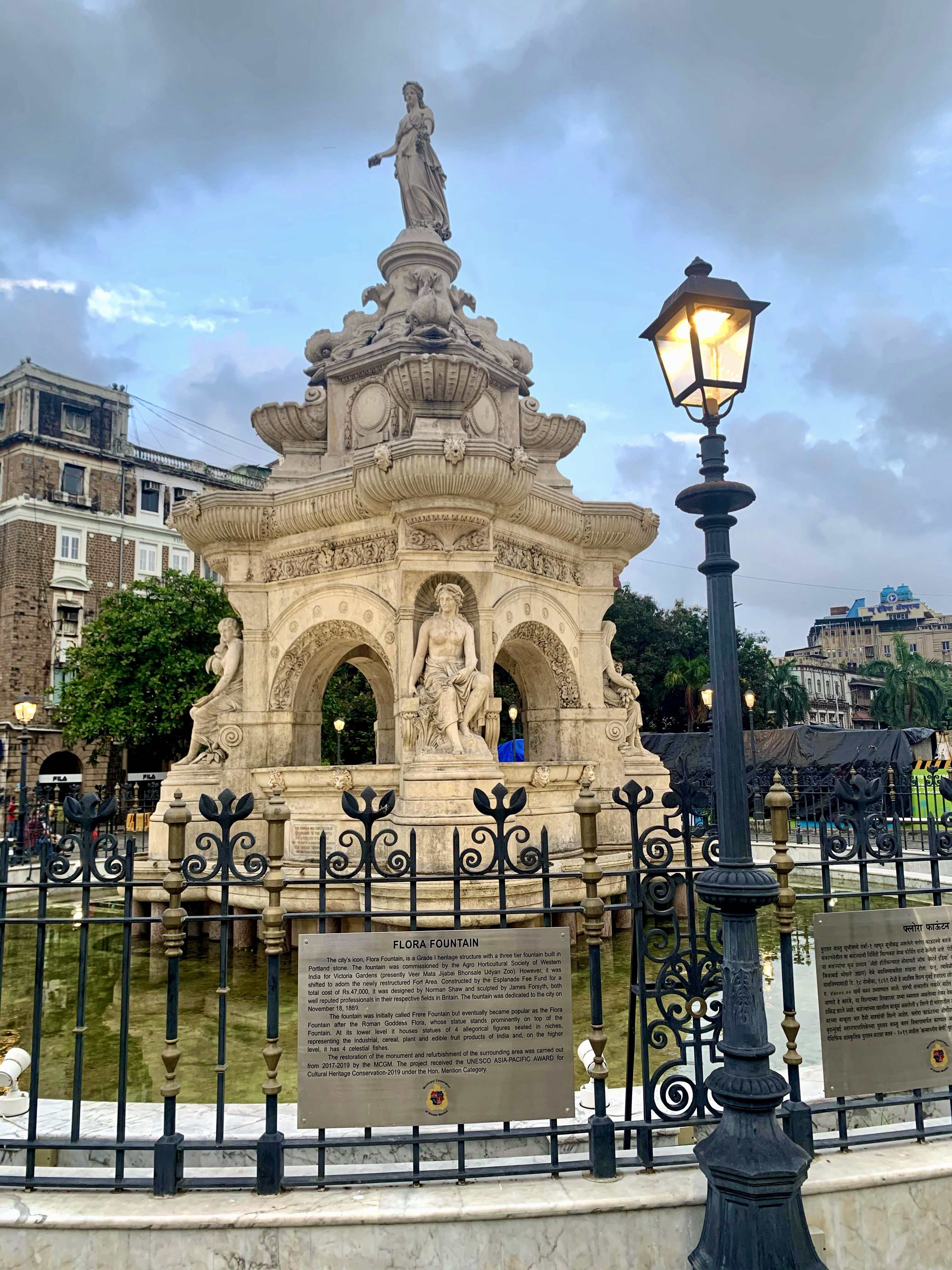
                    4. Flora Fountain

                    Built at a total cost of Rs. 47,000, or 9,000 pounds sterling Flora Fountain is located on historic Dada Bhai Naoroji Road on Hutatma Chowk. The fountain depicts the Roman Goddess Flora and is a famous icon of the fort business district of South Bombay.

                    Flora Fountain
                    Hutatma Chowk

                    5. Asiatic Society Circle/Fort Area(Mumbai)

                    During the COVID period this place was very calm having no people at all. Shooting pictures of this place at that time was once in a lifetime opportunity.

                    6. Kala Ghoda

                    This area is particularly famous for being the art district of Mumbai area. Many of the art festivals including the kala ghoda festival is held in this area.

                    7. Sunset at Marine Drive

                    During the COVID period the environment was clean and hence the Mumbai skyline was very clear from the Marine drive. The view of the sunset from this point was particularly mesmerizing.

                    Mumbai Skyline from Marine Drive

                    8. Other Random Clicks

                    Due to less vehicular movement and the area being free of crowd the entire area was pretty beautiful and all the buildings were giving their most beautiful view.

                    Overall seeing the city of old Mumbai during the COVID times was once in a lifetime experience.

                  3. Kashid Beach: Stunning White Sand Getaway in Alibaug, Maharashtra

                    Kashid Beach: Stunning White Sand Getaway in Alibaug, Maharashtra

                    Kashid Beach is a beautiful white sand beach located in Alibaug Taluka of Maharashtra. The beach is located nearby the Kashid Village in Murud Taluka and is becoming famous among the tourists due to its beautiful beach and less crowd as compared to the other beaches in the region.

                    India has a huge coastline of around 7516 km. This has enabled the country to have beautiful natural beaches and many famous beach cities. We all know about the beaches on Goa, Kerala and Andaman and Nicobar. However there are still many beautiful beaches in India which are relatively lesser known but still very beautiful. The prime among them are the beaches in Alibaug.

                    Famous Beaches of Alibaug

                    Alibaug/Alibag is a coastal city and Municipal Council in Raigad district of Maharashtra. The city boasts of many beautiful natural beaches in its surroundings. The city is becoming famous as weekend getaway among the residents of Pune and Mumbai due to its beautiful beaches and closer proximity to these two cities. Few of the most famous beaches of Alibaug as as follows:

                    • Alibaug Beach: A black-sand beach that offers views of the sunrise, sunset, and Kolaba Fort
                    • Nagaon Beach: A popular beach with beach facing cottages and a view of the sunrise
                    • Kashid Beach: A beach known for its sunsets
                    • Varsoli Beach: A white-sand beach
                    • Mandwa Beach: A serene and scenic beach
                    • Kihim Beach: A picturesque and serene beach

                    The other popular beaches are:

                    1. Akshi Beach
                    2. Kasim Beach
                    3. Rewas Beach
                    4. Korlai Beach
                    5. Saswane Beach
                    6. Revdanda Beach

                    On our Alibaug trip this time we visited the Kashid Beach. The beach is beautiful and has many things to offer to the visitors.

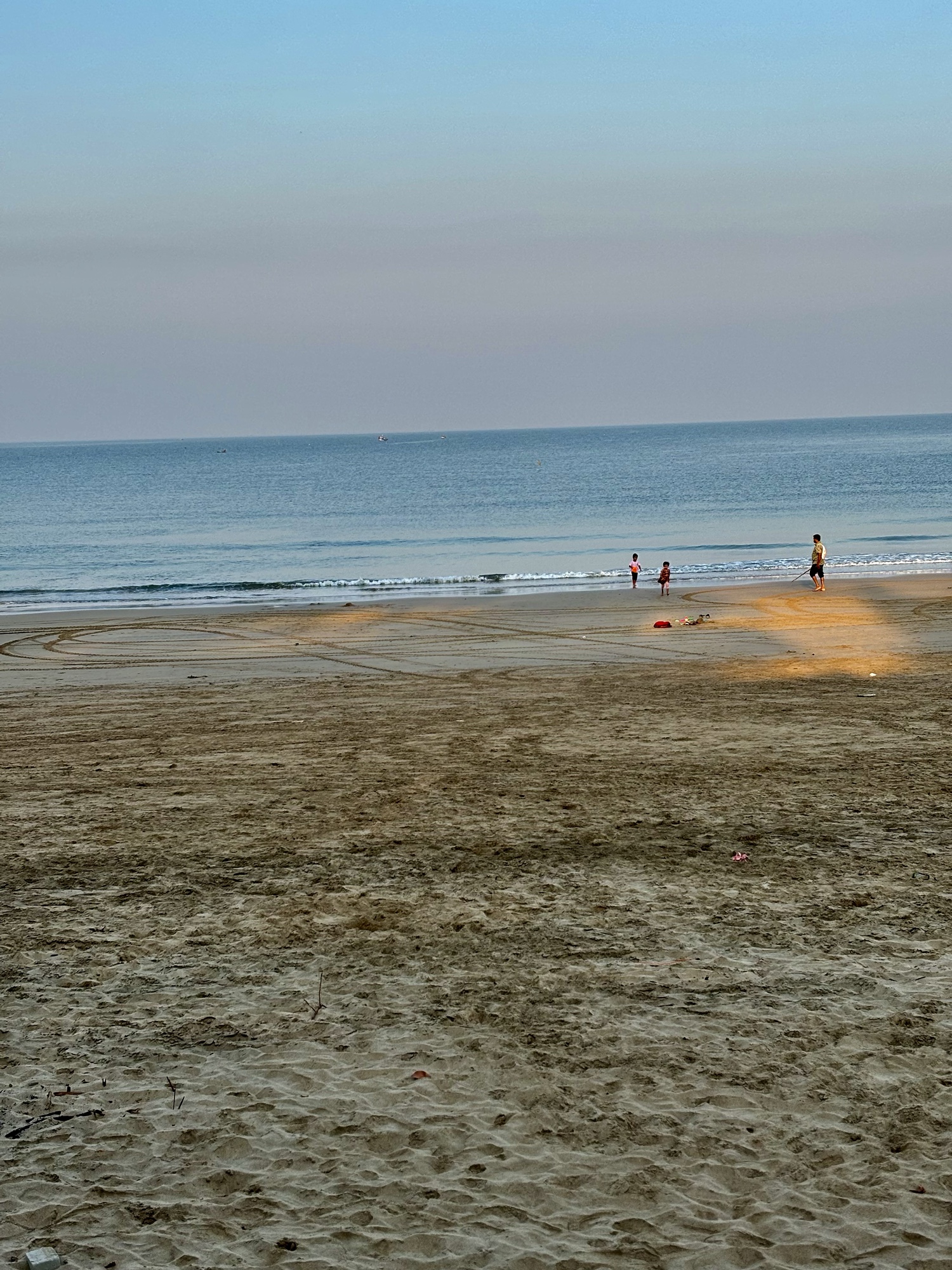
                    Kashid Beach

                    Kashid Beach is known for its white sand, blue water, green mountains, and paddy fields. It’s also considered one of the cleanest beaches in the region. The beach is a popular weekend getaway from Mumbai and Pune. Kashid beach is a newly developed beach and is located at a distance of around 30 km from Alibaug. The beach is located in Kashid village which has traditionally been a fishing village but is fast becoming a tourist village due to Kashid Beach.

                    How to Reach?

                    Due to its difficult topography the place is not accessible via train. However one can reach Pune and Mumbai via train and then take either public transport or drive to Kashid Beach. The distance of Kashid Beach is around 174 Km from Pune and there are two different routes to reach from Pune. The first is vis Pune Mumbai Expressway which takes around 5 hrs to reach. The other route is through Tamhini Ghat. This route is a ghat route and takes around 4 hrs 30 minutes to reach. Although both the routes are good, I would personally recommend to take the Tamhini Ghat route. The traffic is less on this route and the road is scenic.

                    If you are driving from Mumbai you can take the ferry to reach Alibaug and then drive from there(You can take your car inside the derry). This takes around 2 hrs 30 minutes to reach Kashid beach via this route. Alternatively you can drive via Mumbai sea link and reach Kashid beach. Its takes around 4 hours to reach kashid beach via this route. The roads are decent and the drive is scenic.

                    The best part of our drive was crossing the Kundalika River. The view of river meeting the sea was beautiful.

                    Where to Stay?

                    There are many good resorts and homestays available at Kashid Beach. It is always better to stay at a resort which is offering food as well because there are not many eateries available nearby. We stayed at Prakruti Resort which is one the best resorts in the area. However it is on the costlier side so if you want to be on budget then you can take other resorts also which offer you a price range of around Rs 5k to 8k. Few of them are Kashid Beach Heritage Resort, O’Nest Resort etc. The beach is not very much crowded hence there is no particular need for taking a resort offering a private beach.

                    Things to Do at Kashid Beach

                    Although still relatively less developed There are many activities to do at Kashid Beach. The few of them are:

                    1. Banana Ride
                    2. Motor Boating
                    3. Running
                    4. Beach Volleyball
                    5. Swimming
                    6. Photography

                    Other Places to Visit Nearby

                    There are many beautiful beaches in the nearby area which one can visit while being in Kahid. The other place which I would personally recommend is Phansad Wildlife Sanctuary. The road from Kashid to Phansad is very scenic one can see many wild animals in the Sanctuary.

                    Overall the visit to Kashid Beach is quite satisfying and a must recommended for everyone planning to visit a beautiful and peaceful beach.

                  4. Ellora Caves( एलोरा की गुफाएं): They Amaze You Every Time You Visit!

                    Ellora Caves( एलोरा की गुफाएं): They Amaze You Every Time You Visit!

                    We all have grown studying about Ajanta and Ellora caves and their beauty. However if someone has prepared for UPSC for sometime it becomes even more a thing of curiosity because these caves are a thing of great cultural importance not only for India but for the entire world. These caves are a living example of what indian culture has been in the past.

                    My first experience of visiting the Ellora caves was in 2019 when I visited these caves with two of my friends. I visited Ellora Caves again in January 2023 and I must say both the times it was a magical experience. Standing in front of Kailash temple one gets lost in its grandeur and beauty.

                    History of Ellora Caves

                    The history of these caves dates back from 600 AD to 1000 AD. There are around 100 caves at the site out of which 34 are open to public. These caves belong to all three religions prevalent in the region at that time viz. Hinduism, Buddhism and Jainism.

                    Counting wise Cave No 1 to 12 belong to Buddhism. Cave No 13 to 29 belong to Hinduism and Cave No 30 to 34 belong to Jainism. Although the entire complex of Ellora caves is a treasure to behold, the two most significant of them viz Cave no 10 called Vishwakarma cave and cave no 16 known as Kailash temple is discussed below.

                    Cave No 10 (Vishwakarma Cave)

                    Built in early 7th century this is the only Chaitya(Prayer Hall) in the series of Ellora Caves. Vishwakarma Caves are also known as ‘Sutur Ki Jhopdi’ in the local language. At the apsidal end of the chaitya hall is a stupa on the face of which a colossal high Buddha is seated in ‘Vyakhyana Mudra(teaching posture)’. A large Bodhi tree is carved at his back. Many of the Buddhist devotees come and prey in this caves daily even today. The cave is known as “Carpenter’s Cave”, because the rock has been given a finish that has the appearance of wooden beams.

                    Entrance of Vishwakarma Cave( Carpenter’s Cave)
                    Buddha in Vyakhyana Mudra in Carpenter’s Cave

                    Cave No 16( Kailashnath Temple)

                    Brief description of Cave no 16

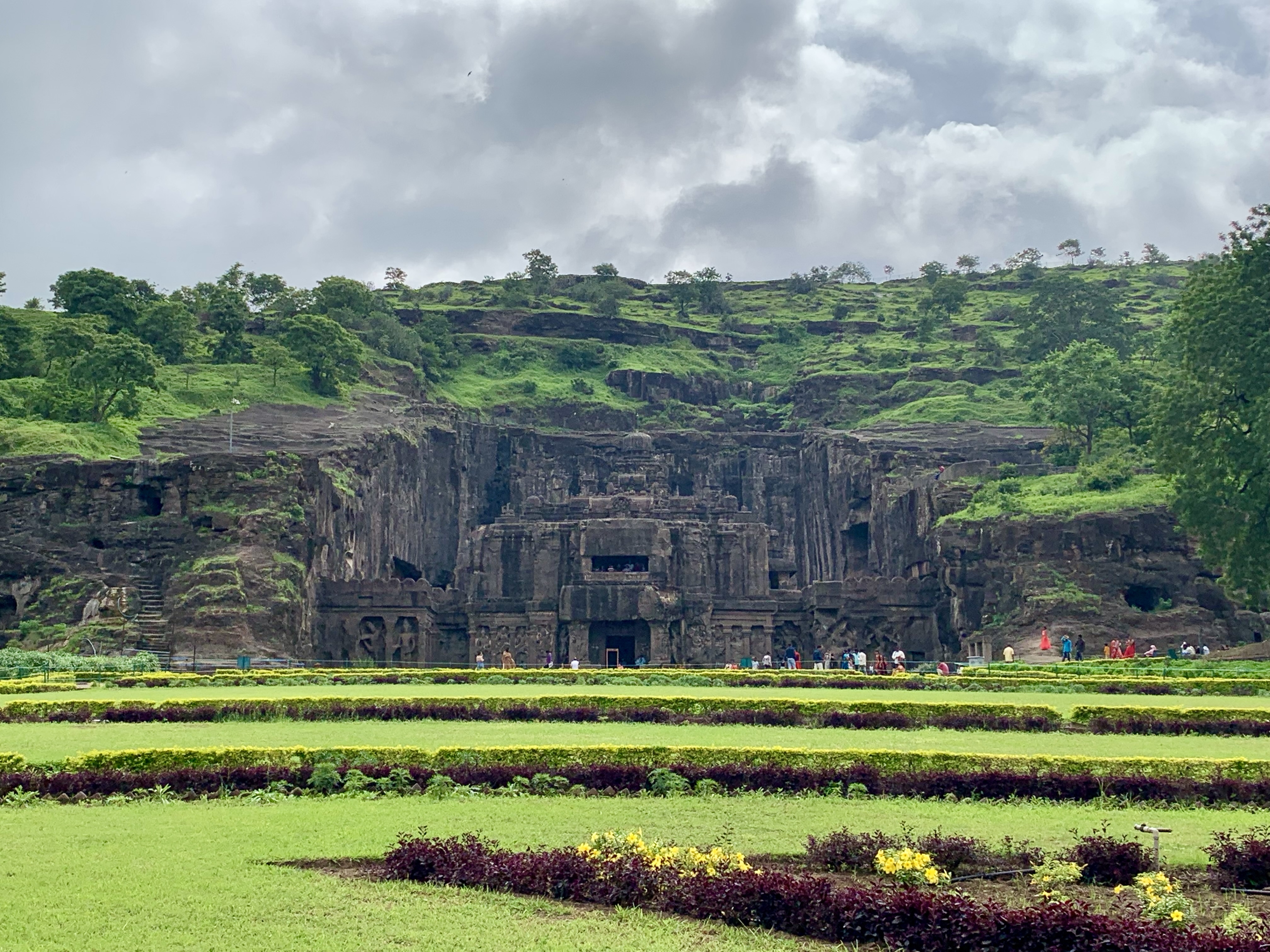
                    Cave No 16 of Ellora Caves is also known as Kailasa(Kailashnath) Temple. The temple dedicated to Shiva is world famous for being the largest megalithic structure carved from the cliff face of a mountain. it is considered one of the most remarkable cave temples in the world because of its size, architecture, and sculptural treatment. It has been called as “the climax of the rock-cut phase of Indian Architecture”. According to the historical evidences the Kailasa temple was commissioned by Rashtrakuta Rulers during the 7th century AD. The temple looks very grand from the entrance itself and in my opinion it is the most beautiful structures in the entire cave architecture of India.

                    View Of Kailasa Temple from the Entry Gate of Ellora
                    Front View of Kailasa Temple from the Inside
                    Side View of Kailasa Temple from the Inside

                    How to Reach Ellora Caves?

                    Aurangabad is the nearest city to Ellora Caves. The city is connected by both rail and road transport from all the major cities in India. There are ample of good hotels available in the city to stay. However I will that one should stay in the resorts nearby to the Ellora Caves. During the monsoon the area becomes very beautiful and there are very good views of the ancient city of Daulatabad. The best time to visit the Ellora Caves is during the monsoon or during the winter season. The area becomes quite hot during the summer time hence wondering around all the caves becomes exhausting during the summer time.

                    Ellora Caves are one of the most astonishing rock cut structures in the world. They are India’s contribution to the entire humanity and they showcase the technological sophistication and the advancement of ancient India. Being the citizen of India it is recommended that everyone must visit them to appreciate the advancement of science, technology and spirituality in ancient India.