Author: Jitendra Singh

  • I did Safari in Amagarh Leopard Reserve Jaipur

    I did Safari in Amagarh Leopard Reserve Jaipur

    For most people in India Leopards are not as exciting as Tigers in Wild. However in my opinion spotting a Leopard in Wild is even more exciting than spotting a Tiger and what is more important is that getting a good photograph of a Leopard is a much more difficult task that getting the photograph of a Tiger. This is mainly because of the living style of both these species. Tigers are truly the apex predators of the Indian forests and they roam freely in the Jungle many a times on the safari tracks. In facts many of the famously photographed Tigers have been known to be walking on the safari routes. This make spotting and photographing them easier. On the other hand Leopard despite being a big cat species is afraid of Tigers and generally prefers to stay on tree branches. They are not as much fearlessly visible on the tracks as the Tigers. Leopards are known to be shy in nature and avoid human presence. This is the reason they are known as elusive cats and getting a good photograph of a Leopard is actually a great achievement and it requires considerable planning and luck.

    This is where the Jhalana and Amagarh Leopard reserves become quite interesting places to spot Leopard in Wild. Both these places are located in the outskirts of Jaipur very close to the city limits and are places dedicated specifically to the conservation of Leopards. Since there are no tigers present here Leopards become the apex species and one can see them roaming fearlessly and without any threat.

    Situated in the outskirts of Jaipur and spread in an area of around 15.50 sq km Amagarh was declared a leopard reserve in 2020 and opened for tourism in May 2022. It later became part of the larger Jhalana–Amagarh Leopard Conservation Reserve managed by the Rajasthan Forest Department. Situated on the eastern edge of Jaipur near the famous Galta Ji Temple, Amagarh lies amidst the ancient Aravalli Hills, making it one of the few places in India where a thriving leopard population exists just minutes away from a major city.

    The reserve primarily consists of Rocky Aravalli hills, dry deciduous woodland, thorn scrub forest, Seasonal streams and waterholes, narrow valleys and granite outcrops. These rocky landscapes provide perfect denning sites for leopards, while the sparse vegetation allows excellent visibility during hunting.

    As per my guide in the reserve, there are around 16-20 leopards present in the reserve at present however spotting them in Amagarh is difficult and the sightings are inconsistent. I myself could not spot any Leopard during my visit. So If your goal is to primarily spot leopards then Jhalana is a much better place than Amagarh. However if you are visiting to photograph Aravali Landscape and coexistence of Human and wildlife then you should pay 1 or 2 visits to Amagarh also.

    Apart from Leopard there are other mammal and Bird species present in the reserve as well like Striped Hyena, Golden Jackal, Desert Fox, Jungle Cat, Indian Grey Mongoose, Indian Hare, Nilgai Sambar, Chital, Wild Boar and Indian Porcupine. Among all these the sightings are Striped Hyena is particularly interesting in Amagarh and it is a better place to spot Hyena as compared to Jhalana. Among the bird species Indian Peafowl, Crested Serpent Eagle, Shikra Indian Eagle-Owl, White-throated Kingfisher, Green Bee-eater, Indian Roller, Grey Francolin ,Various warblers, babblers and sunbirds are frequently spotted in the reserve.

    I also spotted a pair of Indian Francolin while they were traversing on the safari track.

    A Rufous Treepie feeding on the kill made by Leopard
    A Black-rumped Flameback Woodpecker in its Natural Habitat

    However apart from all this what surprised me the most here was the peaceful co-existence of Human and Big Cat species like Leopard so close to the city limits. The Aravalis have been natural abode to Leopard since centuries. However due to Human intervention and habitat fragmentation the population of Leopards have been declining in this region. This is perhaps the most important part of this initiative that makes Amagarh special. Another thing that surprised me was extremely low Human-Wildlife conflict in this area despite the Leopard reserve being located so close to the city limits. Upon researching I found quite a few reasons for this.

    First and foremost being the presence of A healthy prey base of nilgai, wild boar, hare, and other wild animals which means leopards rely less on livestock and lesser the conflict. Leopards are naturally elusive and largely nocturnal, avoiding people whenever possible. The rugged Aravalli hills provide ample cover and denning sites even close to urban areas. Continuous monitoring and rapid response by the Rajasthan Forest Department help address conflict situations before they escalate. These are some of the lessons to be learnt and replicated elsewhere for conservation success.

    The most important lesson to work out here is that in order to protect India’s rich wildlife the peaceful co-existence is the way forward. Conservation is not only about protecting remote wilderness, it is also about finding ways for people and wildlife to share landscapes responsibly.

    As I was returning back from the reserve I was just thinking of the two different world that exist so close to each other without disturbing each other and rather complementing each other. The Amagarh and Jhalana Leopard reserves have become a model for the world to follow and one of the key identities of the Jaipur City among the nature lovers.

  • A Quiet Stay at Kathi(Satara)

    A Quiet Stay at Kathi(Satara)

    There are places that don’t ask anything from you.
    They don’t demand productivity, urgency, or performance.
    Kathi is one such village.

    Tucked quietly in the folds of the Sahyadris in Satara district, Kathi does not announce itself. There are no landmarks shouting for attention, no itineraries to tick off. What it offers instead is far rarer — a life that unfolds without hurry.

    Indian Cities are increasingly becoming congested and overcrowded. Finding a peaceful moment in the cities is becoming a luxury now. Pune City has been particularly heavily polluted this year with AQI reaching to 400. It was in this frame of mind that I decided to take some time out and stay at a quiet place outside the city. My search ended at a Quiet Villa named as Red Stone Villa by Koyna stays located in a small village named Kathi in Satara district of Maharashtra. Most of the population in this village is involved in agriculture. However with the coming up of tourism a small population is now being involved in hospitality and the land use and occupation change is now visible here.

    When I reached this Kathi village I was amazed with the rustic beauty and old world charm of this village. The village lies at a hill plateau overlooking the Shivsagar Dam built on Koyna River. The natural setting of the place is amazing.

    The Village is still far away from what we call ‘Development’ in modern terms. There are no modern cafes and restaurants. People are simple and welcoming. This makes this place perfect for Eco-tourism and many eco tourism resorts are now opening in this village. This village is perfect place for spending quiet days. During my stay at this place I was reminded of the the Dak-Bunglows of British times. Britishers used to built Dak-Bunglow at places which were far from modern world and having plenty of nature around. This gave them the time to think and innovate.

    Relaxing Activities In Kathi

    The village of Kathi is located at a place which is called Oxygen valley. This is because of strong winds that blow here throughout the day. The wind is so strong here that the largest Windmill farm in Asia is located near this village. You can just sit and feel the air in your lungs.

    Wind Mill farm

    Visit to the nearest Windmill farm is a great experience here. The road from Kathi to Satara passes through this wind mill farm and there is one spot where the road is straight over the plateau. This is a perfect place to take an evening walk. I took a walk on this road one evening and it felt magical.

    K-2 Point

    When it comes to viewing sunset in the Western Ghats I found that K-2 point offers one of the most mesmerising view. The place is located at the highest point in the region overlooking the Koyna Backwaters. The view of the sunset from here is just amazing. The only catch is that due to excessive fog at times it becomes difficult to view the sunset. What I found most beautiful is that this place has no crowd at all and hence you can enjoy the beautiful sunset in peace. However despite its natural beauty what disturbed me here was that people have thrown beer bottles and water bottles which was acting as a thorn in the beauty of this place. Seeing this one can sense how much civic sense Indians lack.

    Dhareshwar Shiv Mandir

    Perhaps one of the most unique temples in India that I have visited this Shiva temple is nestled into deep forest and on the edge of a mountain overlooking a huge valley. The main shrine is in a rock-cut cave traditionally associated with Shri Ram’s era, housing a temple to Shri Ram along with a sacred Shiva shrine (Shivshambu Mahadev) regarded as a teerthakshetra. This place is a great nature spot and there is an all weather active waterfall here. When I visited this temple I found that to be crowd free and full of peace and tranquility. This place is great for meditation and Dhyan and one can sit for some time here to connect with spirituality. The active waterfall of this place is considered sacred and the locals use the water for different religious purposes.

    This place is a heaven for star gazers as this place still has not been heavily polluted by light pollution. During the night time star gazing is a great activity here. During our visit we sat in the night sky and all the night stars were visible to us. Using the apps like night sky enhances the experience of Star Gazing by displaying the positions of the stars in the sky.

    Kathi Village has everything that a slow life asks for. A lakeside location, spiritual places nearby and a great sunset view point to go and sit during the evening. Places like these are a modern day luxury for us when the “modernisation and cafe culture” is reaching in every nooks and corners of the country. The very nature of the modern lifestyle is stress-full and few days spent at places like these adds much needed value to our quality of life.

  • Photographing Balck Kite (Milvus migrans) In Pune

    Photographing Balck Kite (Milvus migrans) In Pune

    Spotting birds in Indian Cityscape is becoming a rarity now. The cities in India are slowly becoming urban jungles with no space for trees and wildlife. The birds which are frequently visible in the countryside are no where to be found in the cities. However when I spotted this beautiful big birds in my colony I was surprised to see that they are not even surviving but flourishing in the cityscape. Upon enquiring I came to know that this bird was named as Balck Kite (Milvus migrans). The subspecies of this bird M. M. Govinda also known as the small Indian kite or formerly Pariah Kite is found across the Indian cities and their population is thriving in the Indian cities due to their flexible dietary habits.

    Black Kite is a raptor species which means they hunt and eat other animals and have special adaptations for catching and consuming prey. Raptors are also called birds of prey and include eagles, hawks, kites, falcons, owls, and most vultures.

    Black kites inhabit most Indian states, from the Indo-Gangetic plains to Himalayan foothills and northeastern regions, including Delhi, Maharashtra, Karnataka, and Rajasthan. However what I was most curious about was the astonishingly high number of population of these species in PMC area nearby Mula- Mutha river. The major reason for their high density in this area seems to be because of abundance of urban waste from households, markets, and slaughterhouses. This area also provides constant scavenging opportunities, drawing kites to riversides and dumps. Proximity to PMC headquarters along the Mula-Mutha River supports foraging on scraps and small prey like fish or pigeons.

    Studying the changing behaviour of these species shows that species too have the ability to adopt to the changing environment. Also those species are likely to survive more who can adopt to the changing landscape better in a better way. Having these species nearby gives me an excellent opportunity to photograph them and test my photography skills!

  • Daund-Manmad Railway: Social and Economic Changes in Maharashtra

    The construction and operation of the Daund-Manmad Railway line during the British colonial period (1878-1947) fundamentally transformed the social and economic landscape of Maharashtra and neighboring regions. This strategic “chord line” connecting the Great Indian Peninsula Railway’s southeastern and northeastern divisions catalyzed unprecedented changes in demographics, commerce, agriculture, and social structures across the Deccan plateau.

    Demographic and Migration Patterns

    Large-Scale Population Movement

    The Daund-Manmad Railway triggered substantial demographic shifts throughout the region, fundamentally altering settlement patterns and population distribution. The railway construction phase (1875-1880) attracted thousands of migrant workers from across Maharashtra, Gujarat, Madhya Pradesh, and other regions of British India. This initial wave of construction-related migration established permanent settlement patterns that persisted throughout the colonial period.

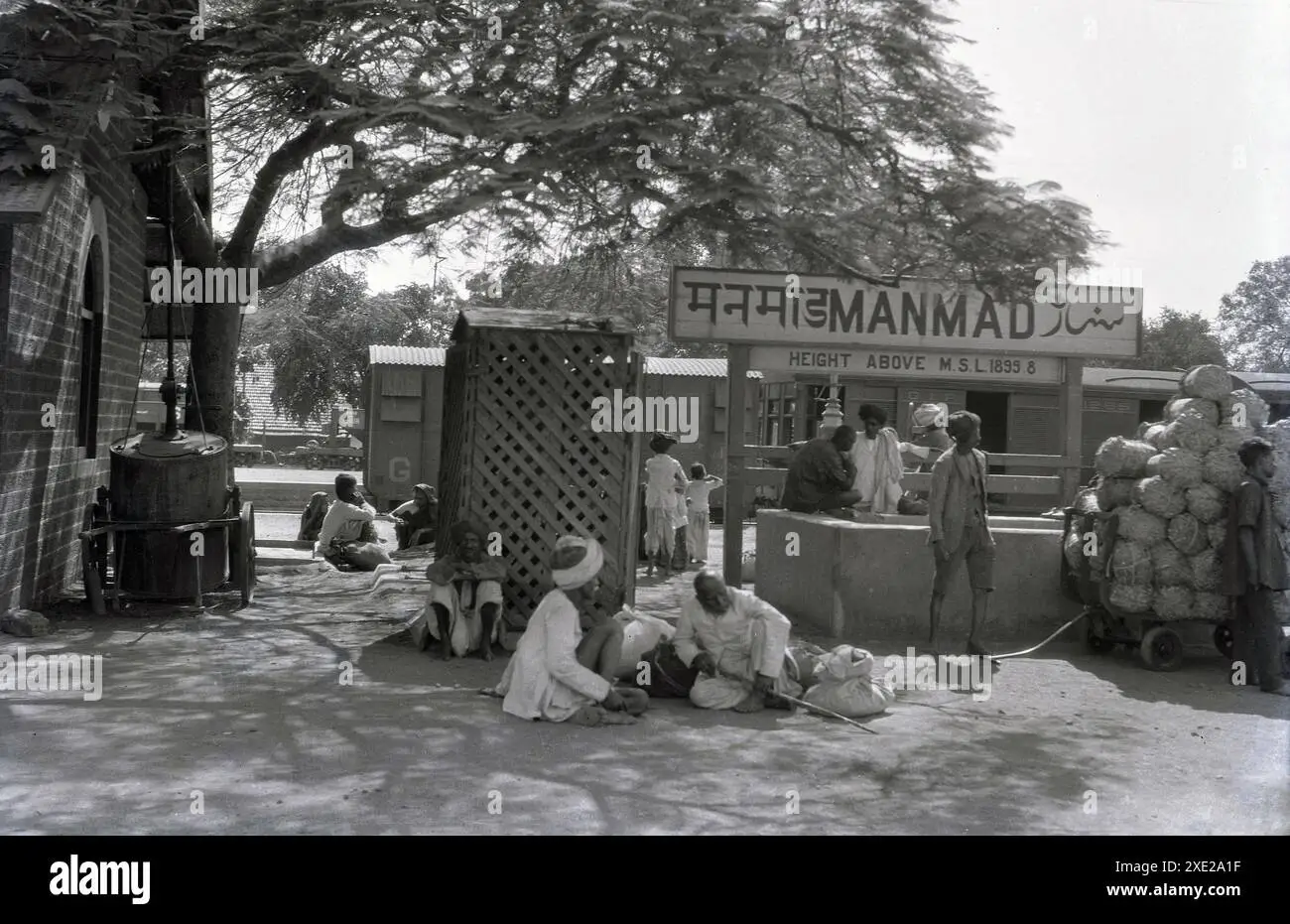
    Rural-to-urban migration accelerated dramatically after the railway’s completion in 1878. Daund emerged as a major railway junction, transforming from a small agricultural town into a significant urban center. The town’s population expanded exponentially as it became a hub for more than 125 coal engines and their associated workforce. Even today a new Electric Loco shed has been established which shows the importance of Daund as a railway town. Similarly, Manmad developed into a crucial junction connecting British territories with the Nizam’s Guaranteed State Railway, facilitating movement between the princely state of Hyderabad and colonial Maharashtra.

    The railway facilitated seasonal migration patterns linked to agricultural cycles and railway maintenance schedules. During construction and later expansion phases, temporary labor camps housed thousands of workers who later established permanent communities along the railway corridor. These migration patterns created lasting demographic changes, with railway towns becoming cosmopolitan centers housing diverse linguistic, religious, and caste communities.

    Inter-Regional Connectivity and Social Integration

    The improved connectivity facilitated inter-regional marriage alliances and social relationships that had been previously constrained by distance and transportation difficulties. The railway enabled regular communication and travel between communities across the Deccan, gradually breaking down regional isolation that had characterized rural Maharashtra for centuries.

    Census data from the colonial period indicates that immigration to railway towns significantly exceeded natural population growth. In Daund, the establishment of railway facilities created a receiver station of the Imperial Wireless Chain and military camps during World War II, further attracting diverse populations and enhancing the town’s strategic importance.

    Economic Transformation

    Agricultural Commercialization and Market Integration

    The Daund-Manmad Railway fundamentally altered agricultural practices and market relationships across the corridor region. The railway reduced transportation costs by an estimated 15-20% between northern and southern India, making previously unprofitable agricultural exports economically viable.

    Cotton cultivation expanded dramatically in areas with railway access, as farmers could now transport their produce efficiently to Bombay’s cotton markets and processing facilities. This shift from subsistence to commercial agriculture increased cash crop cultivation by an estimated 25-40% in the railway corridor. The integration with Bombay’s cotton export trade generated approximately Rs. 5-10 million annually in additional trade value during peak periods.

    The railway also facilitated the development of truck farming and market gardening to supply urban centers with perishable goods. Farmers near railway stations could now transport fruits, vegetables, and dairy products to distant urban markets, increasing perishable trade by approximately 50%.

    Industrial Development and Manufacturing

    The railway corridor witnessed significant industrial development, particularly in sectors related to railway operations and agricultural processing. Cotton processing facilities were established along the route to take advantage of improved transportation access to both raw materials and export markets. The estimated investment in these facilities reached Rs. 1-2 million during the peak development period.

    A unique industrial development emerged from railway operations themselves- brick manufacturing using coal ash from steam locomotives. The abundance of coal ash from Daund’s locomotive shed, which housed more than 125 coal engines, created a thriving brick-making industry that supplied construction materials to major cities across India. This industry generated approximately Rs. 500,000 in annual economic activity and provided employment for hundreds of workers.

    Railway workshop and maintenance facilities developed at major stations, creating specialized industrial employment and technical skills training. These workshops required significant capital investment (estimated at Rs. 200,000) and employed skilled craftsmen, engineers, and mechanics.

    Decline of Traditional Industries

    The improved transportation connectivity had devastating effects on traditional handicraft industries. Cheaper British manufactured goods could now reach previously isolated markets more efficiently, leading to a 40-60% decline in traditional handicraft production. This industrial displacement forced thousands of traditional artisans to seek alternative employment in railway-related industries or migrate to urban centers.

    Employment and Labor Market Changes

    Direct Railway Employment

    The Daund-Manmad Railway created approximately 2,000 direct employment positions in various categories including engineers, station masters, signalmen, guards, drivers, firemen, and maintenance workers. These positions provided annual wages totaling approximately Rs. 150,000, representing a significant injection of steady income into the local economy.

    The railway employment offered unprecedented social mobility for individuals from lower castes and disadvantaged backgrounds. Railway jobs provided regular salaries, standardized working conditions, and opportunities for advancement that were largely absent in traditional occupations. This employment transformation contributed to the breakdown of rigid caste-based occupational restrictions. This has been perhaps one of the most important impact of Railways in the long term.

    Ancillary Service Industries

    Railway operations stimulated the development of extensive ancillary service industries generating approximately Rs. 300,000 in annual economic activity. These included:

    • Hotels and lodging facilities for railway passengers and traveling merchants
    • Food vendors and catering services at railway stations
    • Transportation services connecting railway stations to surrounding towns and villages
    • Trading and commercial establishments facilitating goods movement
    • Banking and financial services supporting increased commercial activity

    Women’s Employment Opportunities

    The railway system created new employment opportunities for women, particularly in roles as vendors, cleaners, and service providers at railway stations. While these positions were often informal and poorly paid, they represented some of the first opportunities for women to engage in regular wage labor outside traditional household occupations.

    Social Structure and Community Development

    Emergence of Railway Communities

    The establishment of railway operations led to the formation of distinct railway worker communities with their own social institutions, recreational facilities, and collective identity. Railway colonies with standardized housing were constructed at major stations, creating planned residential areas that contrasted sharply with traditional village layouts.

    These railway communities developed cooperative societies, worker unions, and social organizations that provided mutual support and collective bargaining power. The railway workers also established recreational clubs and educational institutions that served not only railway families but also the broader community. The building of community hall and clubs in the colonies made increased social interaction possible leading to increased flow of modern ideas. The two British era community halls in Daund stands testament to this fact even today.

    Cultural Integration and Social Change

    The railway facilitated increased interaction between different linguistic and religious communities, promoting cultural exchange and social integration across previously isolated regions. The standardization of railway time introduced modern temporal concepts to rural areas, gradually replacing traditional time-keeping methods based on agricultural and religious cycles.

    The railway’s connection between British territories and the Nizam’s state at Manmad facilitated integration of princely state populations with colonial administrative and commercial systems. This integration accelerated the adoption of British administrative practices and commercial relationships across political boundaries.

    Educational and Health Infrastructure

    Railway towns witnessed significant investment in educational institutions to serve the growing populations and meet the literacy requirements of railway operations. These schools often provided education in multiple languages to accommodate the diverse communities attracted to railway employment.

    Healthcare facilities improved substantially in railway towns, as the colonial administration recognized the importance of maintaining healthy railway workers and their families. Railway dispensaries and hospitals provided modern medical care that was often unavailable in traditional rural areas.

    Regional Economic Integration

    Trade Route Optimization

    The Daund-Manmad Railway created a crucial transportation corridor that reduced the need for lengthy detours through Bombay for trade between northern and southern India. This optimization reduced transportation costs and time, making previously unprofitable trade routes economically viable.

    The railway facilitated integration between grain surplus and deficit regions, enabling efficient food distribution during normal periods and famine relief during crises. Although the impact of railways in reducing famines is debatable. The enhanced connectivity allowed grain traders to arbitrage price differences between regions, generally reducing price volatility and improving food security.

    Financial and Investment Impact

    The British colonial government invested approximately £800,000 (Rs. 1.2 crore in 1878 values) in the construction of the Daund-Manmad Railway. This substantial capital investment had significant multiplier effects throughout the regional economy, creating employment during construction and establishing permanent infrastructure that facilitated ongoing economic activity.

    The railway enhanced tax revenue collection for the colonial administration by approximately Rs. 200,000 annually through increased trade, property values, and economic activity. This revenue enhancement helped justify continued investment in railway infrastructure expansion.

    Banking and credit facilities developed in railway towns to support the increased commercial activity, with an estimated Rs. 50,000 in new financial capital establishment. These facilities provided credit for traders, farmers, and small entrepreneurs seeking to capitalize on improved transportation access.

    Long-term Developmental Consequences

    Urban Development Patterns

    The railway established urban development patterns that persist to the present day. Daund and Manmad evolved into permanent transportation and commercial centers whose economic importance transcended the colonial period. The modern doubling project worth Rs. 2,081.27 crores approved in 2017 demonstrates the continuing strategic importance of this British-era transportation corridor. As of today the doubling is about to get completed from Daund to Manmad.

    Social Legacy

    The social changes initiated by the railway had lasting effects on caste relations, occupational mobility, and community structures throughout the region. The breakdown of traditional occupational restrictions and the emergence of merit-based railway employment contributed to gradual social modernization that accelerated after independence.

    The cosmopolitan communities that developed in railway towns created lasting traditions of linguistic and religious diversity that continue to characterize these areas. The educational and healthcare infrastructure established during the railway period provided foundations for continued development in the post-independence era.

    The social and economic impact of the Daund-Manmad Railway during the British period was transformative and far-reaching, extending well beyond the immediate transportation benefits to fundamentally reshape demographic patterns, economic structures, and social relationships across the Deccan plateau. The railway catalyzed rural-to-urban migration, agricultural commercialization, industrial development, and social modernization while simultaneously contributing to the decline of traditional industries and social structures.

    The economic benefits, including reduced transportation costs, market integration, and new employment opportunities, generated substantial wealth creation estimated at over Rs. 10 million annually in direct and indirect economic activity. However, these benefits were accompanied by social disruption, including the displacement of traditional artisans and the challenges of rapid urbanization.

    The railway’s role in facilitating integration between British territories and princely states, particularly through the Manmad connection to Hyderabad, demonstrated its broader strategic importance in colonial administration and economic policy. The infrastructure and social changes initiated during this period established foundations that continue to influence regional development patterns, as evidenced by the ongoing significance of the Daund- Manmad corridor in contemporary Indian transportation planning.

  • Chasing Chinkara(Indian Gazelle) Inside Mayureshwar Wildlife Sanctuary!

    Chasing Chinkara(Indian Gazelle) Inside Mayureshwar Wildlife Sanctuary!

    Mayureshwar Wildlife sanctuary is comparatively lesser known but very unique wildlife sanctuary located at a distance of about 75 km from Pune city. The sanctuary is so less popular that when I visited the sanctuary even the google map could not identify the exact location of the sanctuary. I had to take the help of a forest department official to find out the exact location of the sanctuary. However if you really want to learn photography this is the place to go. With comparatively less crowd and wildlife density one can learn the concept of composition and also learn to have patience which is a very important skill in wildlife photography.

    Mayureshwar wildlife sanctuary is unique in the sense that this is probably the only wildlife sanctuary in India where you can take your own vehicle inside the sanctuary for safari purpose. Walking inside the sanctuary is also permitted so one can take a walk in the sanctuary and spot various kind of birds from up close. There is a dedicated watch tower inside the sanctuary from where one can get a birds eye view of the surroundings. However the only menace inside the sanctuary are street dogs. You can find them in good numbers in the sanctuary roaming around and they can be very scary.

    The sanctuary is dominated by semi arid grasslands and dry deciduous scrub forests. Acacia catechu (Khair), Dalbergia latifolia (Sissoo), and Ziziphus mauritiana (Ber) are the primary tree species found in the sanctuary. These trees are interspersed with grasslands. This makes spotting the wildlife very easy inside the sanctuary.

    The sanctuary is famous for Indian gazelle (Chinkara) who are found here in herds. However if you are lucky then you can also spot Indian gray wolf, striped hyena, Indian fox, jackal, and Hares. During my visit to the sanctuary I was able to spot a big herd of Chinkara running across the sanctuary however I could not properly photograph it.

    The sanctuary is also famous for many different kinds of birds. The bird species include Indian roller, short-toed snake eagle, Bonelli’s eagle, and Grey Francolin. There are certain winter visitors also like European Roller and Montagu’s Harrier.

    Population pressure on nature is rising day be day in India. However these small efforts to create the sanctuaries for preserving the population of certain species gives us hope that our future generations will be above to see these species in wild.

    The best time to visit the sanctuary is from November to March as the weather is pleasant at this time. I visited the sanctuary in the month of September which was probably not the best of times. The Forest department has a small guest house also at the starting gate of the sanctuary. One can stay there if he wants to spend a peaceful night in the nature not for away from Pune. The morning and Evening walk inside the sanctuary feels really refreshing.

  • History and Development of Dhond-Manmad State Railway

    History and Development of Dhond-Manmad State Railway

    The development of Railway system in India followed a very haphazard and complex pattern. Some of the Railways were owned by the companies others were owned by stated railways. There were a few others which were owned by the state itself due to their strategic importance. The Dhond-Manmad Railway was one such strategically important chord line railway whose construction was done under the direct government supervision.

    The Daund-Manmad Railway (originally known as the Dhond-Manmad State Railway) represents one of the most strategically important “chord lines” constructed during the British colonial period in India. This railway line served as a crucial connecting link between two major divisions of the Great Indian Peninsula Railway (GIPR) and played a vital role in facilitating efficient transportation across the Indian subcontinent.

    Background and Strategic Importance

    The Dhond-Manmad State Railway was conceived as a strategic “chord line” designed to connect the Great Indian Peninsula Railway’s (GIPR) south-eastern main line to Madras with the GIPR north-eastern main line to Allahabad. This connection eliminated the need for trains traveling between these two major routes to make lengthy detours through Bombay (Mumbai), significantly reducing travel time and operational costs.

    The railway was a broad gauge (BG) line measuring 145 miles (197 kilometers) in total length, connecting Manmad Junction, located 162 miles (260 kilometers) from Bombay on the north-east section, with Dhond (present-day Daund) in Poona (Pune), situated 167 miles (267 kilometers) from Bombay on the south-east section.

    Construction and Opening

    Timeline and Development

    The construction of the Dhond-Manmad State Railway began in the mid-1870s under direct government supervision. The line was officially opened for traffic on April 17, 1878. However, the construction faced significant engineering challenges, particularly in the construction of major bridges and infrastructure across the challenging terrain of Maharashtra.

    Some of the large bridges which were begun in 1879 were not completed until after the rains of 1880. This indicates that the initial opening of the line was for basic operations, while major infrastructure projects continued for several years after the official inauguration.

    Administrative Management

    Up to the end of 1880, the line was managed directly by the Government of India. This direct government control during the initial operational period was typical for strategically important railway lines that required careful oversight and standardization. In 1881, management was transferred to the Great Indian Peninsula Railway (GIPR), and the line became an integral part of the GIPR South East Division.

    Engineering Personnel and Administration

    Key Personnel During Construction

    The construction and early operation of the Dhond-Manmad State Railway involved several distinguished British engineers and administrators from the Public Works Department and Railway Branch:

    Chief Engineers and Senior Officials:

    • Alexander Izat served as Chief Engineer, on loan from the Public Works Department (PWD) circa 1878wiki.fibis
    • James Rhind worked as Assistant to Alexander Izat during 1878-1880wiki.fibis
    • Thomas Freeman Dowden, Colonel R.E. was appointed as the first Manager of the Dhond-Manmad State Railway during 1878-1879wiki.fibis
    • Captain W.J. Engledue served as Acting Manager of the Dhond and Manmad State Railway in 1880 and represented the railway as a delegate at the Railway Conferencewiki.fibis

    Assistant Engineers:

    • Ernest Ifill Shadbolt from the Public Works Department was posted as Assistant Engineer to the Dhond-Manmad State Railway during the period 1874-1883wiki.fibis
    • Trevredyn Rashleigh Wynne was deployed from the Railway Branch of the Public Works Department as Assistant Engineer from 1877-1879wiki.fibis
    • John Edwin Dallas, also from the Railway Branch, was posted between 1876 and 1881 to the Dhond-Manmad State Railway specifically for “setting out and construction” activitieswiki.fibis

    These appointments demonstrate the high priority given to this project by the colonial administration, with experienced engineers from various departments being seconded to ensure successful completion of this strategically important line.

    Operational Significance During British Era

    Strategic Military and Administrative Role

    The Daund-Manmad Railway served crucial military and administrative functions for the British colonial government. The line provided a direct connection between the northern and southern railway networks, facilitating rapid troop movements and efficient transportation of military supplies and equipment across the Deccan plateau.pib+1

    The strategic importance of this route became particularly evident during World War I and World War II, when the railway served as a vital logistics corridor for British military operations. The connection to Ahmednagar, which housed a major tank base of the Southern Command, Indian Army, made this railway line essential for defense communications.pib+1

    Commercial and Economic Impact

    During the British period, Daund emerged as a significant railway town and junction. The establishment of the railway brought substantial infrastructure development to the region:bharatpedia+1

    Locomotive and Engineering Facilities:

    • Daund became an important center for coal engines during the British period, with more than 125 coal engines stationed at the locomotive shedbharatpedia
    • The abundance of coal ash from these engines led to the development of a thriving brick-making industry, with bricks being transported to various major cities across Indiabharatpedia
    • A receiver station of the Imperial Wireless Chain was installed three kilometers outside Daund, demonstrating the town’s growing importance in British communication networks.

    Infrastructure Development:

    • Staff quarters were constructed at Dhond, Lonavala, Manmad, and Igatpuri between 1885-1890 to house the growing railway workforceindianrailways
    • The railway facilitated the construction of the bridge over the Bhima River in 1928, connecting Daund to Srigonda and expanding regional connectivitywikipedia+1
    • Military camps were established in Daund from 1942 to 1945, highlighting the strategic importance of the railway junction during World War IIwikipedia+1

    Integration with GIPR Network

    As part of the GIPR South East Division, the Dhond-Manmad State Railway became integral to the broader railway network connecting Bombay with Calcutta and Madras. The line served as a crucial chord that allowed trains to bypass the congested Bombay terminal, providing alternative routes for both passenger and freight traffic.wiki.fibis+1

    The railway facilitated connections with several other important lines:

    • Connection to the GIPR north-eastern main line toward Jubbulpore and eventually Calcuttawiki.fibis
    • Link to the GIPR south-eastern main line toward Raichur and Madraswiki.fibis
    • Integration with the Nizam’s Guaranteed State Railway at Manmad, providing connections to Hyderabad and the Deccan regionwikipedia+2

    Technical and Engineering Achievements

    Bridge Construction and Engineering Challenges

    The construction of the Dhond-Manmad State Railway required significant engineering expertise, particularly for the major bridges constructed between 1879-1880. These bridges were essential for crossing the numerous rivers and challenging terrain between Daund and Manmad, including crossings over tributaries of the Godavari and Bhima river systems.wiki.fibis

    The completion of these bridges after the 1880 monsoon rains indicates the challenges faced in construction during the monsoon season, when river levels would have been at their highest and construction work most difficult.wiki.fibis

    Gauge Standardization

    The adoption of broad gauge (5 feet 6 inches) for the Dhond-Manmad State Railway was consistent with the GIPR’s commitment to creating a unified, high-capacity railway network. This gauge choice facilitated seamless integration with both the north-eastern and south-eastern divisions of the GIPR, allowing for through running of trains without gauge changes.

    Legacy and Historical Impact

    Foundation for Modern Connectivity

    The Dhond-Manmad State Railway laid the foundation for what remains today one of India’s most important railway corridors. The current Daund-Manmad line continues to serve as a crucial link between northern and southern India, carrying substantial passenger and freight traffic.

    Recent developments demonstrate the enduring importance of this British-era railway:

    • A doubling project worth Rs. 2,081.27 crores was approved in 2017 to enhance capacity on this historic route.
    • By 2023, over 120 kilometers (50.83%) of the doubling work had been completed, with 65% overall physical progress achieved.
    • The route now handles approximately 98 trains daily, serving over 70,000 passengers and substantial freight traffic.
    • The line which was operated by the Solapur Division of Central Railways has been transferred to Pune Division with effect from 1/04/24.

    Integration with Princely States

    The strategic location of Manmad as the terminus of the Dhond-Manmad State Railway made it a crucial junction for connections with the Nizam’s Guaranteed State Railway (metre-gauge) until 1948. This interconnection facilitated trade and passenger movement between British India and the princely state of Hyderabad, demonstrating the railway’s role in integrating the diverse political entities of colonial India.wikipedia+1

    Conclusion

    The Daund-Manmad Railway during the British era represents a remarkable achievement in colonial railway engineering and strategic planning. Conceived as a chord line to enhance connectivity between major GIPR divisions, it evolved into a vital transportation artery that served military, commercial, and administrative needs of the British Empire in India.

    The railway’s construction involved some of the most experienced British engineers of the period, and its completion in 1878 marked a significant milestone in India’s railway development. The line’s integration into the GIPR South East Division ensured its role in the broader network connecting Bombay with Calcutta and Madras, while its connection with the Nizam’s railway at Manmad facilitated integration with princely state territories.

    The infrastructure development that accompanied the railway’s establishment—including locomotive sheds, staff quarters, communication facilities, and industrial development—transformed Daund from a small town into an important railway junction that continues to play a crucial role in India’s transportation network today. The ongoing doubling project and continued heavy usage of this route underscore the prescient strategic planning of the British railway engineers who conceived and constructed this vital link over 145 years ago.

  • गणपति बप्पा मोरया

    The celebrations for the गणपति festival started today with गणपति स्थापना in our homes. Our tradition of Celebrating the festival has continued.

    Celebrations for गणपति जी।

    Every year this festival is celebrated with full devotion and enthusiasm.

  • Diverse Railway System in Pre-Independence India: An Overview

    Diverse Railway System in Pre-Independence India: An Overview

    During pre-independence India, the railway system was diverse, reflecting the various needs of colonial administration, princely states, and private enterprises. These railways can be classified into different types based on ownership, gauge, and purpose.

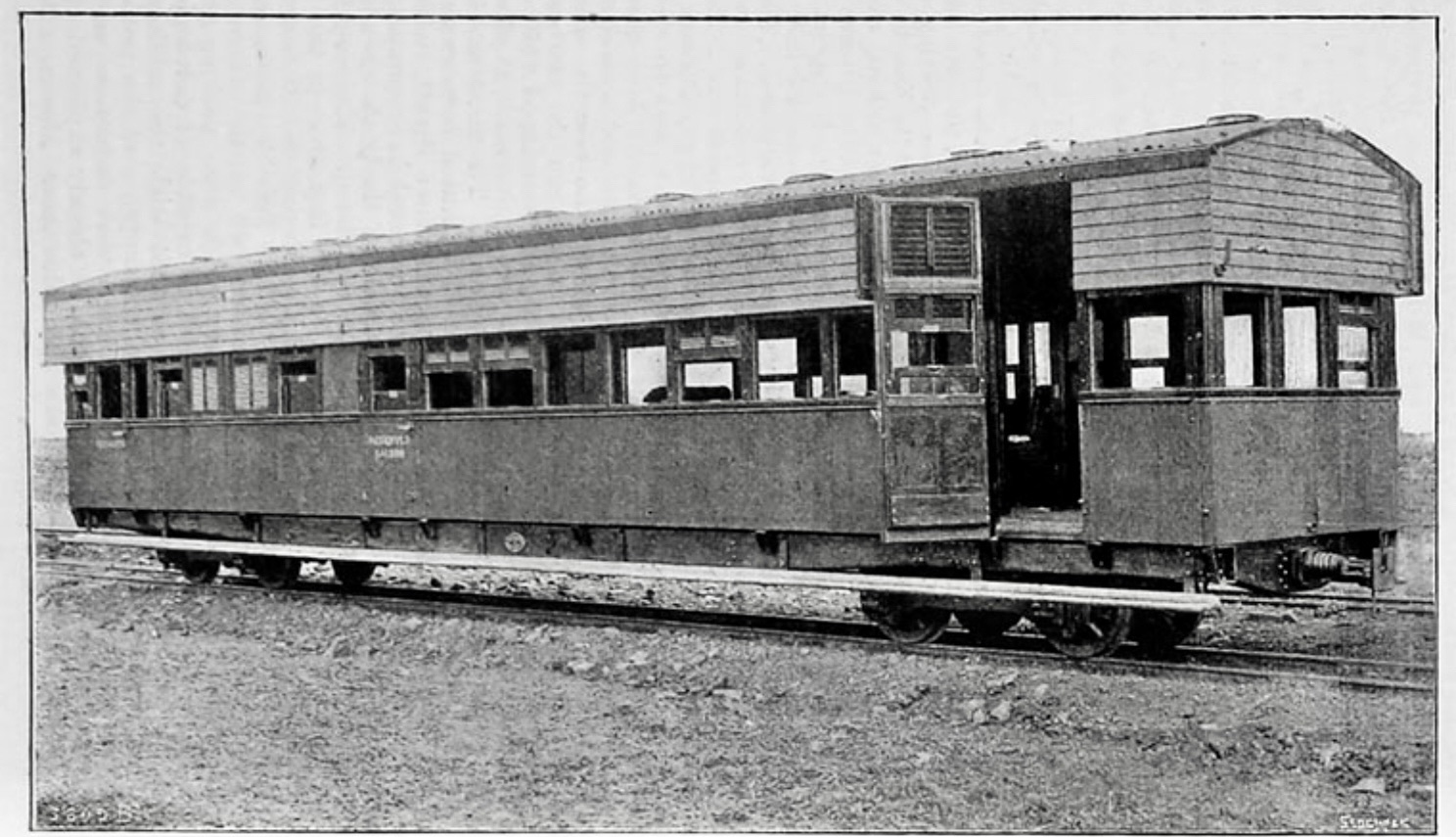
    A Locomotive of Barsi Light Railway

    1. Imperial Railways (Government-Owned Railways)

    • Overview: These railways were directly owned and operated by the British Indian Government. They were developed to serve the strategic and economic needs of the colonial government.
    • Purpose: Primarily used for military movement, administrative control, and facilitating the extraction of raw materials, such as cotton and minerals, for export.
    • Key Example:
      • East Indian Railway (EIR): Established in 1845, this was one of the first railways in India. It connected major cities like Calcutta (Kolkata) and Delhi and played a key role in controlling Northern India.
    • Legacy: These government railways formed the backbone of the railway network, and after independence, they became part of Indian Railways.

    2. Company-Owned Railways (Private Railways)

    • Overview: These were railways constructed and operated by private British companies, often with financial backing from the colonial government. Private companies were initially encouraged to invest in railways with the promise of guaranteed returns, which led to extensive railway development.
    • Purpose: These railways were often built to serve specific industries, such as plantations, coal mines, or ports, as well as major cities for passenger traffic.
    • Key Examples:
      • Great Indian Peninsula Railway (GIPR): Established in 1853, it connected Bombay (Mumbai) with major cities in western and central India, facilitating both passenger and goods transport.
      • Bombay, Baroda, and Central India Railway (BB&CI): This private railway connected Bombay with key industrial and commercial regions of Gujarat and Rajasthan.
    • Legacy: Most of these private railways were nationalized by the government in the early 20th century, forming the core of the Indian Railways system after 1947.

    3. State Railways (Princely State-Owned Railways)

    • Overview: Many princely states and regional authorities owned and operated their own railways, separate from the railways run by the British Indian government or private companies. These railways were constructed to serve local needs and were often smaller in scale.
    • Purpose: To improve local trade, connect isolated areas within princely states, and boost the economy by transporting goods like agricultural produce, textiles, and minerals.
    • Key Examples:
      • Nizam’s Guaranteed State Railway (NGSR): Operated by the Nizam of Hyderabad, it connected Hyderabad with major cities and played a key role in regional trade.
      • Mysore State Railway: Owned by the Kingdom of Mysore, it connected Mysore to Bangalore and was crucial for the local economy.
    • Legacy: After independence, these state railways were merged into the Indian Railways system.

    4. Feeder Railways and Branch Lines

    • Overview: These were smaller railways or branch lines that connected rural areas, smaller towns, or industrial centers with the main railway network. Often, they were built to serve specific regions, industries, or agricultural areas.
    • Purpose: To facilitate the movement of goods (such as grain, cotton, or timber) from rural areas to major trade routes and markets.
    • Key Examples:
      • Barsi Light Railway: A narrow-gauge railway in Maharashtra, built to serve agricultural areas.
    Barsi Light Railway
    • Darjeeling Himalayan Railway: A narrow-gauge railway that connected the tea plantations of Darjeeling with the plains of Bengal.
    • Legacy: Many of these branch lines were either integrated into larger railway networks or discontinued after independence, but some still exist today, especially as heritage railways.

    5. Narrow-Gauge and Light Railways

    • Overview: These were small-scale railways, often built in areas where it was too costly or impractical to construct broad-gauge lines. They were mostly constructed to connect rural and remote areas or to serve industries like mining or plantations.
    • Purpose: Narrow-gauge railways were cost-effective and required less infrastructure, making them ideal for connecting sparsely populated regions, difficult terrains, or for industrial purposes.
    • Key Examples:
      • Barsi Light Railway: A narrow-gauge railway connecting the Sholapur district of Maharashtra, known for its efficiency.
      • Kangra Valley Railway: A narrow-gauge line serving the hilly terrain of Himachal Pradesh.
    • Legacy: Some of these narrow-gauge railways were converted to broad gauge after independence, while others were preserved as heritage railways.

    6. Hill Railways

    • Overview: These railways were constructed in hilly or mountainous regions, using special engineering techniques such as zig-zags, spirals, and gradients to overcome challenging terrains.
    • Purpose: Primarily built to connect hill stations, which were favored by British officials as summer retreats, as well as for the transport of goods like tea and timber.
    • Key Examples:
      • Darjeeling Himalayan Railway: Established in 1881, this narrow-gauge railway connects the plains of Bengal to the hill station of Darjeeling.
      • Nilgiri Mountain Railway: Opened in 1908, it connects Mettupalayam with the hill station of Ooty (Udagamandalam) in Tamil Nadu.
    • Legacy: Some of these hill railways, like the Darjeeling Himalayan Railway and Nilgiri Mountain Railway, are now UNESCO World Heritage Sites.
    A Steam Locomotive on Darjeeling Himalayan Railway

    7. Industrial and Plantation Railways

    • Overview: These were railways built by private industrial or plantation companies to serve specific industrial needs, such as coal mining, tea plantations, or forestry. They often operated in remote areas and were primarily used for transporting raw materials rather than passengers.
    • Purpose: To transport raw materials like coal, tea, sugarcane, or timber to processing centers or ports.
    • Key Examples:
      • Cochin State Forest Tramway: Built for transporting timber from the forests of Kerala to Cochin port for export.
      • Tea Plantation Railways in Assam and Bengal: Narrow-gauge lines built to transport tea from plantations to the nearest major rail lines.
    • Legacy: Many of these lines became obsolete after independence, as road transport became more viable.

    8. Military Railways

    • Overview: These railways were constructed mainly for military purposes to move troops and supplies across British India, especially in border regions or areas prone to unrest.
    • Purpose: To ensure quick movement of troops during military campaigns or to maintain colonial control in restive areas.
    • Key Examples:
      • Sind Railway: Built to transport British troops to the northwestern frontier during colonial campaigns.
    • Legacy: These railways often became part of the general transport network after independence.

    Conclusion:

    The railway system in pre-independence India was diverse, consisting of different types based on ownership, purpose, and construction methods. This network played a pivotal role in shaping the economy, military strategy, and social dynamics of British India. After independence, most of these railways were integrated into Indian Railways, which remains one of the largest railway systems in the world.

  • Evening view of Marine Drive Mumbai!

    Evening view of Marine Drive Mumbai!

    Marine drive is in my opinion the most beautiful spot of Mumbai for enjoying an evening. Despite being crowded the place has a great vibe and it looks very happening in the evening. I had a special privilege of visiting the place during the COVID lockdown and it was at this time I was able to capture a beautiful sunset picture of Marine Drive with Mumbai skyline.

  • Shaniwarwada: A Great Historical Landmark of the Maratha Empire!

    Shaniwarwada: A Great Historical Landmark of the Maratha Empire!

    Shaniwarwada is a significant historical landmark in Pune, Maharashtra, and is deeply intertwined with the history of the Maratha Empire. Here’s a detailed overview of its history:

    Foundation and Construction

    • Built by the Peshwas: Shaniwarwada was commissioned by Peshwa Baji Rao I. He was the Prime Minister of the Maratha Empire. This happened in 1730. The foundation stone was laid on Saturday (Shaniwar in Marathi), hence the name “Shaniwarwada.”
    • Completion: The construction was completed in 1732. It was originally intended to be a grand seven-story structure made entirely of stone. However, a royal decree limited the use of stone for private buildings. Therefore, the upper floors were constructed with brick.

    Architectural Grandeur

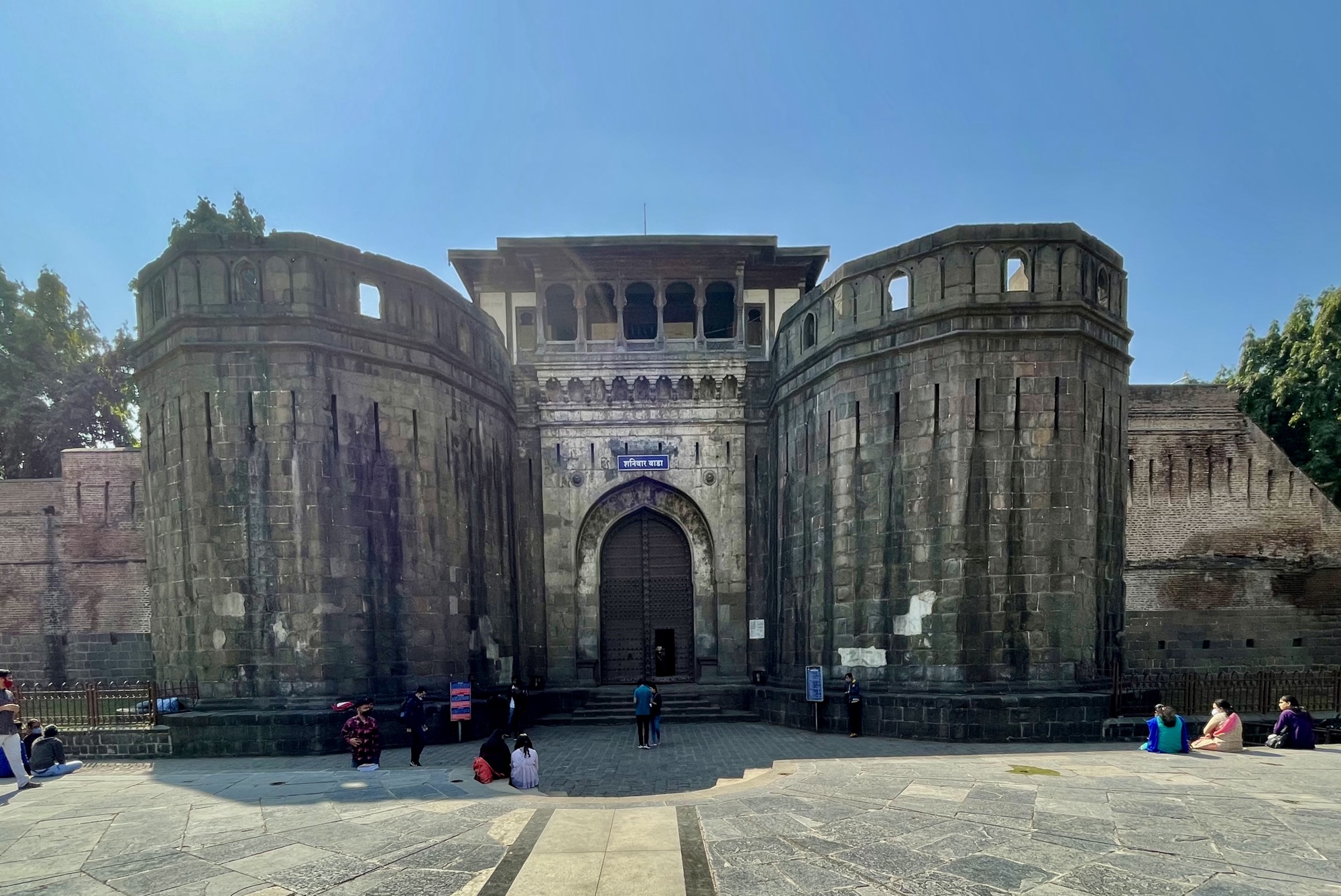
    • Delhi Darwaza: The main gate, called Delhi Darwaza, is a massive structure that could allow elephants to pass through. It is said that the gate was named to signify the Maratha’s aspiration to conquer Delhi.
    Dilli Darwaza( Shaniwarwada)
    • Other Gates: The fort had four other gates—Mastani Darwaza, Khidki Darwaza, Ganesh Darwaza, and Narayan Darwaza—each with its own significance.
    • Palace Complex: Shaniwarwada was more of a palace complex than a military fort. It housed several buildings, fountains, and gardens, displaying a blend of Mughal and Maratha architectural styles.

    Historical Significance

    • Peshwa Residence: Shaniwarwada served as the official residence of the Peshwas and was the administrative center of the Maratha Empire during its peak.
    • Baji Rao I: It was under Peshwa Baji Rao I’s leadership that the Maratha Empire expanded significantly. Shaniwarwada was his seat of power.
    • Narayanrao’s Tragic Death: One of the most infamous events associated with Shaniwarwada is the murder of Peshwa Narayanrao in 1773. The palace was the site of his assassination, allegedly orchestrated by his uncle, Raghunathrao. This incident is one of the darkest chapters in the history of Shaniwarwada.

    Decline and Destruction

    • British Capture: In 1818, the British East India Company took control of Pune, marking the decline of Maratha power. Shaniwarwada lost its importance and gradually fell into disrepair.
    • Fire of 1828: A devastating fire broke out in Shaniwarwada in 1828, destroying much of the fort. The cause of the fire remains a mystery, but it burned for seven days, leaving behind the ruins that are seen today.

    Present-Day Shaniwarwada

    • Historical Monument: Today, Shaniwarwada is a popular tourist destination and a symbol of Pune’s rich heritage. Although only the stone foundations and the main gate remain intact, the site still evokes the grandeur of its past.
    • Cultural Importance: The fort is also the site of various cultural events and historical reenactments, keeping the legacy of the Marathas alive.

    Visit to Shaniwarwada

    Things to See

    • Architecture: Shaniwarwada is known for its grand architecture. Much of the fort was destroyed by a fire in 1828. The surviving structures, including the imposing Delhi Darwaza (main gate), remain impressive.
    • Gardens: The fort complex has beautiful gardens where you can relax and enjoy the surroundings.
    • Light and Sound Show: In the evenings, there’s a light and sound show. It narrates the history of Shaniwarwada and the Maratha Empire. The show is available in Marathi and English.

    Best Time to Visit

    • Morning: Visiting in the morning allows you to explore the fort at your own pace without large crowds. There are no tour guides available. Make sure to read a bit about the place before you visit to appreciate the history and significance of the place.
    • Evening: If you want to catch the light and sound show, plan your visit in the evening. The show is interesting and I would recommend to watch the show to appreciate the Maratha History. In Pune the weather is usually pleasant hence you can visit this place at the time of your choice.

    Stories About Shaniwarwada

    The Tragic Story of Narayanrao Peshwa

    One of the most famous and tragic stories linked to Shaniwarwada is the murder of Narayanrao Peshwa in 1773.

    • Power Struggle: After the death of Peshwa Madhavrao I, his younger brother Narayanrao ascended to the throne. However, his uncle, Raghunathrao, was unhappy with this and wanted to claim power for himself.
    • Conspiracy: According to popular legend, Raghunathrao’s wife, Anandibai, played a crucial role in plotting Narayanrao’s murder. She is said to have altered a letter sent by Raghunathrao to his guards. The original letter ordered the guards to capture Narayanrao (“Dharaa” in Marathi). But Anandibai allegedly changed it to read “Kill Narayanrao” (“Maaraa” in Marathi).
    • Murder: On the night of August 30, 1773, a group of assassins entered Shaniwarwada and attacked Narayanrao. The young Peshwa ran through the palace. He cried out to his uncle for help (“Kaka, mala vachva” meaning “Uncle, save me”). Eventually, he was caught and brutally murdered.

    This incident is said to haunt Shaniwarwada to this day. Many locals claim that Narayanrao’s cries can still be heard on certain nights. These occurrences are especially noted on full moon nights.

    The Mystery of the Fire

    In 1828, a massive fire broke out at Shaniwarwada, destroying most of the fort. The fire is shrouded in mystery:

    • Unexplained Origin: The cause of the fire has never been definitively determined. It is said that the fire started late at night and burned for seven days, consuming most of the wooden structures within the fort.
    • Supernatural Theories: Some believe that the fire was not a mere accident. They think it had supernatural causes. It is possibly connected to the restless spirits of those who died tragically within the fort’s walls, including Narayanrao.

    The Curse of Shaniwarwada

    There is also a belief that Shaniwarwada is cursed:

    • Unlucky for Peshwas: Despite being the seat of power for the Peshwas, it is said that no Peshwa who ruled from Shaniwarwada had a long or peaceful reign. No Peshwa had a long or peaceful reign. The fort witnessed several power struggles, betrayals, and untimely deaths.
    • The Omen: Some locals say that Shaniwarwada’s troubles began right from its construction. During the foundation-laying ceremony, the Peshwa’s chief priest reportedly found bad omens in the astrological readings, predicting misfortune for the fort.

    The Haunted Fort

    Due to its tragic history, Shaniwarwada is often considered one of the most haunted places in India:

    • Ghostly Cries: The most famous paranormal phenomenon associated with Shaniwarwada is the ghostly cries of Narayanrao. Many visitors and locals claim to have heard his voice, especially on full moon nights.
    • Shadowy Figures: Some people have reported seeing shadowy figures within the fort. These sightings are particularly common in the areas that were most affected by the fire.

    Shaniwarwada stands as a testament to the Maratha Empire’s glory and its eventual downfall. It continues to be a place of great historical and cultural significance in Maharashtra. Anyone staying in Pune or just visiting Pune must visit Shaniwarwada for better appreciating the history of Marathas.