The Idea of India is a ‘non fiction’ book written by Prof. Sunil Khilnani. The book touches the various aspects of Indian History, polity and society with a special focus on the state of politics and democracy in post independence India. The book is divided into 4 chapters with each particular chapter discussing a particular facet of India’s history, polity or the state of economy.
The book is very lucid and intellectually stimulating to read. The writer uses many catchy lines to put up his points which puts an imprint of the readers’ minds. For example: while discussing about the Brahmanical order in ancient Indian society writer writes; ‘By renouncing political power, the Brahminic order created a self-coercing, self-disciplining society founded on a vision of a moral order. This society was easy to rule but difficult to change: a new ruler had merely to capture the symbolic seat of power and go on ruling as those before him had done.’ Similarly in the second chapter viz: ‘Temples of the Future’ the writer starts with the sentence: India in the 1950s fell in love with the idea of concrete.
Perhaps the best chapter in the book is chapter 3 ‘Cities’. The chapter discusses at length about Delhi a city built built by britishers and Chandigarh a city built to showcase the vision of independent India. Writer discusses at length how Nehru wanted Chandigarh to be the first Indian city showing the aspirations of Independent and progressive India.
The book ‘The Idea if India’ is a must read for those who want to understand the history of post independent India especially the Nehruvian phase and India’s experiment with ‘democratic socialism’. The book takes you through the journey of Indian state in from the initial days of independence to one becoming a nuclear power.
A recent release on Netflix, ‘Mr Harrigan’s phone’ movie is full of emotion suspense and ‘Horror’. Based on the short story of Stephen King, and directed by John Lee Hancock the movie revolves around a school going boy named Craig and a millionaire Mr Harrigon settled in small town of Harlow, Maine. In turn of events the millionaire Mr Harrigon a lonely person living alone chooses Craig to read books for him. One day Craig introduces Mr Harrigon to the world of mobile phone and teaches him the various uses of it. After using the phone for some time Mr Harrigon gets to understand the future effects of the mobile phone and word wide web popularly called as WWW.
The movie emphasis on two major social issues being faced by all the societies today:
First is the issue of loneliness in old aged people. Mr Harrigon despite being millionaire used to live alone in his ‘big’ home with no one to take care of him except his servants. This phenomenon is increasingly becoming evident in all the major societies. The large scale urbanisation has resulted into dehumanisation of people living in the cities. The movies tries to re-enforce the values of a family.
The second issue is of large scale use of mobile phones and internet by the modern societies. Mr Harrigon rightly remarks in the movie that those news articles which he can read free of cost on internet must have some hidden cost involved. As the polular saying goes: ‘if you don’t pay for the product then you are the product’. These things are now increasingly emerging into cyber frauds, online data breach and identity thefts etc.
Overall the movie is a good watch to understand the issues being faced by the older generations due to swift transition of societies into digital age.
A well known American author and businessman Lawrence Bossidy once remarked:
“I am convinced that nothing we do is more important than hiring and developing people. At the end of the day, you bet on people, not on strategies.”
The above quote brings about the critical role played by the human resources in any organisation. Indian Railways being the national transporter of the country and one of the biggest manpower employer in the world, the role of HR becomes even more important in this regard. HR role becomes critical also because Indian Railways has the responsibility of low cost mass transporter for the large scale masses in the country.
Brief history of HR:
Industrial revolution changed the history of world like never before. The means of production which were centred on small scale were now concentrated on big factories. This necessitated the need for process improvement and better human resource management. However the earlier focus was mainly on process improvement and standardisation which is seen in the works of Taylor, Fayol and other classical thinkers of management. It was only from the time of Elton Mayo that the focus starting shifting to better HR management. His theory of Human Relations was actually a precursor to the other theories of Motivation, leadership etc which actually build the foundations of Modern HR management. So from the time of classical era which treated human beings as RATIONAL ECONOMIC MAN, we have come to a stage where in the words of a famous HR experts “ HR plays the critical role in the success and failure of any organisation”.
Brief History of HR Management in Indian Railways:
One of the most fascinating Thing about Indian Railways is that it has a separate department and a separate group A organised service viz IRPS to manage the HR related work. However the same has evolved over a period of long time.
Till 1924, there was no separate organisation on the Railways to deal with the staff matters. Hence, Executive Officers had to deal with their own staff. However due to coming up of new lines and increased workload, the situation changed and many government managed railways introduced ‘Establishment Department’ after 1924. Early in 1946, the Railway Board decided that, on account of great increase in the volume and complexity of labour and establishment work on the Indian Railways, a distinct Railway Service should be established, with its own cadre, to be known as ‘Establishment Department’ of the ‘Superior Revenue Establishment’ of the State Railways. The recruitment for the same was to be done via Federal Public Service Commission. Mr. Ramaswamy Kannan of 1945 batch was the first officer to be recruited into the ‘Establishment department’.
The question of direct recruitment to Establishment cadre was re-examined in 1949 and the same was discontinued till the new service Named IRPS was established in 1975. The existing officers were given the option to be absorbed in other services.
Later on considering the increased workload Ministry of Railways decided to constitute a separate service named IRPS in 1975.. The recruitment for the same was to be done from UPSC. The first batch came out in 1981. The same arrangement has been going on till date. So at present the HR in IR is being managed by Personnel Department in consultation with respective departments.
Role of HR in enhancing productivity and efficiency:
Indian Railways is highly manpower intensive organisation with around 13.50 lakh employees. Its employees are spread over 17 zones, 68 Divisions, 6 Production Units, 16 Public Sector Undertakings, and organised into 358 categories and 20 levels. In this context the role of HR and HR management becomes critical in enhancing productivity.
Following are certain ways through HR enhances productivity and efficiency:
In words of Steve Wayne, “Human Resource isn’t a thing we do, it’s the thing that runs our business”. From this statement it is clear that HR is the key variable that decides the success or failure of any organisation.
Taken in context of Indian railways HR is mainly responsible for safe train operations and timeliness of trains. Eg; the station masters, the loco pilots, guards etc are pivotal for safe train operations. Any drawback on part of HR can jeopardise the lives of many innocent individuals.
In the times of great ICT revolution, coming up of AI, BIG DATA, HR remains the key variable for deciding the productivity of any organisation.
HR in Indian Railways at present:
Indian railways is a big organisation employing 13.28 lakh employees and around 13,000 officers. Indian Railways has made elaborate arrangements for various processes of HR for proper HR management.
Recruitment:
“You’re not just recruiting employees, but are sowing the seeds of your reputation.”
In this context Indian Railways has adopted a very comprehensive recruitment process.
Training:
Indian Railways is a technology oriented organisation. It involves running of trains carrying thousand of human lives. Even a slightest mistake on part of the crew or guard or other running staff can be fatal for thousands of innocent human lives. This is the prime reason why Indian Railways has made elaborate arrangements for training of officers as well as staff.
Other aspects of HR management in Indian Railways:
Apart from elaborate arrangements for recruitment and training Indian Railways has established a whole department named Personnel Department which is involved in employees welfare. Indian Railways has a cadre of welfare inspectors and a junior scale post of APO Welfare in every division for ensuring employee welfare and organising summer camps, welfare initiatives like health check up, etc.
However despite having such an elaborate HR management structure Indian Railways still suffers from major issues in the field of HR. As per various reports Indian Railways is not being able to acquire the required talent in the changing times. Also the training structure and training content is old and it has outlived its utility.This is one of the prime reasons for falling operating ratio of Indian Railways. In this context following are some of the broad based suggestions that Indian Railways will have to adopt to make itself a good competitor vis a vis Road and Airlines sector.
Comprehensive HR Management In Indian Railways: Some Suggestions:
As it is widely recognised, there are 5 main roles in HR
Talent management
Compensation and benefits
Training and development
HR compliance
Workplace safety
In the above context certain suggestions for better management of HR are summarised as under.
Recruitment: Need to adopt certain changes:
Recruitment being the entry point of anyone in the organisation, any change at this level will change the quality of human resource significantly. In December 2019 a decision to restructure the Railway Board and merge the cadre of 8 different services in Railways was taken. However there is no proper clarity on the details of that decision. The issues can be resolved at priority in the interest of all concerned so that the deficit of recruitment at the officers level can be sorted out.
Also for the staff recruitment Union Cabinet has decided to set up National Testing Agency which is likely to improve the quality of Human Resource joining the Railways.
In this context one more important thing to add is that due to large scale technological changes taking place and coming up of ICT on a large scale like TMS, IPAS, UMMID, HRMS Etc there is a need to evolve a cadre dedicated to the IT related tasks. This can help in better using the IT tools to enhance productivity of Indian Railways.
Training:
At present training is being imparted by various institutions like different CTIs for officers and ZRTI, BTC, DTC, PTC etc for staff which makes the entire training process very fractured and ad-hoc. In this context the context the concept of MDDTI for staff training has been mooted which when implemented will be game changer in training matters.
MDDTI:
MDDTI stands for multi disciplinary divisional training institutes. The concept was mooted by the transformation cell in railway board. The idea is to bring about the training in all the disciplines in railways under one roof. This will help In effectively mobilising the resources using economy of scale. This will also help in imparting multidisciplinary training among the staff which will help In multi-skilling. Another very important impact of this will be reduced departmentalism as training under a single roof will sensitise the staff toward the problems of other departments.
HRMS: A dawn of new era of HR management in IR:
HRMS stands for Human Resource Management System. This is a comprehensive software digitising all the routine HR related works like leave, settlement, e-pass, APAR etc among others. This is intended to sort out many of the present shortcomings in the HR management. Among many other things it is intended to bring about efficiency, accountability, and transparency in HR management.
HRMS In Action:
Till date 7 modules have been launched including e-Pass, APAR, Settlement, PF withdrawal, Post Retirement Complimentary Pass, Executive SR sheet. These modules have digitised to a large extent the working of HR. Earlier the turn around time for e-pass used to be around 6 to 12 hours which have now been reduced to less than 30 minutes. Also the earlier issue of pass being issued only from dedicated office has now been liberalised which has immensely helped the staff.
The PF withdrawal module has also helped fasten the PF withdrawal process as compared to the earlier module.
The most significant among the above modules is settlement module which is in the process of being operationalised. Once fully operationalised this will hugely reduce the time and effort in processing the settlement dues.
The other modules which are likely to be launches are leave record, selection etc which will completely digitise the personnel management work and this will help the executive in focussing upon broader task of Human Resource Management. This will also help in prioritising the welfare activity by the personnel department. Rail Pariwar Dekh Rekh Muhim by Personnel Department Central Railway is one such example.
Way forward: A new era for HR:
Debroy committee when recommending upon the HR reform in Indian Railways suggested that the reorganising the top/officer level HR is very important. In this context it suggested following schematic diagram for a future HR in Indian railways;
Also the committee suggested for the logical grouping of employees in following manner:
In the context of above railways should move towards a new era of HR which is SMART i.e. SIMPLE MORAL ACCOUNTABLE RESPONSIVE And TRANSPARENT. Only a SMART HR can enshrine Indian Railways in a new era of transportation.
World environment day is celebrated every year on 5th of June. The day is celebrated as the environmental conservation day by the United Nations with the participation from the governments /NGOs worldwide to raise awareness regarding the environmental issues like global warming, deforestation, loss of wildlife etc. 5th June was chosen because the first UN conference on Human environment was held in Stockholm on this day.
Over the years the environmental conservation efforts have taken many forms like sustainable development, afforestation, green cities, green buildings etc, but only recently there has been a talk of green HR. As a HR professional working for Indian Railways I can definitely say that if this idea is implemented properly this can change the whole mindset and administration of environmental conservation.
Ramchandran defines green HRM as integration of environmental management into human resource management. The idea here is to devise such HR practices which can contribute to broader environmental conservation efforts. Some of these ideas include car pooling, conducting meetings through video conferencing, online recruitment and training etc.
Many green HR initiatives have been taken in Indian Railways at different levels at different times. Some of such efforts include massive plantation drive by the railway officers and staff during the environment day and other times as well. Also to promote environmental awareness questions from environment are being asked at various departmental exams under general knowledge section. Also certain enthusiastic officers like Mr Somesh Kumar ex-DRM Nagpur division have started initiatives like coming to office by cycling on every Thursdays, starting a specific competition of Fit India to promote healthy living among officers and staff.
COVID 19 pandemic has forced to reinvent the workplace and many of the green HRM practices are now being increasingly used Like holding meetings through video conferencing, conducting interviews and training through video conferencing, use of e-office for office working etc.. This is a welcome development which needs to be continued.
However the various ideas of green HRM are yet to emerge at organised level in Indian Railways. Certain ideas that can be implemented in this regard are as under;
Inclusion of environment as syllabus at all stages of selection on the pattern of UPSC. Also environment related aspects can be added in the training syllabus.
Environment awareness drive can be conducted from time to time to raise awareness about environment issues.
A revolutionary idea can be linking environment conservation efforts in the ARAR of officers which will give much needed push to environment conservation efforts.
Moving toward complete digitisation through initiatives like e-office and other such measures in the long run.
As remarked by Gandhiji ‘Nature has enough for everyone’s need but not for anyone’s greed’. So there is need to promote HR practices in such a way that ensure sustainable and healthy living in the workforce.
Indian Railways is a mammoth organisation employing around 13.08 lakh workforce spread across the length and breadth of the country. This makes Indian Railways the largest employer in India. However at the same time this also makes the management of this humungous workforce a key challenge of Industrial relations.
Unions in Indian Railways:
Trade union history of Indian Railways is as old as the labour movement in India. Labour Movements started in India around the 1870s. The first employees organisation in IR was formed in 1897. It was named “Amalgamated Society of Railway Servants of India and Burma”. This happened in the backdrop of a strike conducted by Guards.
Post independence Article 19(c) of the Indian constitution allowed Indian citizens to form associations and Union as a fundamental Right. Trade Union Act 1929 allowed for any 7 or more members in an organisation to form a trade Union. Trade unions flourished in Indian Railways after independence. However the real need for management of Industrial relations was felt only after the Indian Railway strike of 1974. The strike lasted for 20 days from 8 to 27 May 1974. Around 17 lakh workers participated in this strike and till date this strike is the largest recorded industrial action in the world.
Administrative Changes after the strike:
Various forums like Permanent Negotiating Machinery (PNM) and Participation of Railway Employee In Management (PREM) have already existed in Indian Railways. However post 1974 strike these forums were strengthened. A dedicated group A service named IRPS (Indian Railway Personnel Service) was created. This service addresses day to day issues of employee grievances. It also manages Industrial relations.
PNM
The term PNM stands for Permanent Negotiation Machinery. PNM was set up in the year 1952 and came into force from 1.1.52. As it is clear from the name itself it is a continuous negotiation forum. The meetings are held at division level, Zonal level and Railway Board level as per the schedule decided in consultation with the Unions. The meetings are mostly based on the principle of collective bargaining.
PREM
Indian Railways recognises the role of every single employee in smooth running of the organisation. It is precisely due to this reason that PREM was set up in Indian Railways based on the pattern of Whitely council in UK. The term PREM stands for Participation of Railway Employees In Management. Similar to the PNM the meetings are held at Division level, zonal level and Railway Board level as per the pre-decided schedule. The main objective is to evaluate the functioning of railways, mutual exchange of ideas for improving the efficiency and viability of the organisation.
Apart from the above two forums, there are other forums. These include quarter committees for inspection and management of railway quarters. They also include the staff benefit funds committee for management of staff benefit fund. There is also the canteen management committee. Additionally, there is the Labour advisory committee. These other forums are also in existence for collective management of quarters, canteens etc.. These forums provide for participation of employees in management which is also one of the directive Principles of state policy( article 43A) in Indian Constitution.
It is fascinating to mention here that employee-employer relation in Indian Railways is not restricted only to administration and staff relations. Rather, it covers the families of the staff as well. There are provisions for children Education allowance, employee children camps hostels for the wards of the Railway employees, railway schools etc. which cater to the needs of the families of the Railway staff. This makes the Industrial relations management in Indian Railways a very comprehensive and inclusive exercise.
Have these forums been effective?
The staff in Indian Railways works round the clock throughout the year many a times at very difficult and inaccessible locations. Unions through these forums have been able to brought about the issues of such railway employees before the railway administration which otherwise could have been missed by the administration. Seen in this context these forums have promoted larger cohesiveness in the organisation and have also provided for employee-management connect. Post 1974 strike Indian Railways has never witnessed any strike on a major scale. A major reason among others for this has been the efficient functioning of these forums. They have brought the employee’s issues to the negotiation table.
Indian Railways has devised a good structure of Industrial relations. This structure has ensured resolution of employee grievances. It achieves this through continuous discussion and dialogue.
UPSC civil services exam is probably the most ‘Challenging’ exam in India. This exam has been repeatedly listed as one of the most difficult exams across the world due to its low success rates. The difficulty of this exam primarily comes from following factors:
The background of the candidates appearing in the exam is very varied. In civil services exam one can find candidates from backgrounds like humanities, engineering, medical and many more. This diversity of background of candidates makes this exam very interesting and challenging.
There are around 10 lakh candidates appearing for this exam every year, whereas the number of seats per year varies from 750 to 1000 which makes it an exam for rejection rather than selection.
The mains exam of UPSC as the name suggests is the main exam of UPSC which decides the selection of a candidate. This is so because the total marks allocated for mains exam is 1750 which is way more than the marks allocated to the interview which is 275. Hence scoring high marks in mains exam is a pre requisite for getting into the final list of UPSC. One of the most important aspect of high scoring in Mains exam is “Art” of good answer writing which I am going to discuss in the following paras now.
What is a good answer in UPSC? A good answer from UPSC perspective constitutes following points:
It should be perfect mix of facts, ideas, arguments and solutions.
The facts should be used in the answer to support the arguments and emphasise a point rather than just for sake of putting the facts.
The answer should always be multidimensional rather than being uni-dimensional. For example; A question on causes of poverty should be answered from social, economic, geographic political environmental and administrative angles rather than only through the economic or political angle.
The most important aspect of answer writing is writing what is asked rather than writing what you know. This is where many candidates commit fault as they just write whatever they know about the topic in the question rather than writing as per the demand of the question.
The answer should be easy to read and understand so it is advisable to use simple language.
How to Write a Good Answer in UPSC? Writing a good answer in UPSC is a result of good knowledge of the particular topic asked, good understanding of the question especially the key words like critically analyse/discuss/ examine/critically examine/comment etc. and the ability to present the knowledge in a structured and easy to understand manner. The first part viz. knowledge only comes from continuous reading hence it is advisable for the candidates to cover the whole syllabus at least thrice before appearing in the exam. However the second and third point require what is popularly called ‘Answer writing skill’, hence I will be discussing these two points in some detail in following points:
The first and foremost important aspect in art of good answer writing is understanding the demand of the question. Candidates are advised to read the meanings of the words carefully and especially focus upon the last keywords like analyse/discuss etc. Vision IAS has given a list of detailed meaning of different keywords, the link for the same I am sharing. All candidates are strongly advised to go through it. www.visionias.in/beta/sites/all/themes/momentum/files/Keywords.pdf
The second important aspect here is presenting whatever knowledge one has in a structured, lucid and easy to understand manner. Here I would recommend writing the answers in the following format: INTRODUCTION – MAIN BODY – CONCLUSION. An important thing to keep in mind here is that introduction should be at most 20% of the answer, main body 60-65% and conclusion 15-20%. This way one can maintain the balance of the answer.
The Introduction: The introduction should always be about the overall structure and the basic vision of the answer.
The Main Body: As said earlier the main body should cover the multiple dimensions of an answer in an structured format.
The Conclusion: While writing the answer one should keep in mind that conclusion is the last thing an examiner reads before giving the marks. Hence it should be written with utmost sincerity. The conclusion is not about summarising the answer rather it is about the possible solutions to the problem and vision for the future.
How to Maximise score in a paper?
In UPSC as the competition is very high there is a fight for every single marks. In this context it is very important to maximise the scores if one wants to get into the list or get into the higher ranks. Hence here I am sharing some tips for maximising the scores in the mains exam.
The first and foremost requirement is to attempt all the questions. For this it is necessary that the writing speed is increased and the topics should be revised multiple times so that one doesn’t invest too much time on recalling in the examination hall.
Along with attempting all the questions it is also required that one produces all the knowledge that he has in the question paper. For this it is required that all the questions are given equal emphasis rather than certain questions being more emphasised than others.
Quite often I have seen that candidates are not able to answer simple questions perfectly. It is necessary that simple questions are answered perfectly to get a competitive edge.
While answering a relatively ‘unknown’ question follow one thumb rule- If you don’t know the answer, write about the the question. This will help in getting few marks in a question. However this should only be done when one has attempted all the known questions ‘perfectly’.
Lastly I would like to say that in UPSC mains a set of 3-4 questions in each paper decides whether a candidate will be in or out of the ‘list’ because rest of the questions everyone answers properly. These 3-4 questions if answered properly can make all the difference. Hence candidates should focus on their writing skills. This can be achieved by practice along with right strategy.
India is a country of astonishing geographical diversity. From the snow-clad Himalayas in the north to the tropical islands of the Indian Ocean in the south, every region tells a different story. Among these countless landscapes lies one of the most fascinating destinations I have ever visited—Dhanushkodi, a windswept ghost town perched at the southeastern tip of Tamil Nadu.
I visited Dhanushkodi in 2019 during my journey to Rameswaram. While Rameswaram is renowned as one of the holiest pilgrimage destinations in India, Dhanushkodi offers something entirely different—a rare blend of history, mythology, tragedy and breathtaking natural beauty.
The Road Leading to Dhanushkodi- India’s Last Road
The Road That Leads to the End
Dhanushkodi lies about 19 kilometres from Rameswaram town, connected by a spectacular two-lane road that stretches through the sea. Popularly known as “India’s Last Road,” it feels like driving towards the edge of the country.
As the road narrows, the landscape changes dramatically. The sea appears on both sides, shimmering under the tropical sun, while the horizon seems endless. The feeling is unlike any other road journey in India. With the Bay of Bengal on one side and the Gulf of Mannar on the other, every kilometre offers magnificent views of the ocean.
Standing at the end of this road evokes a unique emotion. Beyond lies only the vast sea separating India from Sri Lanka, barely a few dozen kilometres away. It is easy to understand why visitors often describe this as standing at the edge of the Indian mainland.
The Ghost Town That Time Forgot
Long before it became a tourist attraction, Dhanushkodi was a thriving coastal settlement. It once had a bustling railway station, a post office, schools, churches, customs offices and a vibrant fishing community. A metre-gauge railway connected Dhanushkodi with Pamban and the rest of southern India, making it an important transit point for pilgrims and travellers heading towards Sri Lanka. Everything changed on the night of 22 December 1964. A devastating cyclone struck the region with catastrophic force. Massive tidal waves engulfed the town, destroying homes, public buildings and railway infrastructure. One of the most tragic incidents occurred when the Pamban–Dhanushkodi passenger train was swept away by the sea, claiming the lives of all those onboard. The destruction was so complete that the Government of Tamil Nadu later declared Dhanushkodi unfit for permanent human habitation. Over the decades, the once-thriving town gradually transformed into a ghost town, with only the haunting remains of churches, railway structures and abandoned buildings standing as silent witnesses to the tragedy. Walking among these ruins is a deeply moving experience. They remind visitors of the immense power of nature and the fragility of human settlements along the coast.
Where Mythology Meets Geography
Dhanushkodi occupies a unique place not only in history but also in Indian mythology. According to the Ramayana, this is the place where Lord Rama and his Vanara army began constructing the legendary bridge to Lanka in order to rescue Goddess Sita from Ravana. The bridge, popularly known as Rama Setu or Adam’s Bridge, is believed by many to have connected India with Sri Lanka through a chain of limestone shoals stretching across the shallow sea. The name Dhanushkodi literally means “the end of the bow.” According to tradition, after returning victorious from Lanka and crowning Vibhishana as its king, Lord Rama used the tip of his bow (dhanush) to break a portion of the bridge so that no invading army could use it. Whether viewed through the lens of faith, mythology or cultural heritage, these stories have made Dhanushkodi an enduring symbol in the Indian imagination.
A Landscape of Extraordinary Beauty
While history and mythology draw visitors to Dhanushkodi, its natural beauty leaves the deepest impression. The crystal-clear blue waters on either side of the road create a spectacular panorama. Gentle waves, soft white sands and the constant sea breeze make the journey itself unforgettable. The changing shades of blue—from turquoise near the shore to deep sapphire farther out—create a scene that almost feels surreal. Unlike many beaches crowded with commercial activities, Dhanushkodi still retains an atmosphere of raw wilderness. Sitting quietly by the shore, listening to the rhythmic sound of the waves and watching fishing boats in the distance is an experience that encourages reflection and peace.
The region is also known for its rich marine biodiversity. The nearby Gulf of Mannar Biosphere Reserve supports coral reefs, seagrass meadows, sea turtles, dolphins and hundreds of marine species, making this coastline ecologically significant as well as visually stunning.
The Beautiful Beach of Dhanushkodi
Tourism and Changing Times
For decades, reaching Dhanushkodi required travelling over sandy tracks in specially modified vehicles. Today, the construction of the new all-weather road has made the destination accessible to travellers from across the country. This improved connectivity has transformed Dhanushkodi into one of Tamil Nadu’s most popular coastal attractions. While tourism has brought economic opportunities to local communities, it has also resulted in increasing crowds, particularly during weekends and holidays.
Visitors should therefore consider arriving early in the morning or close to sunset to experience the place at its most serene. At these times, the soft light, quieter surroundings and cooler temperatures reveal Dhanushkodi in its most captivating form.
Visitor Information
Location: Approximately 19 km from Rameswaram, Tamil Nadu
Nearest Railway Station: Rameswaram
Nearest Airport: Madurai (around 175 km)
Best Time to Visit: October to March
Ideal Duration: Half a day, combined with a visit to Rameswaram Temple and Pamban Bridge
Some destinations impress with monuments, while others captivate through wildlife or mountains. Dhanushkodi is different. It is a place where history, mythology and nature converge in a landscape unlike any other in India.
Walking on the road popularly known as India’s Last Road, with the sea stretching endlessly on both sides, is an experience that is difficult to describe in words. The abandoned ruins tell stories of resilience and loss, while the legends of the Ramayana add a timeless spiritual dimension to the journey.
For anyone travelling to Rameswaram, a visit to Dhanushkodi is far more than a sightseeing excursion. It is an opportunity to stand at the edge of the Indian mainland, witness the immense power of the sea, reflect on one of the country’s greatest natural disasters, and experience a place where geography, history and mythology come together in remarkable harmony.
Even years after my visit in 2019, the memory of standing at that lonely stretch of road, gazing across the waters towards Sri Lanka, remains one of the most unforgettable moments of my travels.
The word Andharban means dark dense forest and those who have visited Andharban will say that the place justifies the meaning of the word. The trek is located in the famous ‘Tamhini Ghat’ and takes around 6/7 hrs to complete. The Andharban trek is of easy to moderate difficulty level however being a journey of around 15 km a high level of endurance is required for the trek. It is one of the few treks in Sahyadris where the starting and end points are different. The trek starts from Pimpri Dam in Pune district and ends at Bhira dam in Raigarh district covering the wide variety of landscapes of Sahyadris like Valleys, plateaus, waterfalls and river streams.
Pimpri Dam-The Starting Point of AndarbanTrekking GroupBeginning of Andarban Trek
How to Reach Starting Point?
Pune is the closest located city for Andharban trek. The distance of Pimpri dam, the starting point of the trek is around 60 Km from Pune and it takes around 2 hrs to reach the starting point from Pune. It is recommended to start the journey from Pune early so that trek can be started latest by 8 o’clock. We started our journey from Pune by 7 o’clock and then we has our breakfast at a restaurant near starting point before starting the trek. It is always advisable to have a proper breakfast before starting the trek.
On the Way to ‘Andharban’
The Andharban Trek: Key Highlights
1. Dense Forest
The Andharban trek is unique because much of the trail passes through a dense forest, which is often shrouded in mist, especially during the monsoon season. The name “Andharban” literally translates to “dark forest,” and the trek lives up to its name with the thick canopy that blocks much of the sunlight, creating a mysterious and enchanting atmosphere.
2. Scenic Views
The trek offers stunning views of the Kundalika Valley, Bhira Dam, and the surrounding mountain ranges. On a clear day, you can see the green valleys stretching far into the horizon. During the monsoon, the trail is adorned with countless small waterfalls and streams, adding to the trek’s beauty.
3. Waterfalls and Streams
Along the route, trekkers will encounter several waterfalls and streams. These natural water bodies are most active during the monsoon, providing a refreshing experience as you traverse the forest.
4. Flora and Fauna
The Andharban trek takes you through a biodiversity-rich region. The forest is home to various species of flora and fauna, including many types of birds, butterflies, and small wildlife. The dense foliage and the presence of various plants make it an exciting trail for nature enthusiasts.
Views of Western Ghats in Andharban Trek
Trekking Route
1. Starting Point – Pimpri Village
The trek begins at Pimpri village, which is the base camp for the Andharban trek. Pimpri is accessible by road from Pune, Lonavala, and Mumbai. The village serves as the starting point where trekkers can prepare for the journey ahead.
2. Into the Dark Forest
As you start the trek, you’ll quickly enter the dense forest. The initial part of the trek involves descending through the forest, with the trail gradually leading you downhill. The path is well-defined, but it can get slippery during the monsoon, so proper trekking shoes with a good grip are essential.
3. Hirdi Village
About midway through the trek, you’ll pass through Hirdi village, a small settlement in the middle of the forest. This is a good place to take a short break, rehydrate, and enjoy the serene surroundings.
4. Descending to Bhira Dam
After Hirdi village, the trail continues to descend, with views of the Bhira Dam becoming more prominent. The final stretch of the trek involves navigating through the forest and emerging at the backwaters of the Bhira Dam, where the trek concludes.
The Andharban trek takes you to the lush green forest of Sahyadris and to the views which you may not have witnessed in your lifetime. The trek route passes through some of the Most beautiful places in the Tamhini Ghat. It has all the places that a ‘perfect’ trek has to offer viz. beautiful valleys, astounding water streams, dense forests and a wide variety of flora and fauna. The trek tests the endurance level of the trekker and once you complete the trek it gives you a sense of achievement. Since the trek is long it is preferable to have lunch at a village located in between the trek route. The food quality is good and one gets to taste a local food.
The End Point of Andharban Trek
The end point of the trek is Bhira dam which is located in the Raigad district of Maharashtra. From here one can take his vehicle and commute to his respective place. The only issue in this trek is that one has to get a vehicle with driver as the start and end points are different and the distance between both the points via road is around 40 Km.
Overall Andharban trek is a must do trek at least once. Along with stunning natural beauty one gets to know his endurance level and his willpower also in this trek. The trek is especially recommended in the Monsoon time as the views are stunning during this time.
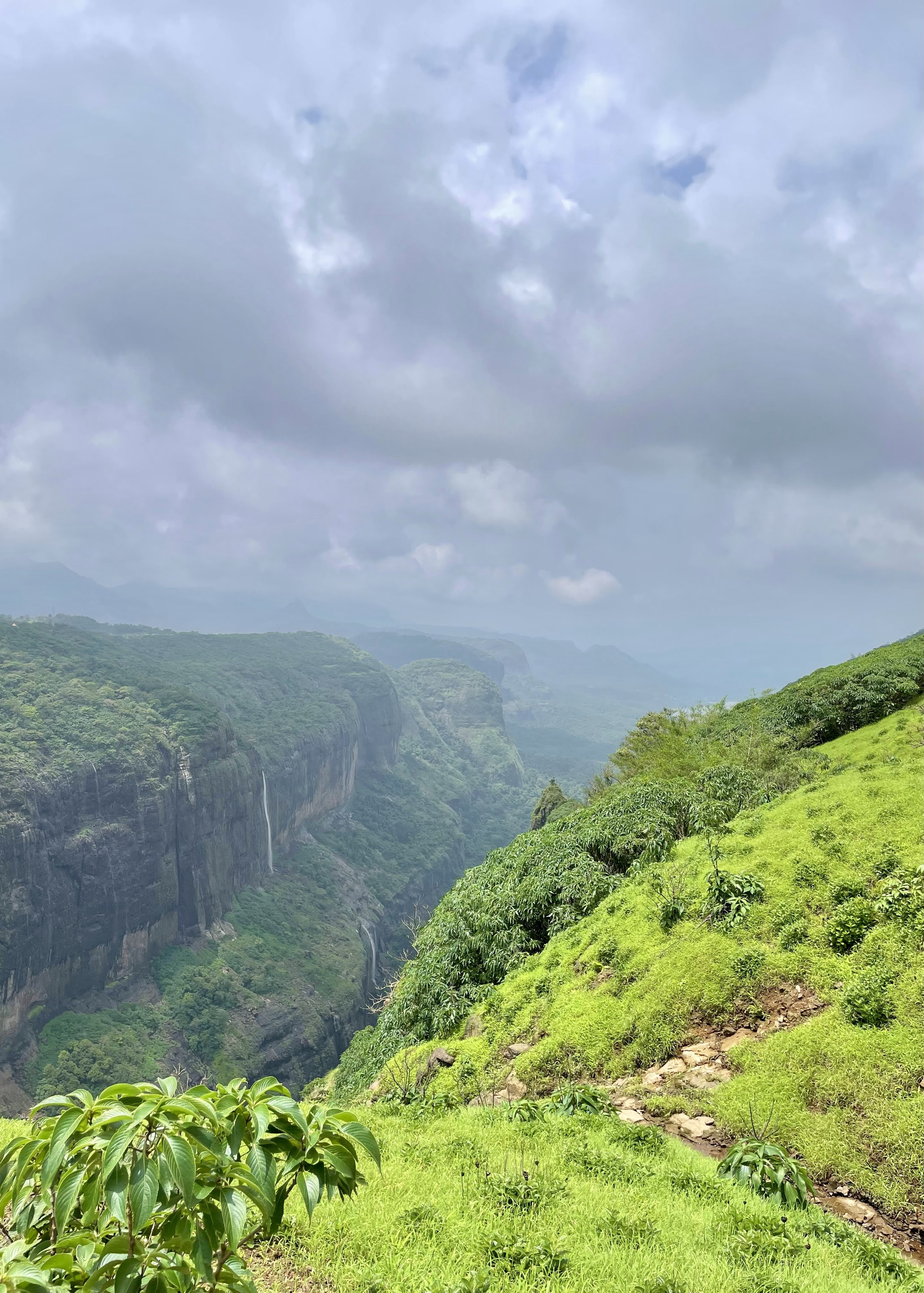
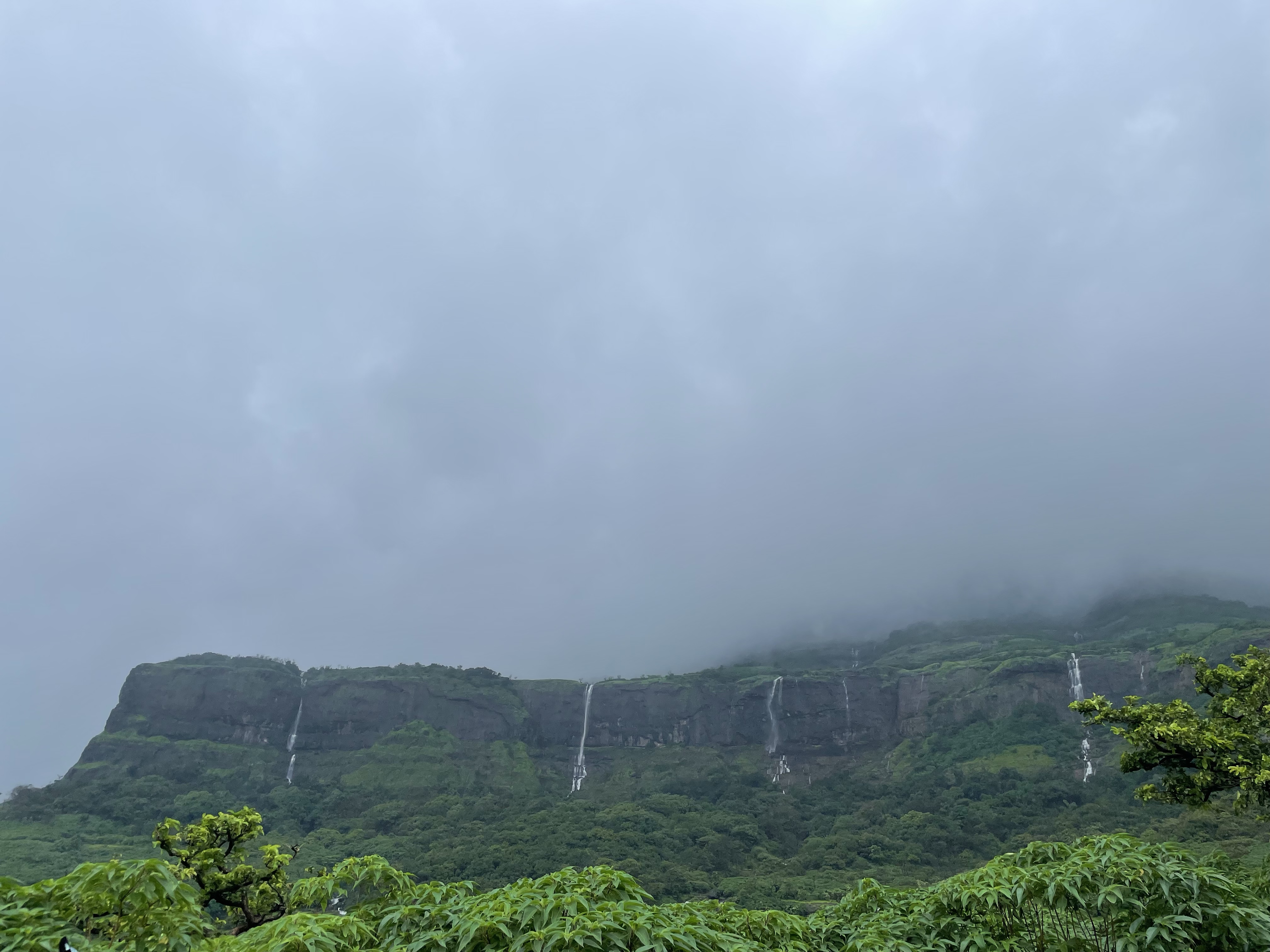
Aadrai is a place located at around 120 Km from Pune city. The place is well connected from Pune, Nasik and Mumbai. The place is Located in one of the Most beautiful Ghats of Sahyadri’s viz. Malsej Ghat, and is peculiarly known for its scenic beauty and breathtaking views.
The Aadrai Jungle Trek is one of the newer and lesser-known trekking routes in Maharashtra, offering adventurers a chance to explore a pristine and untouched forest in the Sahyadri mountain range. Known for its dense forests, hidden waterfalls, and tranquil atmosphere, the Aadrai Jungle Trek is perfect for nature lovers and those looking to experience the wilderness away from the more crowded trekking routes.
View of Sahyadri on Aadrai Trek
How to Reach the Base Village
We started our journey to Aadrai Jungle Trek early in the Morning from Pune. If you are goin from Pune or Mumbai it normally takes 3 hrs to 3hrs 30 minutes to reach the base village. After reaching in the base village, we have had our breakfast at our Local Tour’s house. If you are going for Aadrai Jungle trek it is recommended to go with a local guide otherwise you are likely to get lost. Also your will not be able to see many good places on the way. The trek is simple with not much significant elevation so even the children can easily do it.
Starting point of the trekStarting Point of Aadrai Trek
Key Highlights of the Trek
1. Dense Jungle Experience
The Aadrai Jungle Trek is famous for its dense and lush forest cover, which remains largely unexplored and undisturbed. The thick canopy overhead makes parts of the trek feel dark and mysterious, providing an immersive experience in nature.
Forest in Aadrai Trail
2. Waterfalls and Streams
During the monsoon season, the forest comes alive with several waterfalls and flowing streams. Some of these waterfalls are hidden deep within the forest, and the trek offers a unique opportunity to discover these serene spots.
The first waterfall
3. Ancient Caves
The trek also passes by ancient caves, which are believed to be used by monks and ascetics in the past. These caves add a historical and cultural dimension to the trek, making it more than just a walk through nature.
Buddhist cavesAn Old temple
4. Scenic Views
As you progress through the trek, you’ll be rewarded with panoramic views of the surrounding valleys and mountains. The sight of mist-covered hills and the lush green landscape is especially captivating during the monsoon season.
The first ValleyA beautiful treeA giant Waterfall
5. Wildlife and Flora
The Aadrai Jungle is rich in biodiversity, with various species of plants, birds, and small animals. The trek offers a great opportunity for birdwatching and spotting some of the region’s unique flora.
Trekking Route
1. Starting Point – Khireshwar Village
The trek typically begins from Khireshwar village, which is near the famous Malshej Ghat. The village serves as the base camp where trekkers gather before starting the journey.
2. Into the Forest
The trek takes you deep into the Aadrai forest, with the trail gradually winding through thick vegetation. The sound of rustling leaves, chirping birds, and flowing streams creates a serene ambiance as you make your way through the jungle.
3. Waterfalls and Streams
As you venture deeper, you’ll come across multiple streams and waterfalls. The highlight of the trek is a large waterfall hidden within the forest, where trekkers often take a break to enjoy the refreshing water and the natural beauty.
4. Exploring Caves
The trail also leads to ancient caves, which provide a glimpse into the region’s historical significance. These caves, often covered in moss and surrounded by dense foliage, are fascinating to explore.
5. Return to Khireshwar
After exploring the depths of the forest, the trek circles back to Khireshwar village, where you can relax and reflect on the journey.
The end point of the Trek
Overall the entire trek takes about 6 hrs to complete with only a few tricky/ moderately difficult patches in between. The best part of this trek is that it never becomes monotonous as there are always new kind of views ahead and the trekker is always surprised and awe inspired. On return to the base village we had our lunch at the house of our Guide and then we returned to our places. At the end i would say Aadrai Jungle trek is a must place to venture and experience the pristine beauty of Sahyadris. On this trek the trekkers comes across everlasting landscape, awe inspiring waterfalls, buzzing streams soaking heavy rain to make it an ever-memorable experience.
There are some destinations that leave a lasting impression not because of the number of animals you see, but because of the uniqueness of the landscape itself. Keibul Lamjao National Park, situated in the beautiful state of Manipur, is one such place. During my UPSC preparation, I often came across references to this remarkable national park—the world’s only floating national park. Ever since then, it had remained on my travel bucket list.
The opportunity finally came in early 2020, when I travelled to Manipur to witness this extraordinary ecosystem and, if fortune favoured, catch a glimpse of its most celebrated resident—the graceful Sangai Deer.
Journey to the Floating Paradise
Our journey began from Guwahati, from where we boarded a flight to Imphal. The flight takes roughly an hour, making it one of the most convenient ways to reach Manipur. As the aircraft descended into the picturesque Imphal Valley surrounded by green hills, it became evident why this northeastern state is often described as one of India’s hidden gems.
From Imphal, Keibul Lamjao National Park is located approximately 40 kilometres away, a drive of about an hour through peaceful countryside and traditional Manipuri villages. Unlike many national parks where the thrill begins only after entering the forest, the journey itself offers a glimpse into the simple lifestyle and scenic beauty of the region.
Loktak Lake – The Lifeline of Manipur
Keibul Lamjao National Park is inseparable from the magnificent Loktak Lake, the largest freshwater lake in Northeast India. Spread across hundreds of square kilometres, Loktak is not merely a scenic attraction—it is the ecological and economic lifeline of Manipur.
Thousands of families depend upon the lake for fishing, while its waters are extensively used for irrigation and hydroelectric power generation. The lake supports an astonishing diversity of aquatic plants, birds and fish, making it one of the most important wetland ecosystems in South Asia.
Recognising its immense ecological significance, Loktak Lake has been designated as a Ramsar Site, a wetland of international importance. However, despite this recognition, the lake today faces numerous challenges, including pollution, encroachment, altered water levels due to the Ithai Barrage, invasive vegetation and unsustainable exploitation of its natural resources. These environmental pressures have also directly impacted the fragile ecosystem of Keibul Lamjao National Park.
A View of Loktak Lake
The Floating National Park
What makes Keibul Lamjao unique is the presence of Phumdis—large masses of decomposed vegetation, soil and organic matter that float on the surface of Loktak Lake.
Unlike floating islands elsewhere in the world, these phumdis are remarkably thick. In many places they are strong enough to support grasses, shrubs and even small trees. Standing upon them is an unforgettable experience. The sensation is unlike walking on firm ground; with every step, the earth gently moves beneath your feet, reminding you that you are literally standing on a floating ecosystem.
This extraordinary landscape creates the illusion of endless floating meadows stretching across the lake—a sight that cannot be experienced anywhere else in the world.
The park covers an area of around 40 square kilometres and represents one of the rarest wetland ecosystems on Earth.
View of Keibul Lamjao National Park from the Watch Tower
In Search of the Dancing Deer
The greatest attraction of Keibul Lamjao National Park is undoubtedly the Sangai Deer (Rucervus eldii eldii), affectionately known as the Dancing Deer of Manipur.
The Sangai is found nowhere else in the wild except in this national park, making it one of India’s most remarkable endemic mammals. It is also the State Animal of Manipur.
Its nickname, the “Dancing Deer”, comes from its elegant gait. As the deer walks across the soft and spongy phumdis, it carefully places each hoof, giving the impression of dancing across the floating grasslands.
Observing a Sangai in its natural habitat is an unforgettable experience. Naturally shy and extremely cautious, these deer often remain hidden among the tall grasses. Patience and silence are rewarded, and even a brief sighting feels like a privilege.
A Fragile Ecosystem
Keibul Lamjao is much more than a sanctuary for the Sangai. It is home to several mammals, reptiles, amphibians and hundreds of bird species, including many migratory birds that visit Loktak Lake during winter.
Yet this remarkable ecosystem remains extremely fragile.
Changes in water levels caused by human interventions have affected the natural life cycle of the phumdis. Traditionally, these floating masses would settle on the lake bed during the dry season, absorbing nutrients before floating again as water levels rose. Continuous high water levels have disrupted this natural process, leading to thinning and weakening of the phumdis.
For the Sangai, whose very existence depends upon these floating meadows, this poses a significant conservation challenge.
Climate change, habitat degradation, fishing pressure and increasing human activities around the lake further threaten the park’s ecological balance. Thanks to sustained conservation efforts by the Forest Department, local communities and conservation organisations, the Sangai population has shown encouraging signs of recovery over the past few decades, offering hope for the future.
Beyond Wildlife
One of the most memorable aspects of visiting Keibul Lamjao is the serenity of the landscape. Unlike many popular wildlife destinations that witness heavy tourist traffic, this park still retains an atmosphere of tranquillity.
Watching the endless floating grasslands merge seamlessly with the shimmering waters of Loktak Lake while fishing boats quietly glide across the horizon creates an almost dreamlike setting.
Nearby villages built around the lake also provide an opportunity to understand the close relationship between the local communities and this unique ecosystem. For generations, the people of Manipur have lived in harmony with Loktak Lake, depending upon it for food, livelihood and cultural identity.
Best Time to Visit
The ideal time to visit Keibul Lamjao National Park is between October and March, when the weather is pleasant and wildlife sightings are relatively better. Winter also brings several migratory birds to Loktak Lake, making it an excellent destination for birdwatchers and photographers.
Travel Information
Nearest Airport: Imphal International Airport (about 40 km)
Nearest Railway Station: Dimapur (Nagaland), though most visitors prefer travelling by air
Road Connectivity: Excellent road connectivity from Imphal
Ideal Duration: Half-day for the national park, with an additional day to explore Loktak Lake and nearby attractions such as Sendra Island.
Final Thoughts
Keibul Lamjao National Park is not a destination that overwhelms visitors with dramatic tiger sightings or massive herds of wildlife. Instead, it offers something far rarer—a chance to witness one of the most extraordinary ecosystems on our planet.
Standing on the floating phumdis, watching the calm waters of Loktak Lake stretch into the horizon and searching for the elusive Sangai reminded me that nature often expresses its beauty in quiet, understated ways.
For wildlife enthusiasts, conservationists, photographers and travellers seeking experiences beyond the usual tourist circuit, Keibul Lamjao is a destination that deserves a place on every travel itinerary. It is a living reminder that some of Earth’s greatest natural wonders are also among its most fragile—and preserving them is our shared responsibility.