Industrial Relations: Meaning
The term industrial relation stands for the smooth relations between the
management and the workers in an industry. More precisely it can be defined
as Follows:
Industrial relations may be defined as the relations and interactions in
the industry particularly between the labour and management as a result of
their composite attitudes and approaches in regard to the management of the
affairs of the industry, for the betterment of not only the management and the
workers but also of the industry and the economy as a whole.
The term industrial relations explains the relationship between employees
and management which stem directly or indirectly from union-employer
relationship.
Industrial relation is the relation in the industry created by the diverse and
complex attitudes and approaches of both management and workers in
connection with the management of the industry.
Industrial relations has its roots in the industrial revolution which created the
modern employment relationship by spawning free labour market and large
scale industrial organisations with thousands of wage workers. A society
wrestled with these massive economic and social changes, labour problems
arose.Low wages, long working hours, monotonous and dangerous work, and abusive supervisory practices led to high employee turnover, violent strikes,
and the threat of social instability. Intellectually, industrial relations was
formed at the end of the 19th century as a middle ground between classical
economics and Marxism with Sidney Webb and Beatrice Webb’s Industrial
Democracy (1897) being a key intellectual work. Industrial relations thus
rejected the classical econ.
Institutionally, industrial relations was founded by John R. Commons when he
created the first academic industrial relations program at the University of
Wisconsin in 1920 Another scholarly pioneer in industrial relations and labour
research was Robert F. Hoxie. Early financial support for the field came from
John D. Rockefeller Jr. who supported progressive labour–management
relations in the aftermath of the bloody strike at a Rockefeller-owned coal
mine in Colorado. In Britain, another progressive industrialist, Montague
Burton, endowed chairs in industrial relations at the universities of Leeds,
Cardiff, and Cambridge in 1929–1930.
Beginning in the early 1930s there was a rapid increase in membership of
trade unions in the United States, and with that came frequent and
sometimes violent labour–management conflict. During the Second World
War these were suppressed by the arbitration powers of the National War
Labor Board. However, as the Second World War drew to a close and in
anticipation of a renewal of labour–management conflict after the war, there
was a wave of creations of new academic institutes and degree programs
that sought to analyse such conflicts and the role of collective bargaining. The
most known of these was the Cornell University School of Industrial and
Labor Relations, founded in 1945. But counting various forms, there were
over seventy-five others. These included the Yale Labor and Management
Center, directed by E. Wight Bakke, which began in 1945. An influential
industrial relations scholar in the 1940s and 1950s was Neil W. Chamberlain
at Yale and Columbia universities. In the 1950s, industrial relations was formalised as a distinct academic discipline with the emergence in the UK of the so-called “Oxford school”, including Allan Flanders, Hugh Clegg, and Alan Fox, Lord William
McCarthy, Sir George Bain (all of whom taught at Nuffield College, Oxford), as well as Otto Kahn-Freund (Brasenose College, Oxford).
Industrial Relations in India
Indian society has been in existence since the Indus valley civilisation. In its
journey of around 4000 years the industrial relations have gone through
different phases. This is discussed as under.
Industrial Relations in Ancient-India
In ancient times, the highest occupation was agriculture and trading was the
next important. The manual services formed the third rung of occupation.
The states were in active existence even in the Vedic times. A majority of the
states were ruled by the kings. A considerable number of the republics and
oligarchies were also in existence and lasted for many centuries.
India was greatly advanced in the field of industry and occupations in ancient
literature. Dyeing of leather, weaving of woolen cloth, making of containers to
hold liquids (such as milk and curds), making chariots for war, boats and
ships for carrying on trade with foreign countries and making of ploughs and carts for the farmer were the main crafts.
It has been realised in the Vedas that one of the important factors necessary
for happiness in a group or community is good mutual – relations. The industrial relations machinery during the Vedic times consisted of a ‘Madhymasi’ (mediator), a man of position and influence in the society. People in the rural community were able to solve and settle all disputes by themselves. This system prevailed under the Hindu government. Every effort was made to improve the mutual relations between capital and labour. In the Epics also, the employees were treated with respect, given some gifts and sweetly addressed. But the Mahabharata mentions that a powerful person exploits the weak one, just as big fishes make a meal of small one.
Kautilya’s Arthashastra and the edicts of Emperor Ashok reveal that workers
enjoyed privileges, were paid high wages and were given sick leave and old
age pensions. According to Kautilya, the employers and employees should
make a contract with regard to work to be done, the employer should undertake not to employ another man for the work and not to take up any other work. If this contract is broken, the offender should be fined.
In the medieval times, during Muslim rule, there was only a nominal difference between an artisan, a servant, an employee and a slave. If the work was found to be inadequately done the wages were proportionately reduced. During this period, the disputes were solved and decided by the Emperor himself. When the Emperor and his officials dealt harshly, with the workers, cordial relations between labour and capital could not be expected to exist.
The commercial character of the East India Company did not change the
conditions of workers. The under-development of economy continued even
under the British rule for more than a century, but collective relations in
industry were modelled on the British pattern. In fact, the growth of
industries in different parts of the country characterised the industrial
relations. The first indication of industrial unrest and earliest work stoppage
came to the fore in 1877 on the initiatives of weavers of Empress Mills, Nagpur. Though trade union existed, the relations between employers and workers can not be said to be peaceful. Evidence of short – lived strikes and their frequent occurrence is found at various centres such as Bombay and Surat. The passing of the Factories Act in 1881 awakened the working class towards a concrete approach. In 1890, the first labour association, viz., Bombay Mill-bands Association was established. In 1905 another organisation was formed in Calcutta under the name of the Printer’s Union. The Postal Union was formed in Bombay in 1907. The conditions of labour were greatly affected by the World War-1. when a large number of factors came on the Scene.
PRE-INDEPENDENCE INDIA
In the early days of the factory systems of production, workers were considered a commodity, which could be easily hired and readily replaced. The doctrine of supply and demand governed their employment relations. Since during those days employers were in a dominating position, they used to exercise their authority freely and virtually used to dictate terms and conditions of service, including wages, to the workers. V.V. Giri has rightly observed, “This freedom of contract and liberty in employment relations gradually degenerated into license. Industrial and social ills, therefore, began to develop. Low wages, long hours of work, insecurity of employment, insanitary working and living conditions, persecution of trade union activity and economic injustice brought untold misery to the working class. Industry, which had a social purpose and was considered as an agency for human welfare thus became responsible for the want, poverty and misery of the working class”.
Initially the workers felt that it was a temporary phase because if their factory employment which was a new system and that with the passage of time their miserable plight would come to an end. However, very soon they realised that it was not to be so Hence they started making efforts, individually as well as in small groups, to improve their lot but nothing came out of it. Rather their collective efforts were scorned at especially by employers. The workers were suspected of hatching conspiracies and therefore, they met with stiff opposition. Their leaders were victimised and persecuted so that they may give up their collective efforts. Unfortunately, the Government was a silent spectator because those days it used to follow the policy of “laissez-faire” and“Laissez-passer”.Due to the laissez-faire policy adopted by the government in the initial stages of industrial revolution, the workers suffered a disadvantage. In the production setting, the relationship between them and their employers was the relationship among unequal, which inevitably resulted in the exploitation of the weak by
the strong. Thus the then existing industrial system gave rise to a large
number of social and industrial ills like low wages, long hours of work, poor
working conditions, ill treatment by the employer, etc. This exploitation
sowed the seeds of dissatisfaction among workers and bred protest. Too
much oppression of workers compelled them to organise themselves and fight for their common cause through the platform of their trade unions. Due
to this awakening among the workers, they began to take retaliatory measures to help themselves to get a new and fair deal. If need be, they resorted to going on strike. Trade unions, therefore, emerged in the area of collective relationship as organised bodies for the protection and furtherance of workers’ interests. Isolated disputes took place in India but it was not until 1918 that they became serious features of the Indian industrial system. After the outbreak of First World War (19Id- 1918) a number of strikes took place almost every year. There was great distress among the workers due to rise in cost of living. Besides this, there was mass awakening in the country due to the Russian Revolution and the leadership of Mahatma Gandhi. The establishment of International Labour
Organisation various Acts were enacted- the Workmen’s Compensation Act
(1923), the Trade Union Act (1926) and the Trade Disputes Act (1917) -which provided significant measure of protection of workers against injury during employment, provided a legal status to trade unions and granted them protection against criminal and civil suits in cases of strikes, and provided machinery for bringing about industrial peace. As a result of this, the employers too started forming their associations to safeguard and protect the interest of their members through collective action. Now employer too would not hesitate to go for lockouts. However, the influence of employers association on their members differed widely, depending on how these were organised and how effective their services were to the members. So far as their role in tackling industrial relations was concerned here to the employers association showed differences in different industries and in different regions. With all this, there started an industrial war between the workers and the employers. It was just like a tug of war between the two. Whosoever proved his strength on a particular issue, he won the game. Thus the problem of industrial relations started to be viewed as the problem of relationship between the workmen and the employer.
As stated earlier also, in the beginning, the government did not interfere with
the settlement of industrial disputes unless these resulted in prolonged strikes. Even in such cases, usually the government was contented with appointing
committees of inquiry. However, when the government observed that the frequency and intensity of industrial unrest had started assuming serious
proportions, it would keep silent. It was thought proper by the government to
intervene in field of industrial relations and in that way the government became
one more party in the matter of industrial relations.During the Second War,
employers made enormous profits. The workers demanded a share in it. In
order to meet the exigencies, certain drastic measures were taken. Orders
were issued prohibiting strikes and lockouts under the Emergency Rules (Rules
81-A of the Defence of India Rules)- which provided for the adjudication of
disputes between employers and workers. All these measures largely controlled
industrial unrest during the war period. The years immediately following the war
(1946 and 1947) were most disturbed years from the point of view of the pattern of industrial relations in India, for a large number of strikes took place during these years. However, there was a considerable increase in the number of trade unions and their memberships. In 1947, the INTUC was formed. Many legislative enactments were brought in 1946; the Industrial Employment (Standing Orders) Act was passed to regulate terms and conditions of service. The Industrial Disputes Act, 1947, provided for the settlement of disputes.
INDEPENDENCE AND POST-INDEPENDENCE INDIA
Immediately after independence, in the interest of the national economy, it was considered necessary to put a stop on strikes/lockouts and have uninterrupted production. It was obvious that the workmen were a weaker party as compared to the employers. Thus, the inherent inequalities between the contract among parties (i.e. the workmen and the employer) in the employment relationship called for the intervention by a third party i.e., the government so as to protect the interest of the weak. Since the government is supposed to be a custodian of the broader social interest, it had to ensure (and continue to ensure) that the economic needs of the community are satisfied by an uninterrupted flow of goods and services. The major instrument with the government for this purpose is legislation, whereby the norms to regulate the relationship between the two parties are specified and enforced through the apparatus created for the purpose. A tripartite conference was, therefore, convened in 1947. In free India, Industrial Disputes Act was enacted in 1947. The Act seeks the prevention and settlement of industrial disputes in all industries through conciliation, arbitration and adjudication. Apart from setting up machinery for the settlement of industrial disputes it seeks to prohibit strikes and lockouts during the pendency of conciliation and adjudication proceedings. The amendment made in the Act in 1976, places restraints on the employers’ power to ‘lay- off or retrench a worker, or to impose ‘closure’. The Minimum Wages Act, the Factories Act, and the Employees State Insurance Act were all enacted in 1948.
During the First Plan Period, great importance has been given to the
maintenance of industrial peace. During the Second Five Year Plan period,
certain norms, mechanism and practices formulae were evolved for need
based minimum wage boards, guidelines for rationalisation, code of
discipline, code of conduct, scheme for worker’s participation in management,
model grievance procedure, evaluation and implementation machinery and
emphasis on ‘Voluntary-arbitration’.
The second plan suggested that statutory provision should be made for the
recognition of unions, keeping in mind the need for having one union in an
industry. It also suggested that there should be restrictions on the number of
outsiders who serve as office-bearers of unions, that office-bearers should
have additional protection against victimisation and that the finances of trade
unions should be strengthened.
During the Third Five-Year Plan period, emergency caused by the Chinese
29
War in 1962, the Industrial Truce Resolution was adopted and employers and
employees pledged themselves to maximise production. The rights of an
individual worker came to be better safeguarded when the Disputes Act was
amended. The Third Five-Year Plan laid stress on moral rather than on legal
sanctions for the settlement of disputes. The plan suggested that “Workers
participation in management should be accepted as a fundamental principle
and as an urgent need. In view of its importance, the plan undertook as a
major programme, the progressive extension of the scheme of Joint
Management Councils to new industries and units during the Plan period so
that, in the course of a few years, it may become a normal feature of the
industrial system. In course of time, management cadres should arise out of
the working class-itself.” It has also laid emphasis on workers’ educational
programmes.
The Fourth Five-Year Plan emphasised the growth of a healthy trade union
movement, collective bargaining and voluntary arbitration. The plan hoped
that, “trade unions would serve not only as agencies seeking for their
members fair wages and proper conditions of work and living, but play an
increasingly important role in the nation’s development.”
During Fifth Five-Year Plan stress will be laid on strengthening industrial
relations and labour laws, imparting training to labour officers, improvement of
labour statistics and undertaking studies in the field of wages and productivity. Special attention will be devoted to bring about improvement in productivity in
all spheres of the economy.
The sixth plan declared the industrial harmony is most important to make
economic progress. Healthy industrial relations are not only concerned with
employers and workers but are of vital concerned to the community as a
whole. It also said that strikes and lockouts would become redundant so
effective arrangements should be made for settlement of inter-union disputes
and to discourage unfair practices and irresponsible conduct. The plan also
stressed that collective bargaining should be encouraged. This would
enhance the strength and facilitate the enlargement of trade unions’ role so
that they can full fill the norms of greater efficiency and achieve excellence in
their overall performance.
The Seventh Five-Year Plan remarked that, “There is considerable scope for
improvement in industrial relations which would obviate the need for strikes
and the justification for lockouts. In the proper management of industrial
relations, the responsibility of unions and employees has to be identified and
inter-union rivalry and intra-union divisions should be avoided.”
The Eighth Plan has recognised the need for a re-orientation of planning in
keeping with the process of economic reforms and restructuring of the
economy. The eighth plan emphasised on human development as the main
focus of planning. A large economic space for the private sector and physical and social infrastructure development by the public sector (allowing at the same time the private sector to participate) were envisaged.
Industrial Relations in Government
Governments worldwide have been large scale employer of workforce.
During the earlier times governments used to undertake multiple production
activities including production of goods and services like cars and breads in
India. Although socialist governments like Russia and China have been
more involved in the production activities, however the capitalistic governments like USA and UK have also been undertaking production activities from time to time.
In this context managing the industrial relations becomes quite important in
the government sector as well. As government is considered to be the model
employer so it has to give maximum benefits to the workforce. This context
has given rise to the emergence of strong unions in the government sector.
These Unions are at times connected to the existing political parties as well.
This gives them additional political power.
Governments worldwide employ different tools for managing the industrial
relations. Few of which are discussed as under:
Whitley Council: UK
This is perhaps the first and most successful institutional mechanism
worldwide, established in UK to deal with industrial relation matters and
negotiate with unions. Its brief history and objective is given as under:
Origin of Whitley Councils:
The Whitley Councils in England are based upon the Report on Relations
between Employers and Employees submitted by the Whitely Committee
under the chairmanship of Whiteley, the Speaker of the House of Commons in
1917. This committee had recommended the establishment of joint industrial
councils with an equal number of representatives of the employers and employees to promote cooperation and understanding. Soon after the
adoption of its recommendations by the Government, the civil servants
associations began to press for the application of Whitley recommendation to
public services also. They ‘wanted Whitley, the whole of Whitley, and nothing but Whitely’. After some negotiations with the union representatives, the Government accepted their demand on 8th of April, 1919. A committee was appointed to work over a modified constitution for Whitley Councils in the Civil Service. The committee under the chairmanship of Sir Malcolm Ramsay submitted its report on 28th April, 1919.
On the basis of this report, Whitley Councils have been established now in
each of the Government departments. Referring about the establishment of
Whitley Councils, White observes “Perhaps the most significant change in the
British Civil Service in present generation is the establishment of the Whitley
Councils.
These bodies have representatives in equal numbers of the official and staff
sides and have proved a valuable agency for presenting the views and
criticisms of the staff for conciliation and for the adjustment of many points of
difference.
Objects of Whitley Councils:
(1) To provide machinery for the discussion of grievances as to the conditions
of service and to determine general principles regarding the same;
(2) To provide the best means for utilising the ideas and experience of the
staff;
(3) To give to the staff a greater share in and responsibility for the
determination and observance of the conditions under which they work;
(4) To encourage further education of the staff;
(5) To improve efficiency in public service and promote the welfare of the
staff;
(6) To propose legislation so far as it has a bearing upon the positions of civil
servants in relation to their employment.
Organisation of Whitley Councils
The Whitley machinery for public servants consists of:
- National Council
- Departmental Councils
- District Committees.
The working of Whitley council is quite similar to that of Joint Consultative
Machinery (JCM) in India.
Joint Consultative Machinery in India
A Scheme for joint consultation with the organisations of Government servants on the pattern of the Whitely Machinery in the U.K. was recommended by the Second Pay Commission (1959). After working out the details in consultation with the leaders of the employees, the Scheme (Appendix I) was introduced in 1966. It broadly covers over 95% of the regular civil employees of the Central Government including industrial employees working in departmentally run undertakings like the Railways and the Workshops/Production Units of various Ministries. The Scheme is a voluntary one, and the Government as well as the Staff Associations/Unions participating in the Scheme are required to subscribe to a Declaration of Joint Intent (Appendix II), which inter alia provides for abjuration of agitational methods by the Staff Unions/Associations for redressal of their grievances.
Objective
The Scheme has been introduced with the object of promoting
harmonious relations and of securing the greatest measure of cooperation
between the Government, in its capacity as employer, and the general body
of its employees in matters of common concern, and with the object, further,
of increasing the efficiency of the public service
Applicability
The Scheme covers all regular civil employees of the Central Government,
except:
- the Class I services;
- the Class II services, other than the Central Secretariat Services and
the other comparable services in the headquarters organisation of the
Government; - persons in industrial establishments employed mainly in managerial
or administrative capacity, and those who being employed in
supervisory capacity draw salary in scales going beyond Rs. 2900/- per
mensem; - employees of the Union Territories; and
- police personnel
From the above it is clear that the organisation and functioning of JCM is
based on Whitley Council. However it is not as effective as the Whitley
Council in resolving industrial disputes.
Institutions for Managing Industrial Relations in Indian Railway
There are mainly two institutions for managing the industrial relations in
Indian railways. These are
1: PREM i.e. participation of Railway employee in Management
2: PNM I.e. Permanent negotiating Machinery
These two are discussed as under
1: PREM
It was setup in the ministry of Railway in the year 1972 and the Zonal
Railways in 1977.
On Indian Railways it is working on three-tier basis.
- The Railway Board Level ( Corporate Enterprise Group of Labour of
Management) - The Zonal Railway Level
- The Divisional Railway Level
Objective:
- To have better and systematic participation of labour in management
with the main objective of improving the efficiency viability of Railway
organisation and building the image of Railways as a service
organisation - To provide free flow of exchange of ideas on the running and shaping of
Railway organisation - Apprise the investment programme particularly in regard to housing and
welfare activities.
Note : Staff matters could not be discussed unless linked with the overall
productivity of the organisation.
- The Railway Board Level :
Chairman – Chairman Railway Board
Convenor – Secretary Railway Board
Administrative side – Members Railway Board, Advisers & ED’s,
Staff side – Four representatives of NFIR & AIRF each.
Four representatives of federation of Railway officers. Four representatives of federation of promotee officers association - At Zonal Level Chairman – GM
Convenor – Dy. GM (G)
Administrative side – AGM & PHOD’s
Staff side – Four representatives of NRMU & CRMS each
Four representatives of Railway officers association.
Four representatives of promotee officers association. - Divisional Railway Level :
Chairman – DRM
Convenor – Sr. DPO/ DPO
Administrative side – ADRM & Branch Executives
Staff side – Four representatives of NRMU & CRMS each
Four representatives of Railway officers association.
Four representatives of promotee officers association.
Meeting : once in three months at all three levels.
2: PNM
It was founded by shri. V.V.Giri in the year 1951 when Shri. Lal Bahadur
Shastri was the Railway minister of India.
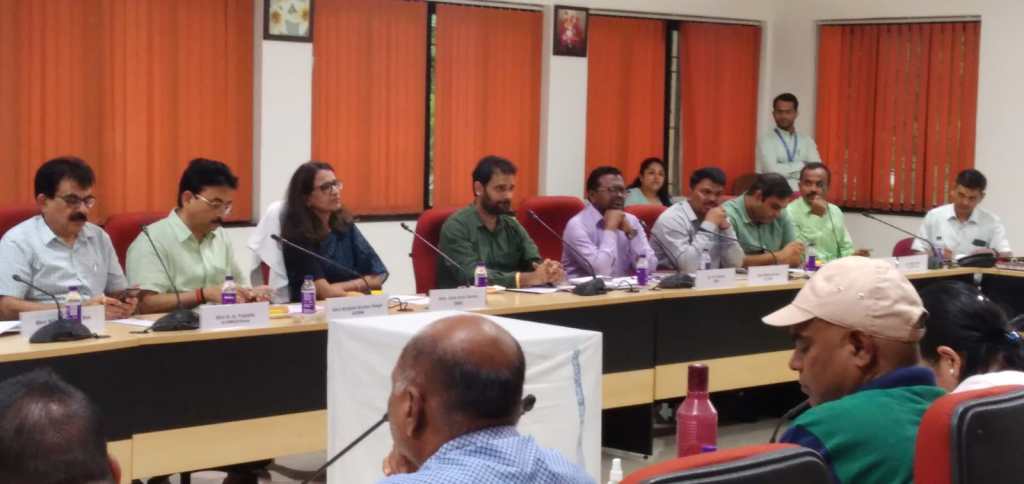
Objective :
With a view to maintain the contact with organised labour and to settle
differences and disputes arising between organised labour and Railway
administration a machinery has been setup and is called as permanent
negotiating machinery.
PNM was on three-tier basis:
- The Railway level
- The Railway Board level
- The Ad-hoc tribunal level
- The Railway Level:
At Railway level there are further two levels
i) The divisional level/ store depot level/ workshop level
ii) The Zonal Railway level
i) The divisional level/ store depot level/ workshop level :
a) DRM/ Dy. COS/ CWM works as it’s chairman and the Sr. DPO/ DPO/
SPO/ APO works as its secretary.
b) Subject agenda must be circulated one month in advance. Out of agenda
items may also be discussed with permission of chairman and chairman can
discussed any item out of agenda.
c) Meeting : once in two month separately with representatives of NRMU &
CRMS .
d) Matters discussed which comes within the powers of DRM/ Dy. COS/
CWN.
ii) Zonal Railway Levels :
a) Chairman- GM Secretary – CPO.
b) Subject agenda must be circulated one month in advance. Out of agenda
items may also be discussed with permission of chairman and chairman can
discussed any item out of agenda.
c) Meeting : once in three months separately with representatives of NRMU
& CRMS
d) Matters discussed which comes within the powers of GM or which could
not be settled at the divisional level.
- The Railway Board Level :
a) Chairman- Member staff
Secretary – Dy. Director Establishment
b) Subject agenda must be circulated one month in advance. Out of agenda
items may also be discussed with permission of chairman and chairman can
discussed any item out of agenda
c) Meeting : once in three months separately with representatives of NFIR &
AIRF.
d) Matters discussed which comes within the powers of Railway Board or
which could not be settled at the Zonal Railway level.
- Ad-hoc Tribunal Level :
a) The matter of important nature on which no agreement is reached upto
the Railway Board level.
b) Chairman would be retired judge of High court or Supreme court having
his own staff, and equal representatives of labour and administration.
c) The award given by the tribunal is not binding. The government may
accept, reject or modify the award of the tribunal.
d) The matter settled by the tribunal or decision of tribunal once accepted by
the government shall not be opened by unions for a period of two years.
e) Where the government reject or modify the decision of the tribunal then
the same items may be raised at the end of the year by the union.
From the above it is very clear that there is a well formed machinery for dealing with the staff grievances in Indian Railways.
 Wizards of Life!