Tag: Trekking

  • A Transforming Trek to Deorital-Chandrashila

    A Transforming Trek to Deorital-Chandrashila

    Regular Office work can lead to a boredom in long run. It was a sunny winter day when I was having a discussion with one of the office colleagues to do something different as we were feeling bored due to the repetitive nature of the work in a government system. It was at this point that a thought came up to do a High Altitude trek in the Himalayas. The major reason for selecting this option was to see the ice covered mountains for the first time in our lifetime. Having decided to do a trek in Himalayas the search for the suitable trek begun. At first we decided to do a winter trek but the harsh winter in the Himalayas scared us and we decide to do a spring trek instead. Since spring is the rhododendron blooming season we started searching for a trek which has the maximum bloom of rhododendrons. The search ended at the not so famous but extremely beautiful trek known as Deorital-Chandrashila trek.

    Deorital-Chandrashila trek is a trek which is mostly known for the blooming Rhododendrons and the sighting of beautiful birds. It is also known for Tungnath Temple which is one of the five Kedars in the Himalayas. The trek is a four day Journey into the beautiful landscapes of Kedarnath Bird sanctuary and ends with the summit climb of Chandrashila peak at the final day.

    The Journey to Base Village

    Sari is the base village to the Deorital Trek. Sari is a beautiful ancient village nestled in the lap of Himalayas at around 6000 feet. The Village is located at a distance of around 240 KM from Dehradun. Since my wife was also going for the trek with me, we took a taxi to drive us to Sari Village. The drive was scenic and we stopped at the famous Devprayag-the meeting point of Alaknanda and Bhagirathi rivers. It took us around 8 hrs to reach the base village.

    Confluence of Alaknanda and Bhagirathi
    Getting Settled up at Base Village

    I had booked the trek through IndiaHikes. The hiking agency has a camp office at Sari Village. We reached the base camp at Sari at around 5:00 PM and got settled up in the tents at the IndiaHikes campus. Once we came out of our tents for the evening tea our guide showed us the first glimpse of the Chandrashila Peak. While looking at the peak it looked both beautiful and Challenging. In fact Deorital-Chandrashila is one of the few treks where the peak is visible from the base camp itself.

    View of Chandrashila peak from Sari Village

    One Good thing about the IndiaHikes is that they have a detailed plan laid out for all of their treks. The Trek leader and the support staff are well trained and supportive of any of the needs. This makes the trekking experience very pleasant and memorable.

    Day-1: Sari Village to Deoriatal Lake

    As the famous saying goes- Journey of a thousand miles begins with a single step. We started the 35 km long trek from the Sari village to reach Chandrashila peak four days later. The journey of the next four days was going to be transforming and memorable. The trek starts with steep ascent for the first 1 hour with many of the houses in the vicinity. However After about and hour the slope becomes gentle and easy on the legs. When we started our journey from the base village few of us were really beginning to think that they were not going to make it to the peak. But when you start doing any such thing you really get to know your body capabilities. After about 1 hr out bodies were quiet comfortable with the hike and we all has achieved our natural pace.

    The first campsite of this trek is truly a memorable experience. The campsite is located in the vicinity of the Deoraital Lake. This lake is popularly famous in Indian mythology because this is the place where the Yaksha Prashna episode unfolded between Yudhishthira and Yaksha (a divine nature spirit). Naturally also this alpine lake is famous for its mirror-like reflections of the Chaukhamba massif and its calm, meditative atmosphere.

    During the winter this lake gets frozen and the entire area gets covered by snow which adds to the experience of the trekker. However the most beautiful part of this place is the magical evening alongside bonfire and birdwatching. During my camping at this place I could spot many birds. If you are a bird watcher then this is the trek to do in Himalayas. The bird activity is especially high during the morning and in the month of spring.

    Day-2 Deoriatal to Syalmi via Rohini Bugyal

    This is the first long day of the trek with roughly 9 Kms to cover. We started the trek early in the morning to reach Rohini Bugyal during the lunch hour. This day is exclusively for the rhododendron lovers. The rhododendrons are found all over the trek on this day with their colours changing with the change in altitude. When you start early in the morning you can spot plenty of birds perched on the tree top sunbathing. This entire day you are trekking in Kedarnath Wildlife sanctuary and if you are lucky you can spot some wildlife too. We were lucky that we were able to spot a Himalayan Jackal just ahead of the Rohini Bugyal although I could not film it. The major highlight of this day was the rhododendrons and the lunch at the Rohini Bugyal.

    In the above pictures look for the fading colours of the rhododendrons as the height increases. This was my first encounter with these trees and it was just an amazing experience.

    Having Lunch overlooking the majestic mountains was an all together a different experience.

    The sunset at the Shyalmi campsite was just amazing. Watching sunset high up in the mountains far away from the civilisation is just a different experience all together.

    However my most unique experience of the day was the Shepherd houses. I was seeing them for the first time. These houses are simple lacking any kind of amenities. Shepherds live here when they come to stay here during the dummers. If you are lucky and the sky in cloud less you can do stargazing in the night. This campsite is an excellent place for stargazing. However we were little unlucky, it was cloudy that day.

    Day-3 Syalmi to Baniyakund

    The distance of this day is approximately 6.5 km and it takes 4 to 5 hour to cover this distance by walk. This day is fully dedicated to forest walk and feeling the nature around us. The day is not very difficult neither it is very easy. We started our trek at 9 AM in the morning to reach the Baniya-Kund Campsite around 3 PM. The forest section on this day is thick and majestic. If you are trekking peacefully you can hear the sound of the forest. We could hear the sound of many of the birds during the morning time of our trek.

    A beautiful experience of this day is that you trek along the river stream. The sound of water is with you throughout the day of your trek which is a different experience all together. The Baniyakund campsite is located at location which is quite touristy. If you are a snow lover it quite definite that you will find snow at this campsite even in March and April as well.

    Day-4 Summit Day

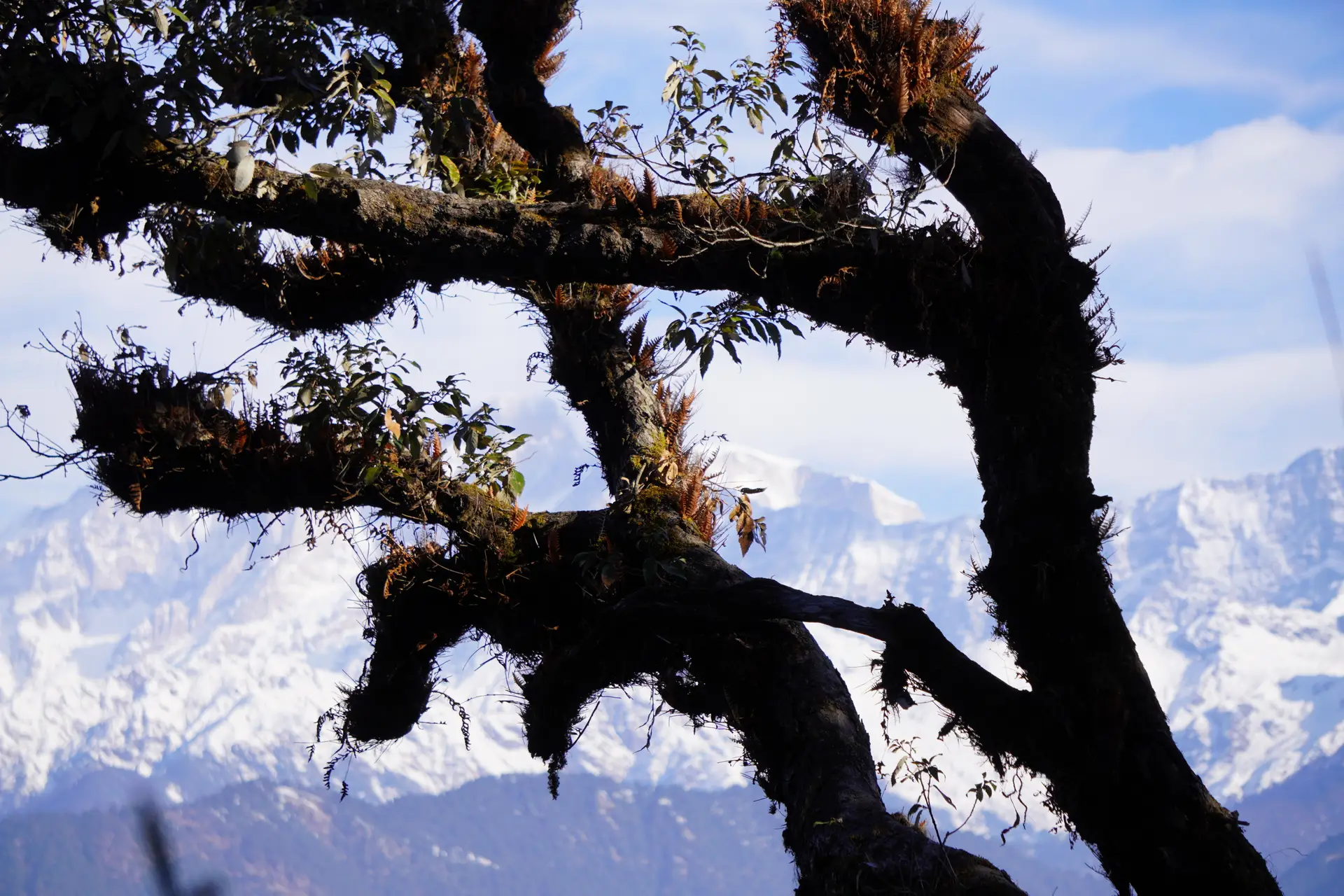
    This was the longest, hardest and most rewarding day of the trek. The summit push starts at 3 am in the morning. However in my opinion it starts way before that in your mind. The summit of Deorital Trek is one of the most beautiful summit. You get to see 360 degree view of the Himalayan peaks from the Chandrashila peak which itself is a 4200 meter peak. At the start of the this day trek we started from the campsite to reach the starting point of Tungnath Temple trek at about 5 am. From here the actual trek starts. If you trekking in winter and spring you will encounter huge snow in this area. The snowcapped meadows are one of the most beautiful landscape which you will encounter on this trek.

    Since I started early in the morning the view of sunrise from this meadow was a mesmerizing experience. The sunrise looks so good that it takes away all the discomfort of waking up at 3 am in the morning.

    This day holds another treasure for wildlife lovers. The colourful state bird of Uttarakhand Monal is especially found in this area. I was lucky enough to spot a pair of Monal on this route in the morning although I could not film it.

    Darshan of Tungnath, the highest Shiva temple in the world was a divine experience. Although the temple was closed and filled with snow we did the Darshan from outside. This temple is one of the Panch Kedars and thousands of devotees visit this temple every year.

    The Chandrashila Peak is located at a distance of 1 km from Tungnath and it takes around 1 hrs to reach the Chandrashila peak from Tungnath.

    During my trek due to turn around time I could not reach the Chandrashila peak however everyone who reached the peak was mesmerized by the beauty of the Himalayas.

    The concept of trekking in modern terms is new in India. However during the ancient period this was very much prevalent in our country. Monks used to go in the Jungles to do ‘Tapasya’.

    Deoriatal was my first multi day trek and it was really memorable. The harsh conditions of the mountains made me appreciate whatever I have in my life and the much needed disconnect from the modern world gave me some time to think about myself. Overall it was truly a transforming experience.

  • A Surprising Cactus Plant in Western Ghats

    While living in Pune for last few years I have taken quite a few trips around Pune to see the landscape of this region. The city of Pune is located at a place from where its very easy to enjoy the beauty of Western Ghats. Western Ghats region of India is well known for its scenic beauty and being closer to the Arabian sea the area receives plenty of rainfall. However while I was trekking in the western ghats region I was surprised to see a cactus plant.

    A Cactus Plant in Western Ghat region of India
  • Capturing Monal at Tungnath!

    Capturing Monal at Tungnath!

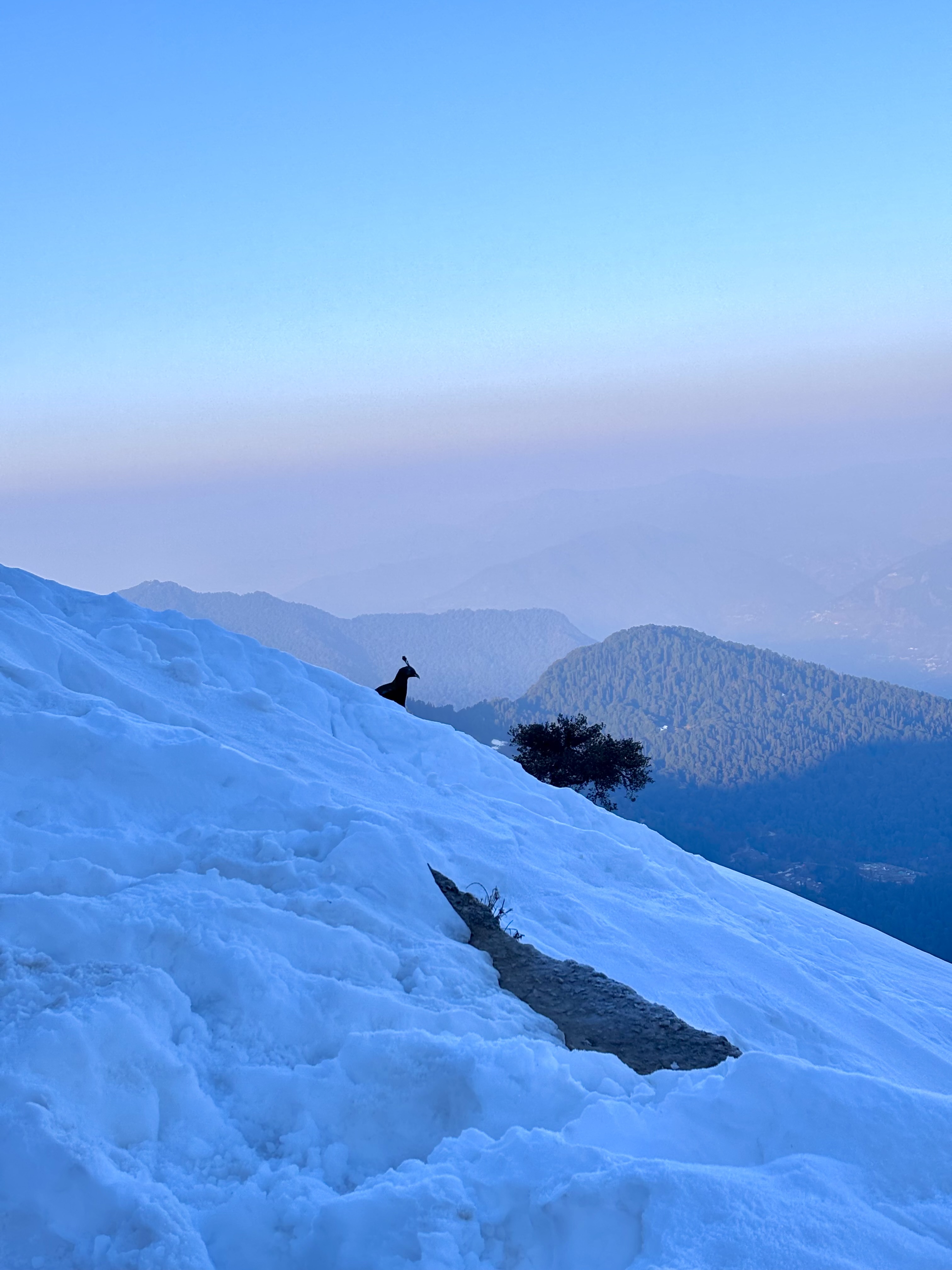
    During my recent trek to Deorital-Chandrashila I was able to capture(though not fully) a beautiful Monal Bird on my way to Chandrashila peak.

    The Monal bird, also known as the Himalayan Monal (Lophophorus impejanus), is a beautiful and vividly colored pheasant native to the Himalayan mountains. It holds ecological, cultural, and symbolic significance in the region. The bird prefers alpine meadows, forests, and shrublands between 2,100–4,500 meters altitude and you can easily spot it if you are trekking to Tungnath in the spring season. In Buddhist and Hindu symbolism, it represents divine beauty and dignity.

    A Himalayan Monal
  • Orchha Wildlife Sanctuary: A Serene Haven for Nature Lovers

    Orchha Wildlife Sanctuary: A Serene Haven for Nature Lovers

    Orchha Wildlife Sanctuary is a lesser-known yet beautiful natural reserve located near the town of Orchha in Madhya Pradesh, India. Established in 1994, the sanctuary covers an area of approximately 46 square kilometers and is situated along the Betwa River. It offers a serene environment with rich biodiversity, making it an excellent destination for nature lovers, birdwatchers, and wildlife enthusiasts.

    Key Highlights

    1. Flora and Fauna

    • The Orchha Wildlife Sanctuary is home to a diverse range of flora and fauna. The sanctuary’s vegetation primarily consists of deciduous forests, with a variety of trees, shrubs, and grasses. The rich plant life supports a vibrant ecosystem, including several species of animals and birds.
    • Mammals: The sanctuary is home to animals like deer, nilgai (blue bull), jackals, sloth bears, and wild boars. Though tigers and leopards were once reported in the area, sightings are now rare.
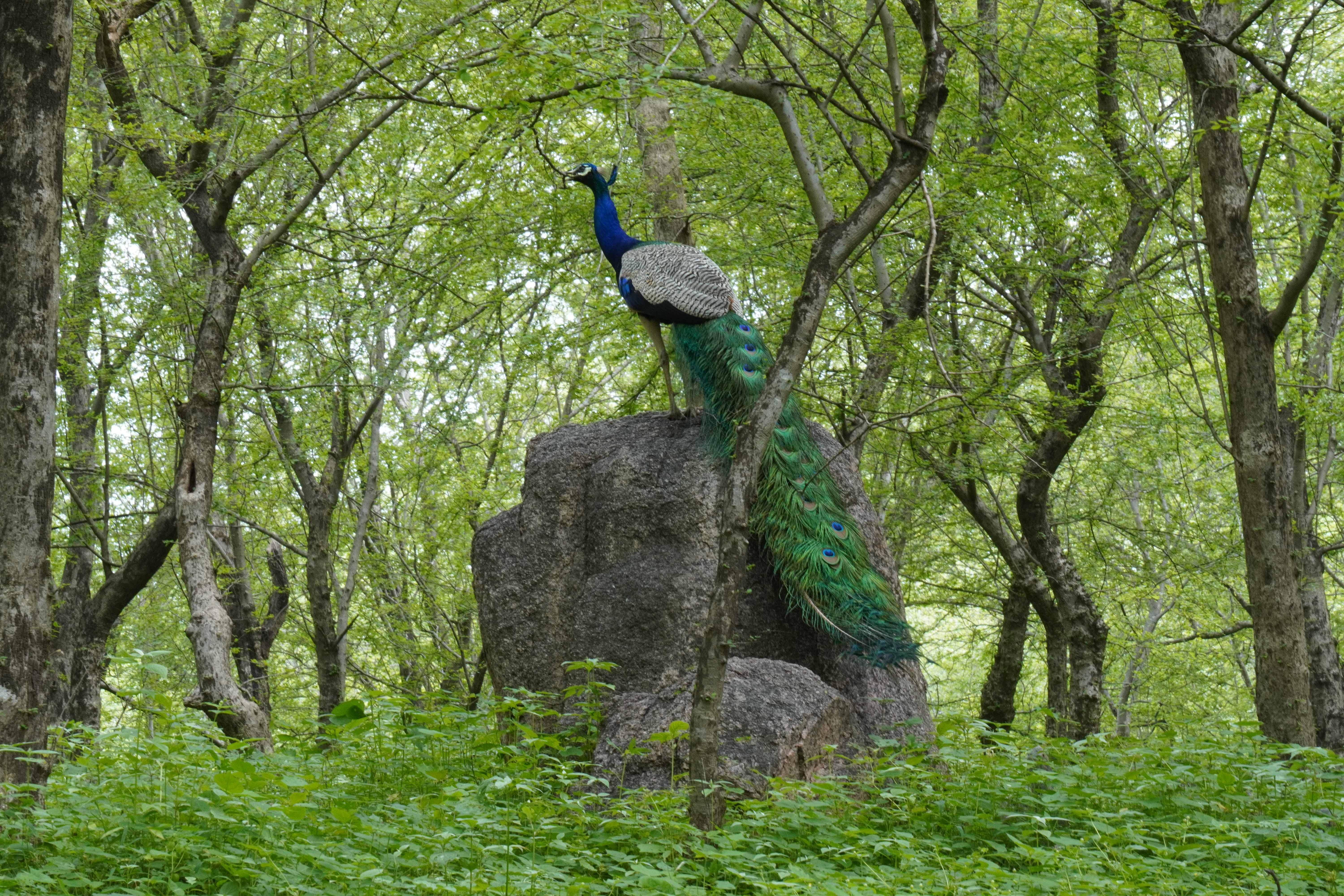
    • Birds: The sanctuary is a haven for birdwatchers, with over 200 species of birds recorded here. Notable species include the Indian roller, peafowl, black swan, kingfisher, herons, and several migratory birds during the winter season.
    A peacock in Orchha Wildlife Sanctuary

    2. Betwa River

    • The Betwa River, which flows through the sanctuary, adds to the natural beauty of the area. The river is not only a source of water for the wildlife but also offers picturesque views and opportunities for activities like boating and picnicking. The riverbanks are excellent spots for birdwatching, especially during sunrise and sunset. The confluence of Yamuna and Betwa river inside the sanctuary is a sight to watch.

    3. Nature Trails and Trekking

    • The sanctuary offers several nature trails that allow visitors to explore its diverse landscapes on foot. These trails wind through forests, along the river, and over gentle hills, providing an immersive experience in the natural environment. Trekking in the sanctuary is relatively easy, making it accessible for visitors of all ages.

    4. Wildlife Safari

    • Though Orchha Wildlife Sanctuary is not as large as some other sanctuaries in India, it still offers wildlife safaris, typically in the form of jeep safaris or guided tours. These safaris provide an opportunity to see the sanctuary’s wildlife up close and learn about the region’s ecology from experienced guides.

    5. Cultural and Historical Proximity

    • The sanctuary’s proximity to the historic town of Orchha adds a cultural dimension to the visit. After exploring the sanctuary, visitors can easily visit the nearby Orchha Fort, temples, and cenotaphs (Chhatris) that reflect the rich heritage of the Bundela dynasty.
    View of Orchha Town from the Betwa river Bridge

    Visiting Orchha Wildlife Sanctuary

    1. Timings

    • The sanctuary is generally open to visitors from early morning until sunset. It’s best to visit during the early morning or late afternoon when wildlife is most active.

    2. Entry Fee

    • There is a nominal entry fee for visiting the sanctuary. Additional charges may apply for jeep safaris, guided tours, and photography. If you want to take your own vehicle inside the sanctuary Rs 300 is charged by the forest department for the same.

    3. Guided Tours

    • Hiring a local guide is recommended, especially for birdwatching or learning about the local flora and fauna. Guides can enhance the experience by pointing out species that might otherwise go unnoticed.

    How to Reach Orchha Wildlife Sanctuary

    1. By Air

    • The nearest airport is Gwalior Airport, about 120 kilometers from Orchha. From the airport, you can hire a taxi or take a bus to Orchha.

    2. By Train

    • The closest railway station is Jhansi Junction, which is about 16 kilometers from Orchha. From Jhansi, you can take a taxi or auto-rickshaw to reach the sanctuary.

    3. By Road

    • Orchha is well-connected by road to major cities like Jhansi, Gwalior, and Khajuraho. You can reach the sanctuary by car, taxi, or bus from these locations.

    Accommodation

    • In Orchha Town: There are several hotels, guesthouses, and heritage stays in Orchha town, catering to different budgets. Staying in Orchha allows easy access to both the sanctuary and the town’s historical sites.
    • Sheesh Mahal: For a unique experience, consider staying at the Sheesh Mahal, a former palace now converted into a heritage hotel, located within the Orchha Fort complex.

    Conclusion

    Orchha Wildlife Sanctuary offers a tranquil escape into nature, with its rich biodiversity and scenic landscapes. Whether you’re a wildlife enthusiast, a birdwatcher, or someone looking to explore the natural beauty of Madhya Pradesh, this sanctuary provides a peaceful retreat with the added benefit of being close to the cultural treasures of Orchha.

  • Lohagad Fort: Historical Marvel and Trekking Paradise in Maharashtra

    Lohagad Fort: Historical Marvel and Trekking Paradise in Maharashtra

    Lohagad Fort is located near Lonavala in Maharashtra. It is a significant historical fort with a rich past that dates back several centuries. The fort is perched on a hilltop at an elevation of around 1,033 meters (3,389 feet) above sea level. It offers a commanding view of the surrounding region.

    History of Lohagad Fort

    Ancient and Medieval Period

    • Initial Construction: The exact date of Lohagad fort’s construction is uncertain. However, it is believed to have been built during the Satavahana period, around the 1st or 2nd century BCE. The fort has seen numerous rulers and dynasties over the centuries, including the Satavahanas, Chalukyas, and Rashtrakutas.

    Maratha Period

    • Shivaji Maharaj’s Era: Lohagad gained prominence during the Maratha Empire, particularly under the rule of Chhatrapati Shivaji Maharaj. He captured the fort in 1648 from the Adil Shahi dynasty of Bijapur. The fort was strategically important due to its location. It was used to store loot from Shivaji’s successful campaigns. These included his raid on Surat in 1665.
    • Battle and Defense: Lohagad played a crucial role in defending the Maratha territories against the Mughal Empire and other enemies. The fort’s natural defenses, with steep cliffs on three sides, made it difficult to conquer.

    British Era

    • Capture by the British: After the fall of the Maratha Empire, Lohagad Fort eventually came under British control in 1818. This occurred following the Third Anglo-Maratha War. The British used the fort primarily as a garrison and a place to store ammunition.

    Architecture and Features

    • Design and Structure: Lohagad Fort is known for its robust architecture. It features four large gates, namely Ganesh Darwaja, Narayan Darwaja, Hanuman Darwaja, and Maha Darwaja. The fort also has several cisterns and water tanks, as well as a step-well.
    • Vinchu Kata: One of the most striking features of Lohagad is the “Vinchu Kata” (Scorpion’s Tail). It is a long and narrow wall-like structure that extends from the fort. It resembles a scorpion’s tail. This part of the fort offers breathtaking views of the surrounding landscape.
    Scorpion’s Tail

    Lohagad Fort stands as a testament to the rich history of Maharashtra and the Maratha Empire. It embodies the architectural brilliance and strategic acumen of the period.

    Trekking to Lohagad Fort

    Lohagad Fort is one of the most popular trekking destinations in Maharashtra, particularly for those seeking a relatively easy and scenic trek. The fort is located near Lonavala and is easily accessible from both Lonavala and Malavli.

    Starting Point

    • Malavli Station: The most common starting point for the trek is Malavli. It’s a small railway station located on the Mumbai-Pune route. Malavli is about 9 kilometers from Lonavala, and the trek to Lohagad begins here.
    • Reaching Malavli: You can reach Malavli by taking a local train from either Mumbai or Pune. From Malavli station, it’s a short walk through the village before you start the actual trek.

    Trekking Route

    • Route Overview: The trek from Malavli to Lohagad Fort is around 5 kilometers one way and takes about 1.5 to 2 hours, depending on your pace. The trail is well-marked and frequently trekked, making it easy to navigate. On the way to the fort there are proper steps making it easy to walk.

    Trail Description

    • Initial Walk: The trek begins with a walk along a mud road that gradually ascends towards the fort. You will pass through scenic landscapes, including green fields, small villages, and lush vegetation, especially beautiful during the monsoon season.
    • Bhaje Caves: En route, you will come across the Bhaje Caves. These are ancient Buddhist rock-cut caves. They date back to the 2nd century BCE. These caves are worth a visit if you have time and add a cultural element to the trek.
    • Final Ascent: After passing the Bhaje Caves, the trail becomes steeper as you approach the fort. The path is rocky but manageable, with stone steps leading up to the fort’s main entrance. The stone steps make this trek and easy and safe one. However, during heavy rain these steps become a drain for the water coming from the top of the fort. This makes it dangerous at times.

    Highlights of the Trek

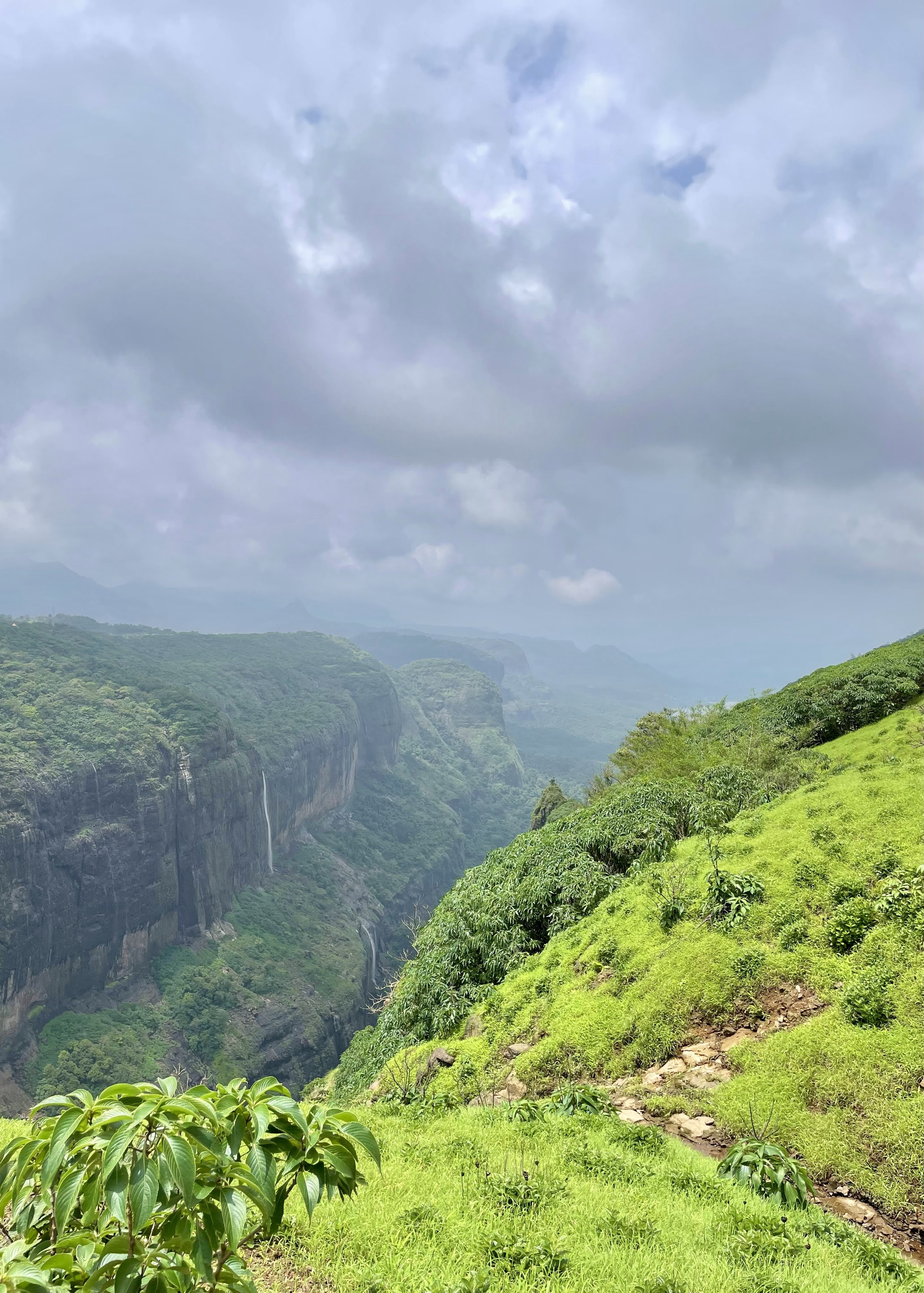
    • Scenic Views: The trek offers breathtaking views of the surrounding Sahyadri mountain range. It also offers views of the Pawna Lake and the lush green valleys. This is particularly true during the monsoon season when the landscape is vibrant and the weather is cool.
    • Historical Significance: As you reach the fort, you’ll encounter the ancient gateways, walls, and structures. These tell the story of the fort’s historical importance. The Vinchu Kata, a narrow wall extending from the fort, offers panoramic views and is one of the trek’s highlights.
    • Monsoon Experience: Trekking to Lohagad during the monsoon is especially popular. The fort is enveloped in mist. The surrounding greenery is at its peak. However, the trail can be slippery, so trekkers need to be cautious especially the beginners.

    Difficulty Level

    • Easy to Moderate: The Lohagad trek is considered easy to moderate and is suitable for beginners, families, and even children. The well-paved trail and gentle gradient make it accessible for most people.

    Best Time to Trek

    • Monsoon Season (June to September): The best time to trek Lohagad is during the monsoon. The area is lush and the waterfalls are in full flow. However, the trail can be slippery, so proper footwear is essential. I will personally advise not to wear slippers and high heels.
    • Winter (October to February): Winter offers clear skies and cool weather, making it another excellent time for the trek. The visibility is good, providing stunning views of the surrounding landscape.

    What to Carry

    • Essentials: Comfortable trekking shoes. Water (at least 2 liters). Snacks. A raincoat or windcheater (during monsoon). A hat or cap. A small first aid kit.
    • Camera/Phone: To capture the scenic beauty and historic structures.
    • Light Jacket: If trekking in winter, a light jacket or sweater might be necessary.

    Reaching the Fort

    • Fort Exploration: Once you reach the top, you can explore various parts of the fort. This includes the four gates, water tanks, ancient temples, and the Vinchu Kata. The fort offers numerous vantage points to enjoy the breathtaking views. The fort also offers great view of Visapur Fort which is located in the vicinity. There are many good resorts located nearby and one can go and stay in these resorts for a relaxing time.

    Trekking to Lohagad Fort is a fulfilling experience, blending natural beauty with historical intrigue. Whether you’re a seasoned trekker or a beginner, Lohagad offers a rewarding journey. It is both physically manageable and spiritually enriching.

  • Sunrise at Kanifnath Trek: Beauty and Divinity!

    Sunrise at Kanifnath Trek: Beauty and Divinity!

    Kanifnath Trek is a unique trek near Pune city. The trek is neither a fort trek nor a hill trek, rather it is a ‘Tekdi’. Famous Kanifnath temple is located at the top of this tekdi. The trek is one of the offbeat locations near Pune city but is fast becoming famous because of being located near Pune city and the easy nature of the trek.

    Location of Kanifnath Trek

    The Kanifnath trek is located at a distance of around 25 to 30 km from Pune city depending upon where you live in Pune city. The base village known as Bopagaon is located just before the start of Dive Ghat. The place is easily reachable from Pune city both via drive and public transport. It takes around 1 hr to reach the base village from the Pune city via Hadapsar. The road is good and there is not much traffic especially in the morning. There is ample parking available in the base village so you can easily park your car/bike.

    Kanifnath Trek

    The entire trek distance of kanifnath trek is around 2.5 km. The trek is of easy nature except a few difficult patches. The trek takes around 45 minutes to complete each side. The entire trek duration is around 1.5 hours.

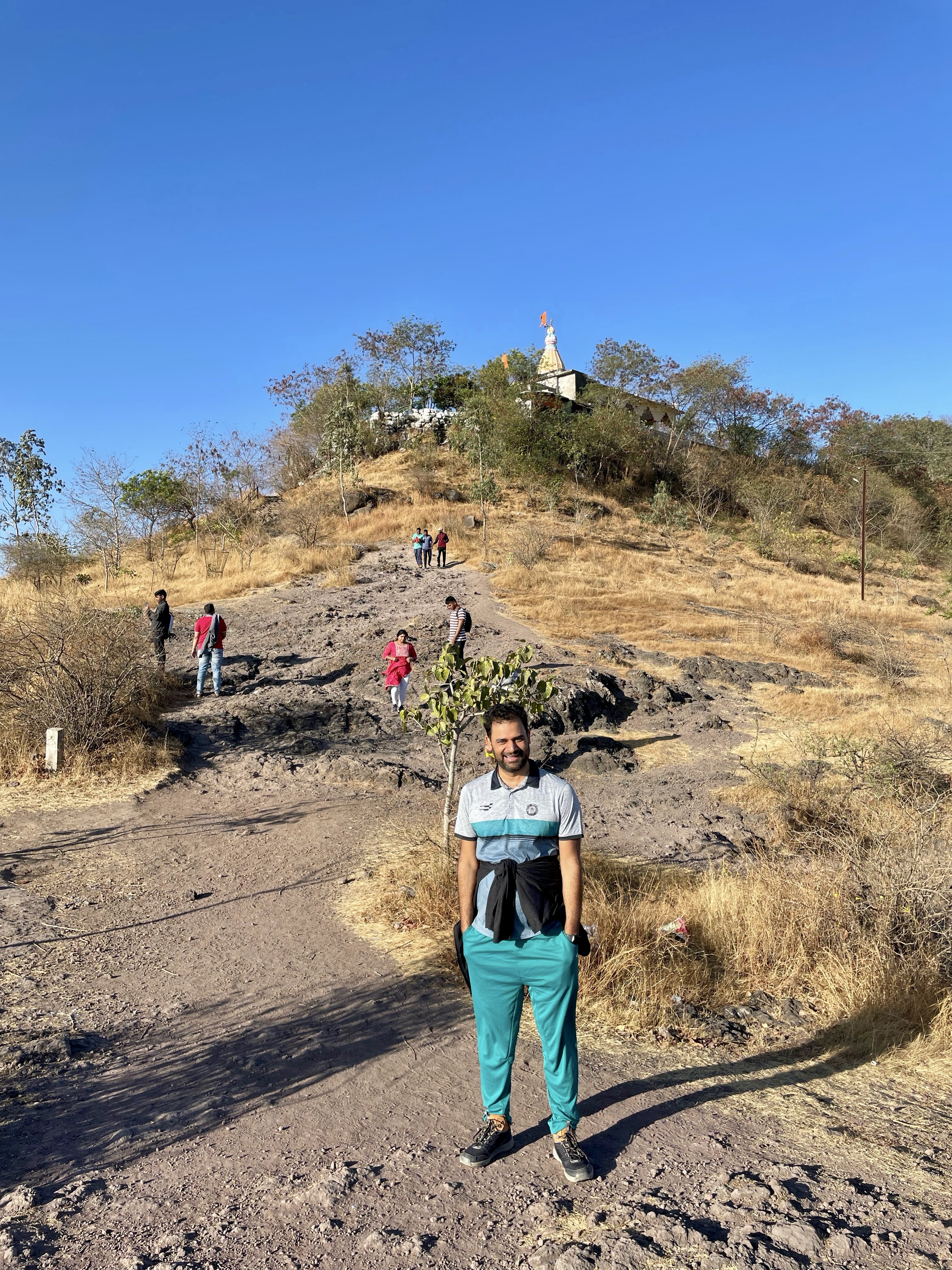
       The only difficult patch of Kanifnath trek

    Due to the easy nature of the trek it can be easily done by the children. It is in this context that Kanifnath trek is an ideal location for a morning family outing.

       Children Enjoying the Morning trek at Kanifnath

    View of Sunrise at Kanifnath Trek

    Along with the darsan to Kanifnath temple the view of sunrise is the most important attraction of Kanifnath trek. The cool breeze of Western Ghats fills you with energy and positivity. If you start the trek early you can easily reach at the top before sunrise and enjoy a beautiful view of sunrise from the top.

    Visit to Kanifnath Temple

    Kanifnath also known as Khandoba is a Hindu Saint. He is one of the nine Mahayogis of Navnath Sampradaya. Kanifnath is also considered as an avtaar of Narayana. The temple at the top is dedicated to Kanifnath. The temple is grand and beautiful. There are many shops nearby selling local food and fruits. You can just sit and relax inside the temple premises for sometime and then start your return trek. There are many smaller temples inside the temple premises.

    Monsoon season is the best season the do the Kanifnath trek. However the trek can be done in any season and the journey and the the experience is memorable.

    Other Places Near Kanifnath Trek

    The famous Dive ghat is located in the vicinity of the Kanifnath. The Murti of Vitthal prabhu is also located nearby. While visiting the Kanifnath you can also visit Malhargarh Fort( The last fort built by Marathas). There are many good restaurants nearby where you can enjoy a delicious breakfast.

  • Gorewada Lake Jogging Trail: A Trail for Morning Walk and Bird Watching!

    Gorewada Lake Jogging Trail: A Trail for Morning Walk and Bird Watching!

    Gorewada Lake:Origin and History

    Gorewada Lake is one of the 11 lakes in Nagpur district. The lake is located in the northwestern part of the Nagpur City. Gorewada lake is an artificial lake which was formed by constructing by building a dam like wall.

    Gorewada lake was developed in 1912 to supply the drinking water to the increasing population of Nagpur city. The lake still remains one of the primary source of water supply for the city of Nagpur.

    The lake is surrounded by thick forests from 3 sides. There are many wild animals and birds in the vicinity of the lake. A jungle safari is available in Balasaheb Thackeray Gorewada International Zoological Park. For detailed information please refer- https://gorewadasafari.com/.

    However the topic of discussion for today is Gorewada Nature trail. The trail is around 4 km long and is an ideal spot for morning walk, jogging and running. The trail runs parallel to the Gorewada lake and is an ideal spot for bird watching.

    Key Highlights

    1. Nature Trails

    • The Gorewada Nature Trail offers a peaceful walk through a forested area with well-marked paths. The trails vary in length and difficulty, catering to both casual walkers and more serious trekkers.
    • The trails wind through lush greenery, with plenty of opportunities to observe local flora and fauna. The area is especially vibrant during the post-monsoon season when the forest is dense and the weather is pleasant.

    2. Birdwatching

    • Gorewada is a haven for birdwatchers, with over 200 species of birds recorded in the area. Commonly spotted birds include peafowl, kingfishers, woodpeckers, and various species of raptors and waterfowl.
    • The trail passes near Gorewada Lake, which is an excellent spot for observing waterbirds. Early morning or late afternoon are the best times for birdwatching when the birds are most active.
    Bird Watching in Gorewada Lake

    3. Wildlife

    • The biodiversity park is home to various species of wildlife, including deer, wild boars, and small mammals. Although large predators are not common in this area, the park plays a crucial role in conserving the local ecosystem.
    • The park also has a rescue center for injured or displaced wildlife, contributing to the conservation efforts in the region.

    4. Gorewada Lake

    • The nature trail offers scenic views of Gorewada Lake, a man-made reservoir that provides a tranquil setting for visitors. The lake is surrounded by forest, adding to the serene atmosphere.
    • Visitors can enjoy the calm waters, watch birds by the lakeside, or simply relax and take in the natural beauty.

    5. Environmental Education

    • The park is not only a recreational area but also a center for environmental education. It often hosts workshops, guided tours, and activities aimed at raising awareness about conservation and the importance of preserving natural habitats.

    Gorewada Nature Trail(Ticket Price and Entry)

    The entry fee for the Gorewada nature trail is Rs 30 for adults and Rs 10 for kids. Monthly pass is available for Rs 50. The place is managed by forest department and you are required to show a valid id for entry. There is ample parking space available in the vicinity. The timings for the place is generally from 6 am to 10 am.

    Gorewada lake is an ideal spot for morning walk, run and jogging. If you are a cycling enthusiast you can do cycling upto Gorewada lake entry point and then do a jogging and return back. The place is calm and peaceful with not many people around. Considering its peacefulness it is one of the best places for morning activities in the city of Nagpur.

  • Malhargarh Fort(Pune): The last Fort built by Marathas

    Malhargarh Fort(Pune): The last Fort built by Marathas

    The state of Maharashtra is unique state in India. The state is blessed with Western Ghat ranges popularly known as Sahyadris which have shaped its polity, history and geography. The peculiar geography of Western Ghats led to the emergence of one of the most powerful empires in India in pre modern times, the Maratha Empire. Marathas were experts in Guerrilla Warfare and this was particularly possible due to the geography of the region which supported this kind of Warfare. In order to ensure the security of their kingdom from invasions and maintain control over the vast land mass, Marathas built many hill forts which used to act as watchtowers and military bases. These forts were the places of political as well as military activity and were the instruments of control over the kingdom.

    Hill Forts of Maharashtra

    Hill forts were usually built on a hilltop. In local Marathi language they are also called ‘Giri Durg’. Hill forts have two natural advantages as compared to other forts. First of all the hill itself acts as a natural roadblock for the enemy attacks. Secondly due to their natural height hill forts are an ideal place for watchtower and keeping an eye on the enemy activities. The only issue with hill forts is that they are difficult to built. Some of the major hill forts in Maharashtra are Sinhagad fort, Rajmachi fort, Visapur fort, Lohgarh fort etc. During their peak days of power Marathas built many hill forts to protect their empire.

    Malhargarh Fort

    The great Maratha Ruler Shivaji Maharaj captured Torna Fort in 1646 which became the first fort captured by Marathas. Subsequently they built many forts themselves. In the series of forts built during Maratha empire the Malhargarh fort is the last one to be built.

    Secret Gate of Malhargarh Fort

    Location

    Malhargarh fort is located at a distance of about 30 km from Pune. The fort is located near Saswad and is about 3 km from the famous Dive Ghat. The fort is believed to be built for keeping a watch on Dive Ghat along the Pune- Saswad Route. The fort is also called Sonori Fort due to the village of Sonori being located in the foothills of the fort. The fort is believed to be built in 1760 by the Peshwa Sardar Krishnji Madhavrao Panse.

    Malhargarh Fort Trekking

    Being closest hill fort to the Pune city(along with Sinhagad fort) Malhargarh fort is an ideal place for outing. The trekking to the fort is very short. There are two ways to trek the fort. One is to start right from the base which will take around 25 minutes to reach at the top. Other way is to take your vehicle to the last parking point above the fort from where it takes only 10 minutes to reach at the top of the fort.

    Places to Visit at the Fort

    There are two temples at the fort. One being dedicated to Lord Khandoba   (a Hindu Deity worshipped as manifestation of Shiva in Deccan region) and Other being dedicated to Lord Mahadeva(also known as Shiva). The old walls of the fort have survived and can be seen all along the fort. A medium size statue of Chhatrapati Shivaji is installed in the fort premises. An old water tank can also be seen in the outer premises of the fort. There is also a big Maratha flag on a small plateau in front of the fort. This place is a popular trekking spot for the trekkers. However beware of the monkeys when you visit that place. One can also enjoy the beautiful views of Saswad and Jejuri from the top of the fort.

    Lord Mahadeva Temple in the Fort Premises
    Khandoba Temple in the fort Premises
    Chhatrapati Shivaji Statue inside the Fort Premises
    An Old Water Tank can still be seen.
    Views From the above the Fort.
    Maratha Flag can be seen on the Fort.

    Major Attractions Nearby

    While visiting the Malhargarh Fort do stop by at the Dive Ghat and enjoy the beautiful view of Mastani Lake. There are many good restaurants nearby which offer an authentic Marathi breakfast in the Morning. Taste an authentic Marathi breakfast while you are there.

    Malhargarh fort is a good place to spent an early morning. The place is good for small trekking and picnic. Due to the easy nature of the trek one can also take small children to the fort. Overall the place is an ideal mix of History, nature and spirituality.

  • Visapur Fort: A Short Trek for a Great History

    Visapur Fort: A Short Trek for a Great History

    If someone asks me why Pune is probably the best city in India to live my response will not be Pune’s weather rather it will be the variety of places which are located nearby which one can explore in one day outing. These places not only inherit and contain a lot of history but at the same time they speak a lot about the tradition and culture of the nearby region. Our one such place of interest today is Visapur Fort which is not only a historical place but also an important cultural and religious place.

    On the Way to Visapur Fort

    History of Visapur Fort

    Visapur and Lohagarh forts are called twin forts and are located next to each other. Historically Lohagarh fort is older than Visapur fort and Visapur fort was established to protect the Lohagarh Fort. Visapur Fort was built in 1720 AD by Balaji Vishwanath The first Peshwa of the Maratha empire. The fort was attacked and captured by Britishers in 1818 and subsequently canons were established at the fort and Lohagarh fort was bombarded from Visapur Fort. This forced Marathas to flee from Lohagarh Fort. During this battle Visapur fort was converted into ruins and very less of the earlier structure remains today.

    How to Reach Visapur Fort?

    The place is located at around 1 hr 30 minutes drive from Pune. The nearest railway station is Lonavala where most of the trains have stoppage. Visapur is the base village from where the trek is generally started.

    Major attractions at Visapur Fort

    The fort is mostly into ruins and not much remains to be seen there. However there are a few structures that still remain. It includes a few carvings of Lord Hanuman, a temple and 2 canons. The trek to the top of the fort takes around 45 minutes and it takes around 1 hr 30 minutes to roam around the fort. I am sharing certain pictures of the specific attractions at the fort. The view of the surroundings in magnificent especially during the monsoon and scenic beauty is spectacular. The trek is recommended during the monsoon season however it can be done at any time.

    An old canon at the fort
    A temple at the fort.

    The best thing about this trek is that the trek is of around 45 minutes only and hence it leaves you with enough energy to roam around the fort and enjoy the beautiful view of the surroundings.

  • Andharban Trek: A Unique Journey Through Sahyadris’ Dark Forest!

    Andharban Trek: A Unique Journey Through Sahyadris’ Dark Forest!

    The word Andharban means dark dense forest and those who have visited Andharban will say that the place justifies the meaning of the word. The trek is located in the famous ‘Tamhini Ghat’ and takes around 6/7 hrs to complete. The Andharban trek is of easy to moderate difficulty level however being a journey of around 15 km a high level of endurance is required for the trek. It is one of the few treks in Sahyadris where the starting and end points are different. The trek starts from Pimpri Dam in Pune district and ends at Bhira dam in Raigarh district covering the wide variety of landscapes of Sahyadris like Valleys, plateaus, waterfalls and river streams.

    How to Reach Starting Point?

    Pune is the closest located city for Andharban trek. The distance of Pimpri dam, the starting point of the trek is around 60 Km from Pune and it takes around 2 hrs to reach the starting point from Pune. It is recommended to start the journey from Pune early so that trek can be started latest by 8 o’clock. We started our journey from Pune by 7 o’clock and then we has our breakfast at a restaurant near starting point before starting the trek. It is always advisable to have a proper breakfast before starting the trek.

    On the Way to ‘Andharban’

    The Andharban Trek: Key Highlights

    1. Dense Forest

    • The Andharban trek is unique because much of the trail passes through a dense forest, which is often shrouded in mist, especially during the monsoon season. The name “Andharban” literally translates to “dark forest,” and the trek lives up to its name with the thick canopy that blocks much of the sunlight, creating a mysterious and enchanting atmosphere.

    2. Scenic Views

    • The trek offers stunning views of the Kundalika Valley, Bhira Dam, and the surrounding mountain ranges. On a clear day, you can see the green valleys stretching far into the horizon. During the monsoon, the trail is adorned with countless small waterfalls and streams, adding to the trek’s beauty.

    3. Waterfalls and Streams

    • Along the route, trekkers will encounter several waterfalls and streams. These natural water bodies are most active during the monsoon, providing a refreshing experience as you traverse the forest.

    4. Flora and Fauna

    • The Andharban trek takes you through a biodiversity-rich region. The forest is home to various species of flora and fauna, including many types of birds, butterflies, and small wildlife. The dense foliage and the presence of various plants make it an exciting trail for nature enthusiasts.

    Trekking Route

    1. Starting Point – Pimpri Village

    • The trek begins at Pimpri village, which is the base camp for the Andharban trek. Pimpri is accessible by road from Pune, Lonavala, and Mumbai. The village serves as the starting point where trekkers can prepare for the journey ahead.

    2. Into the Dark Forest

    • As you start the trek, you’ll quickly enter the dense forest. The initial part of the trek involves descending through the forest, with the trail gradually leading you downhill. The path is well-defined, but it can get slippery during the monsoon, so proper trekking shoes with a good grip are essential.

    3. Hirdi Village

    • About midway through the trek, you’ll pass through Hirdi village, a small settlement in the middle of the forest. This is a good place to take a short break, rehydrate, and enjoy the serene surroundings.

    4. Descending to Bhira Dam

    • After Hirdi village, the trail continues to descend, with views of the Bhira Dam becoming more prominent. The final stretch of the trek involves navigating through the forest and emerging at the backwaters of the Bhira Dam, where the trek concludes.

    The Andharban trek takes you to the lush green forest of Sahyadris and to the views which you may not have witnessed in your lifetime. The trek route passes through some of the Most beautiful places in the Tamhini Ghat. It has all the places that a ‘perfect’ trek has to offer viz. beautiful valleys, astounding water streams, dense forests and a wide variety of flora and fauna. The trek tests the endurance level of the trekker and once you complete the trek it gives you a sense of achievement. Since the trek is long it is preferable to have lunch at a village located in between the trek route. The food quality is good and one gets to taste a local food.

    The End Point of Andharban Trek

    The end point of the trek is Bhira dam which is located in the Raigad district of Maharashtra. From here one can take his vehicle and commute to his respective place. The only issue in this trek is that one has to get a vehicle with driver as the start and end points are different and the distance between both the points via road is around 40 Km.

    Overall Andharban trek is a must do trek at least once. Along with stunning natural beauty one gets to know his endurance level and his willpower also in this trek. The trek is especially recommended in the Monsoon time as the views are stunning during this time.