Category: Nature and Wildlife

  • I did Safari in Amagarh Leopard Reserve Jaipur

    I did Safari in Amagarh Leopard Reserve Jaipur

    For most people in India Leopards are not as exciting as Tigers in Wild. However in my opinion spotting a Leopard in Wild is even more exciting than spotting a Tiger and what is more important is that getting a good photograph of a Leopard is a much more difficult task that getting the photograph of a Tiger. This is mainly because of the living style of both these species. Tigers are truly the apex predators of the Indian forests and they roam freely in the Jungle many a times on the safari tracks. In facts many of the famously photographed Tigers have been known to be walking on the safari routes. This make spotting and photographing them easier. On the other hand Leopard despite being a big cat species is afraid of Tigers and generally prefers to stay on tree branches. They are not as much fearlessly visible on the tracks as the Tigers. Leopards are known to be shy in nature and avoid human presence. This is the reason they are known as elusive cats and getting a good photograph of a Leopard is actually a great achievement and it requires considerable planning and luck.

    This is where the Jhalana and Amagarh Leopard reserves become quite interesting places to spot Leopard in Wild. Both these places are located in the outskirts of Jaipur very close to the city limits and are places dedicated specifically to the conservation of Leopards. Since there are no tigers present here Leopards become the apex species and one can see them roaming fearlessly and without any threat.

    Situated in the outskirts of Jaipur and spread in an area of around 15.50 sq km Amagarh was declared a leopard reserve in 2020 and opened for tourism in May 2022. It later became part of the larger Jhalana–Amagarh Leopard Conservation Reserve managed by the Rajasthan Forest Department. Situated on the eastern edge of Jaipur near the famous Galta Ji Temple, Amagarh lies amidst the ancient Aravalli Hills, making it one of the few places in India where a thriving leopard population exists just minutes away from a major city.

    The reserve primarily consists of Rocky Aravalli hills, dry deciduous woodland, thorn scrub forest, Seasonal streams and waterholes, narrow valleys and granite outcrops. These rocky landscapes provide perfect denning sites for leopards, while the sparse vegetation allows excellent visibility during hunting.

    As per my guide in the reserve, there are around 16-20 leopards present in the reserve at present however spotting them in Amagarh is difficult and the sightings are inconsistent. I myself could not spot any Leopard during my visit. So If your goal is to primarily spot leopards then Jhalana is a much better place than Amagarh. However if you are visiting to photograph Aravali Landscape and coexistence of Human and wildlife then you should pay 1 or 2 visits to Amagarh also.

    Apart from Leopard there are other mammal and Bird species present in the reserve as well like Striped Hyena, Golden Jackal, Desert Fox, Jungle Cat, Indian Grey Mongoose, Indian Hare, Nilgai Sambar, Chital, Wild Boar and Indian Porcupine. Among all these the sightings are Striped Hyena is particularly interesting in Amagarh and it is a better place to spot Hyena as compared to Jhalana. Among the bird species Indian Peafowl, Crested Serpent Eagle, Shikra Indian Eagle-Owl, White-throated Kingfisher, Green Bee-eater, Indian Roller, Grey Francolin ,Various warblers, babblers and sunbirds are frequently spotted in the reserve.

    I also spotted a pair of Indian Francolin while they were traversing on the safari track.

    A Rufous Treepie feeding on the kill made by Leopard
    A Black-rumped Flameback Woodpecker in its Natural Habitat

    However apart from all this what surprised me the most here was the peaceful co-existence of Human and Big Cat species like Leopard so close to the city limits. The Aravalis have been natural abode to Leopard since centuries. However due to Human intervention and habitat fragmentation the population of Leopards have been declining in this region. This is perhaps the most important part of this initiative that makes Amagarh special. Another thing that surprised me was extremely low Human-Wildlife conflict in this area despite the Leopard reserve being located so close to the city limits. Upon researching I found quite a few reasons for this.

    First and foremost being the presence of A healthy prey base of nilgai, wild boar, hare, and other wild animals which means leopards rely less on livestock and lesser the conflict. Leopards are naturally elusive and largely nocturnal, avoiding people whenever possible. The rugged Aravalli hills provide ample cover and denning sites even close to urban areas. Continuous monitoring and rapid response by the Rajasthan Forest Department help address conflict situations before they escalate. These are some of the lessons to be learnt and replicated elsewhere for conservation success.

    The most important lesson to work out here is that in order to protect India’s rich wildlife the peaceful co-existence is the way forward. Conservation is not only about protecting remote wilderness, it is also about finding ways for people and wildlife to share landscapes responsibly.

    As I was returning back from the reserve I was just thinking of the two different world that exist so close to each other without disturbing each other and rather complementing each other. The Amagarh and Jhalana Leopard reserves have become a model for the world to follow and one of the key identities of the Jaipur City among the nature lovers.
  • A Transforming Trek to Deorital-Chandrashila

    A Transforming Trek to Deorital-Chandrashila

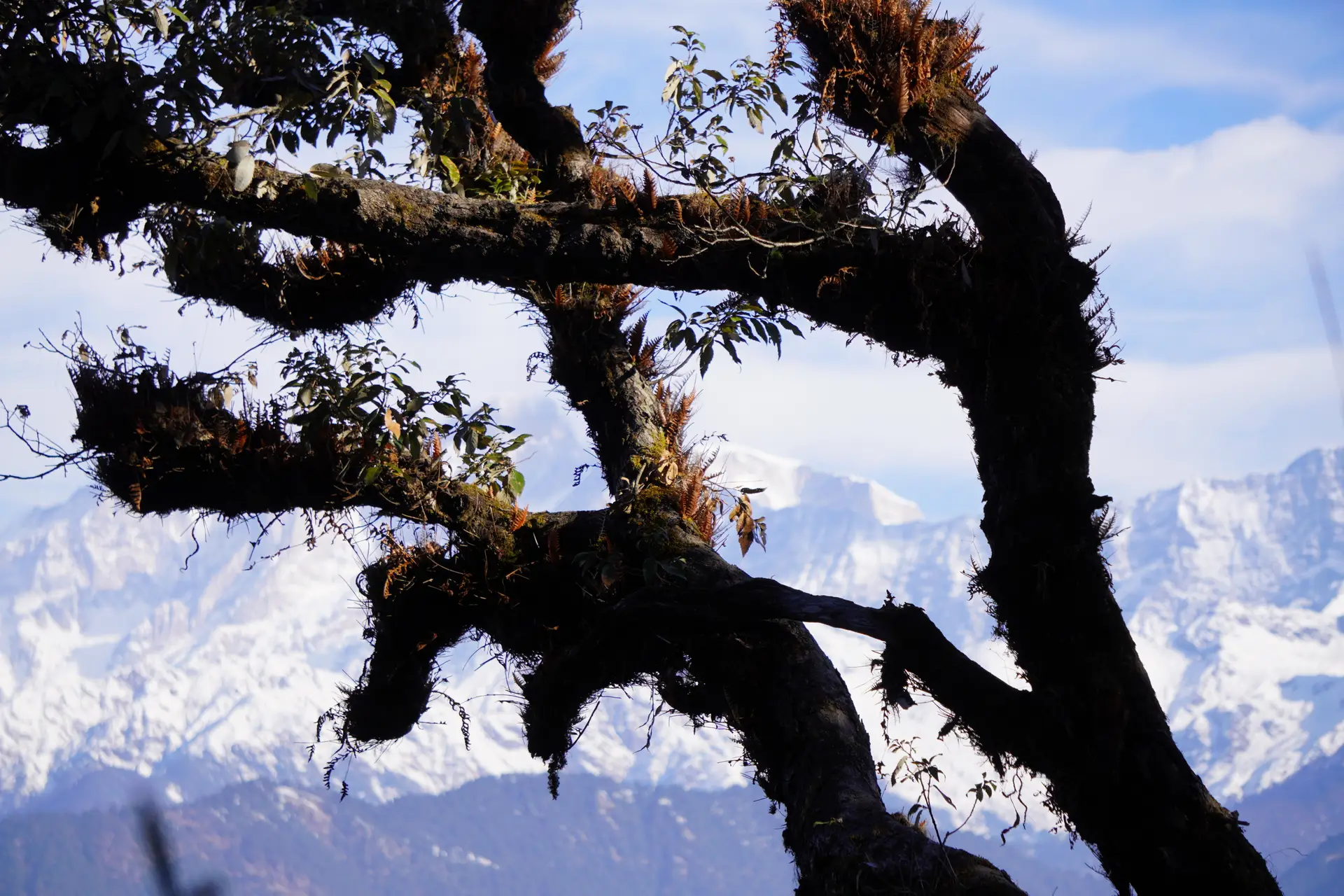
    Regular Office work can lead to a boredom in long run. It was a sunny winter day when I was having a discussion with one of the office colleagues to do something different as we were feeling bored due to the repetitive nature of the work in a government system. It was at this point that a thought came up to do a High Altitude trek in the Himalayas. The major reason for selecting this option was to see the ice covered mountains for the first time in our lifetime. Having decided to do a trek in Himalayas the search for the suitable trek begun. At first we decided to do a winter trek but the harsh winter in the Himalayas scared us and we decide to do a spring trek instead. Since spring is the rhododendron blooming season we started searching for a trek which has the maximum bloom of rhododendrons. The search ended at the not so famous but extremely beautiful trek known as Deorital-Chandrashila trek.

    Deorital-Chandrashila trek is a trek which is mostly known for the blooming Rhododendrons and the sighting of beautiful birds. It is also known for Tungnath Temple which is one of the five Kedars in the Himalayas. The trek is a four day Journey into the beautiful landscapes of Kedarnath Bird sanctuary and ends with the summit climb of Chandrashila peak at the final day.

    The Journey to Base Village

    Sari is the base village to the Deorital Trek. Sari is a beautiful ancient village nestled in the lap of Himalayas at around 6000 feet. The Village is located at a distance of around 240 KM from Dehradun. Since my wife was also going for the trek with me, we took a taxi to drive us to Sari Village. The drive was scenic and we stopped at the famous Devprayag-the meeting point of Alaknanda and Bhagirathi rivers. It took us around 8 hrs to reach the base village.

    Confluence of Alaknanda and Bhagirathi
    Getting Settled up at Base Village

    I had booked the trek through IndiaHikes. The hiking agency has a camp office at Sari Village. We reached the base camp at Sari at around 5:00 PM and got settled up in the tents at the IndiaHikes campus. Once we came out of our tents for the evening tea our guide showed us the first glimpse of the Chandrashila Peak. While looking at the peak it looked both beautiful and Challenging. In fact Deorital-Chandrashila is one of the few treks where the peak is visible from the base camp itself.

    View of Chandrashila peak from Sari Village

    One Good thing about the IndiaHikes is that they have a detailed plan laid out for all of their treks. The Trek leader and the support staff are well trained and supportive of any of the needs. This makes the trekking experience very pleasant and memorable.

    Day-1: Sari Village to Deoriatal Lake

    As the famous saying goes- Journey of a thousand miles begins with a single step. We started the 35 km long trek from the Sari village to reach Chandrashila peak four days later. The journey of the next four days was going to be transforming and memorable. The trek starts with steep ascent for the first 1 hour with many of the houses in the vicinity. However After about and hour the slope becomes gentle and easy on the legs. When we started our journey from the base village few of us were really beginning to think that they were not going to make it to the peak. But when you start doing any such thing you really get to know your body capabilities. After about 1 hr out bodies were quiet comfortable with the hike and we all has achieved our natural pace.

    The first campsite of this trek is truly a memorable experience. The campsite is located in the vicinity of the Deoraital Lake. This lake is popularly famous in Indian mythology because this is the place where the Yaksha Prashna episode unfolded between Yudhishthira and Yaksha (a divine nature spirit). Naturally also this alpine lake is famous for its mirror-like reflections of the Chaukhamba massif and its calm, meditative atmosphere.

    During the winter this lake gets frozen and the entire area gets covered by snow which adds to the experience of the trekker. However the most beautiful part of this place is the magical evening alongside bonfire and birdwatching. During my camping at this place I could spot many birds. If you are a bird watcher then this is the trek to do in Himalayas. The bird activity is especially high during the morning and in the month of spring.

    Day-2 Deoriatal to Syalmi via Rohini Bugyal

    This is the first long day of the trek with roughly 9 Kms to cover. We started the trek early in the morning to reach Rohini Bugyal during the lunch hour. This day is exclusively for the rhododendron lovers. The rhododendrons are found all over the trek on this day with their colours changing with the change in altitude. When you start early in the morning you can spot plenty of birds perched on the tree top sunbathing. This entire day you are trekking in Kedarnath Wildlife sanctuary and if you are lucky you can spot some wildlife too. We were lucky that we were able to spot a Himalayan Jackal just ahead of the Rohini Bugyal although I could not film it. The major highlight of this day was the rhododendrons and the lunch at the Rohini Bugyal.

    In the above pictures look for the fading colours of the rhododendrons as the height increases. This was my first encounter with these trees and it was just an amazing experience.

    Having Lunch overlooking the majestic mountains was an all together a different experience.

    The sunset at the Shyalmi campsite was just amazing. Watching sunset high up in the mountains far away from the civilisation is just a different experience all together.

    However my most unique experience of the day was the Shepherd houses. I was seeing them for the first time. These houses are simple lacking any kind of amenities. Shepherds live here when they come to stay here during the dummers. If you are lucky and the sky in cloud less you can do stargazing in the night. This campsite is an excellent place for stargazing. However we were little unlucky, it was cloudy that day.

    Day-3 Syalmi to Baniyakund

    The distance of this day is approximately 6.5 km and it takes 4 to 5 hour to cover this distance by walk. This day is fully dedicated to forest walk and feeling the nature around us. The day is not very difficult neither it is very easy. We started our trek at 9 AM in the morning to reach the Baniya-Kund Campsite around 3 PM. The forest section on this day is thick and majestic. If you are trekking peacefully you can hear the sound of the forest. We could hear the sound of many of the birds during the morning time of our trek.

    A beautiful experience of this day is that you trek along the river stream. The sound of water is with you throughout the day of your trek which is a different experience all together. The Baniyakund campsite is located at location which is quite touristy. If you are a snow lover it quite definite that you will find snow at this campsite even in March and April as well.

    Day-4 Summit Day

    This was the longest, hardest and most rewarding day of the trek. The summit push starts at 3 am in the morning. However in my opinion it starts way before that in your mind. The summit of Deorital Trek is one of the most beautiful summit. You get to see 360 degree view of the Himalayan peaks from the Chandrashila peak which itself is a 4200 meter peak. At the start of the this day trek we started from the campsite to reach the starting point of Tungnath Temple trek at about 5 am. From here the actual trek starts. If you trekking in winter and spring you will encounter huge snow in this area. The snowcapped meadows are one of the most beautiful landscape which you will encounter on this trek.

    Since I started early in the morning the view of sunrise from this meadow was a mesmerizing experience. The sunrise looks so good that it takes away all the discomfort of waking up at 3 am in the morning.

    This day holds another treasure for wildlife lovers. The colourful state bird of Uttarakhand Monal is especially found in this area. I was lucky enough to spot a pair of Monal on this route in the morning although I could not film it.

    Darshan of Tungnath, the highest Shiva temple in the world was a divine experience. Although the temple was closed and filled with snow we did the Darshan from outside. This temple is one of the Panch Kedars and thousands of devotees visit this temple every year.

    The Chandrashila Peak is located at a distance of 1 km from Tungnath and it takes around 1 hrs to reach the Chandrashila peak from Tungnath.

    During my trek due to turn around time I could not reach the Chandrashila peak however everyone who reached the peak was mesmerized by the beauty of the Himalayas.

    The concept of trekking in modern terms is new in India. However during the ancient period this was very much prevalent in our country. Monks used to go in the Jungles to do ‘Tapasya’.

    Deoriatal was my first multi day trek and it was really memorable. The harsh conditions of the mountains made me appreciate whatever I have in my life and the much needed disconnect from the modern world gave me some time to think about myself. Overall it was truly a transforming experience.

  • A Quiet Stay at Kathi(Satara)

    A Quiet Stay at Kathi(Satara)

    There are places that don’t ask anything from you.
    They don’t demand productivity, urgency, or performance.
    Kathi is one such village.

    Tucked quietly in the folds of the Sahyadris in Satara district, Kathi does not announce itself. There are no landmarks shouting for attention, no itineraries to tick off. What it offers instead is far rarer — a life that unfolds without hurry.

    Indian Cities are increasingly becoming congested and overcrowded. Finding a peaceful moment in the cities is becoming a luxury now. Pune City has been particularly heavily polluted this year with AQI reaching to 400. It was in this frame of mind that I decided to take some time out and stay at a quiet place outside the city. My search ended at a Quiet Villa named as Red Stone Villa by Koyna stays located in a small village named Kathi in Satara district of Maharashtra. Most of the population in this village is involved in agriculture. However with the coming up of tourism a small population is now being involved in hospitality and the land use and occupation change is now visible here.

    When I reached this Kathi village I was amazed with the rustic beauty and old world charm of this village. The village lies at a hill plateau overlooking the Shivsagar Dam built on Koyna River. The natural setting of the place is amazing.

    The Village is still far away from what we call ‘Development’ in modern terms. There are no modern cafes and restaurants. People are simple and welcoming. This makes this place perfect for Eco-tourism and many eco tourism resorts are now opening in this village. This village is perfect place for spending quiet days. During my stay at this place I was reminded of the the Dak-Bunglows of British times. Britishers used to built Dak-Bunglow at places which were far from modern world and having plenty of nature around. This gave them the time to think and innovate.

    Relaxing Activities In Kathi

    The village of Kathi is located at a place which is called Oxygen valley. This is because of strong winds that blow here throughout the day. The wind is so strong here that the largest Windmill farm in Asia is located near this village. You can just sit and feel the air in your lungs.

    Wind Mill farm

    Visit to the nearest Windmill farm is a great experience here. The road from Kathi to Satara passes through this wind mill farm and there is one spot where the road is straight over the plateau. This is a perfect place to take an evening walk. I took a walk on this road one evening and it felt magical.

    K-2 Point

    When it comes to viewing sunset in the Western Ghats I found that K-2 point offers one of the most mesmerising view. The place is located at the highest point in the region overlooking the Koyna Backwaters. The view of the sunset from here is just amazing. The only catch is that due to excessive fog at times it becomes difficult to view the sunset. What I found most beautiful is that this place has no crowd at all and hence you can enjoy the beautiful sunset in peace. However despite its natural beauty what disturbed me here was that people have thrown beer bottles and water bottles which was acting as a thorn in the beauty of this place. Seeing this one can sense how much civic sense Indians lack.

    Dhareshwar Shiv Mandir

    Perhaps one of the most unique temples in India that I have visited this Shiva temple is nestled into deep forest and on the edge of a mountain overlooking a huge valley. The main shrine is in a rock-cut cave traditionally associated with Shri Ram’s era, housing a temple to Shri Ram along with a sacred Shiva shrine (Shivshambu Mahadev) regarded as a teerthakshetra. This place is a great nature spot and there is an all weather active waterfall here. When I visited this temple I found that to be crowd free and full of peace and tranquility. This place is great for meditation and Dhyan and one can sit for some time here to connect with spirituality. The active waterfall of this place is considered sacred and the locals use the water for different religious purposes.

    This place is a heaven for star gazers as this place still has not been heavily polluted by light pollution. During the night time star gazing is a great activity here. During our visit we sat in the night sky and all the night stars were visible to us. Using the apps like night sky enhances the experience of Star Gazing by displaying the positions of the stars in the sky.

    Kathi Village has everything that a slow life asks for. A lakeside location, spiritual places nearby and a great sunset view point to go and sit during the evening. Places like these are a modern day luxury for us when the “modernisation and cafe culture” is reaching in every nooks and corners of the country. The very nature of the modern lifestyle is stress-full and few days spent at places like these adds much needed value to our quality of life.

  • Photographing Balck Kite (Milvus migrans) In Pune

    Photographing Balck Kite (Milvus migrans) In Pune

    Spotting birds in Indian Cityscape is becoming a rarity now. The cities in India are slowly becoming urban jungles with no space for trees and wildlife. The birds which are frequently visible in the countryside are no where to be found in the cities. However when I spotted this beautiful big birds in my colony I was surprised to see that they are not even surviving but flourishing in the cityscape. Upon enquiring I came to know that this bird was named as Balck Kite (Milvus migrans). The subspecies of this bird M. M. Govinda also known as the small Indian kite or formerly Pariah Kite is found across the Indian cities and their population is thriving in the Indian cities due to their flexible dietary habits.

    Black Kite is a raptor species which means they hunt and eat other animals and have special adaptations for catching and consuming prey. Raptors are also called birds of prey and include eagles, hawks, kites, falcons, owls, and most vultures.

    Black kites inhabit most Indian states, from the Indo-Gangetic plains to Himalayan foothills and northeastern regions, including Delhi, Maharashtra, Karnataka, and Rajasthan. However what I was most curious about was the astonishingly high number of population of these species in PMC area nearby Mula- Mutha river. The major reason for their high density in this area seems to be because of abundance of urban waste from households, markets, and slaughterhouses. This area also provides constant scavenging opportunities, drawing kites to riversides and dumps. Proximity to PMC headquarters along the Mula-Mutha River supports foraging on scraps and small prey like fish or pigeons.

    Studying the changing behaviour of these species shows that species too have the ability to adopt to the changing environment. Also those species are likely to survive more who can adopt to the changing landscape better in a better way. Having these species nearby gives me an excellent opportunity to photograph them and test my photography skills!

  • Chasing Chinkara(Indian Gazelle) Inside Mayureshwar Wildlife Sanctuary!

    Chasing Chinkara(Indian Gazelle) Inside Mayureshwar Wildlife Sanctuary!

    Mayureshwar Wildlife sanctuary is comparatively lesser known but very unique wildlife sanctuary located at a distance of about 75 km from Pune city. The sanctuary is so less popular that when I visited the sanctuary even the google map could not identify the exact location of the sanctuary. I had to take the help of a forest department official to find out the exact location of the sanctuary. However if you really want to learn photography this is the place to go. With comparatively less crowd and wildlife density one can learn the concept of composition and also learn to have patience which is a very important skill in wildlife photography.

    Mayureshwar wildlife sanctuary is unique in the sense that this is probably the only wildlife sanctuary in India where you can take your own vehicle inside the sanctuary for safari purpose. Walking inside the sanctuary is also permitted so one can take a walk in the sanctuary and spot various kind of birds from up close. There is a dedicated watch tower inside the sanctuary from where one can get a birds eye view of the surroundings. However the only menace inside the sanctuary are street dogs. You can find them in good numbers in the sanctuary roaming around and they can be very scary.

    The sanctuary is dominated by semi arid grasslands and dry deciduous scrub forests. Acacia catechu (Khair), Dalbergia latifolia (Sissoo), and Ziziphus mauritiana (Ber) are the primary tree species found in the sanctuary. These trees are interspersed with grasslands. This makes spotting the wildlife very easy inside the sanctuary.

    The sanctuary is famous for Indian gazelle (Chinkara) who are found here in herds. However if you are lucky then you can also spot Indian gray wolf, striped hyena, Indian fox, jackal, and Hares. During my visit to the sanctuary I was able to spot a big herd of Chinkara running across the sanctuary however I could not properly photograph it.

    The sanctuary is also famous for many different kinds of birds. The bird species include Indian roller, short-toed snake eagle, Bonelli’s eagle, and Grey Francolin. There are certain winter visitors also like European Roller and Montagu’s Harrier.

    Population pressure on nature is rising day be day in India. However these small efforts to create the sanctuaries for preserving the population of certain species gives us hope that our future generations will be above to see these species in wild.

    The best time to visit the sanctuary is from November to March as the weather is pleasant at this time. I visited the sanctuary in the month of September which was probably not the best of times. The Forest department has a small guest house also at the starting gate of the sanctuary. One can stay there if he wants to spend a peaceful night in the nature not for away from Pune. The morning and Evening walk inside the sanctuary feels really refreshing.