Category: Culture and Heritage

  • Ellora Caves( एलोरा की गुफाएं): They Amaze You Every Time You Visit!

    Ellora Caves( एलोरा की गुफाएं): They Amaze You Every Time You Visit!

    We all have grown studying about Ajanta and Ellora caves and their beauty. However if someone has prepared for UPSC for sometime it becomes even more a thing of curiosity because these caves are a thing of great cultural importance not only for India but for the entire world. These caves are a living example of what indian culture has been in the past.

    My first experience of visiting the Ellora caves was in 2019 when I visited these caves with two of my friends. I visited Ellora Caves again in January 2023 and I must say both the times it was a magical experience. Standing in front of Kailash temple one gets lost in its grandeur and beauty.

    History of Ellora Caves

    The history of these caves dates back from 600 AD to 1000 AD. There are around 100 caves at the site out of which 34 are open to public. These caves belong to all three religions prevalent in the region at that time viz. Hinduism, Buddhism and Jainism.

    Counting wise Cave No 1 to 12 belong to Buddhism. Cave No 13 to 29 belong to Hinduism and Cave No 30 to 34 belong to Jainism. Although the entire complex of Ellora caves is a treasure to behold, the two most significant of them viz Cave no 10 called Vishwakarma cave and cave no 16 known as Kailash temple is discussed below.

    Cave No 10 (Vishwakarma Cave)

    Built in early 7th century this is the only Chaitya(Prayer Hall) in the series of Ellora Caves. Vishwakarma Caves are also known as ‘Sutur Ki Jhopdi’ in the local language. At the apsidal end of the chaitya hall is a stupa on the face of which a colossal high Buddha is seated in ‘Vyakhyana Mudra(teaching posture)’. A large Bodhi tree is carved at his back. Many of the Buddhist devotees come and prey in this caves daily even today. The cave is known as “Carpenter’s Cave”, because the rock has been given a finish that has the appearance of wooden beams.

    Entrance of Vishwakarma Cave( Carpenter’s Cave)
    Buddha in Vyakhyana Mudra in Carpenter’s Cave

    Cave No 16( Kailashnath Temple)

    Brief description of Cave no 16

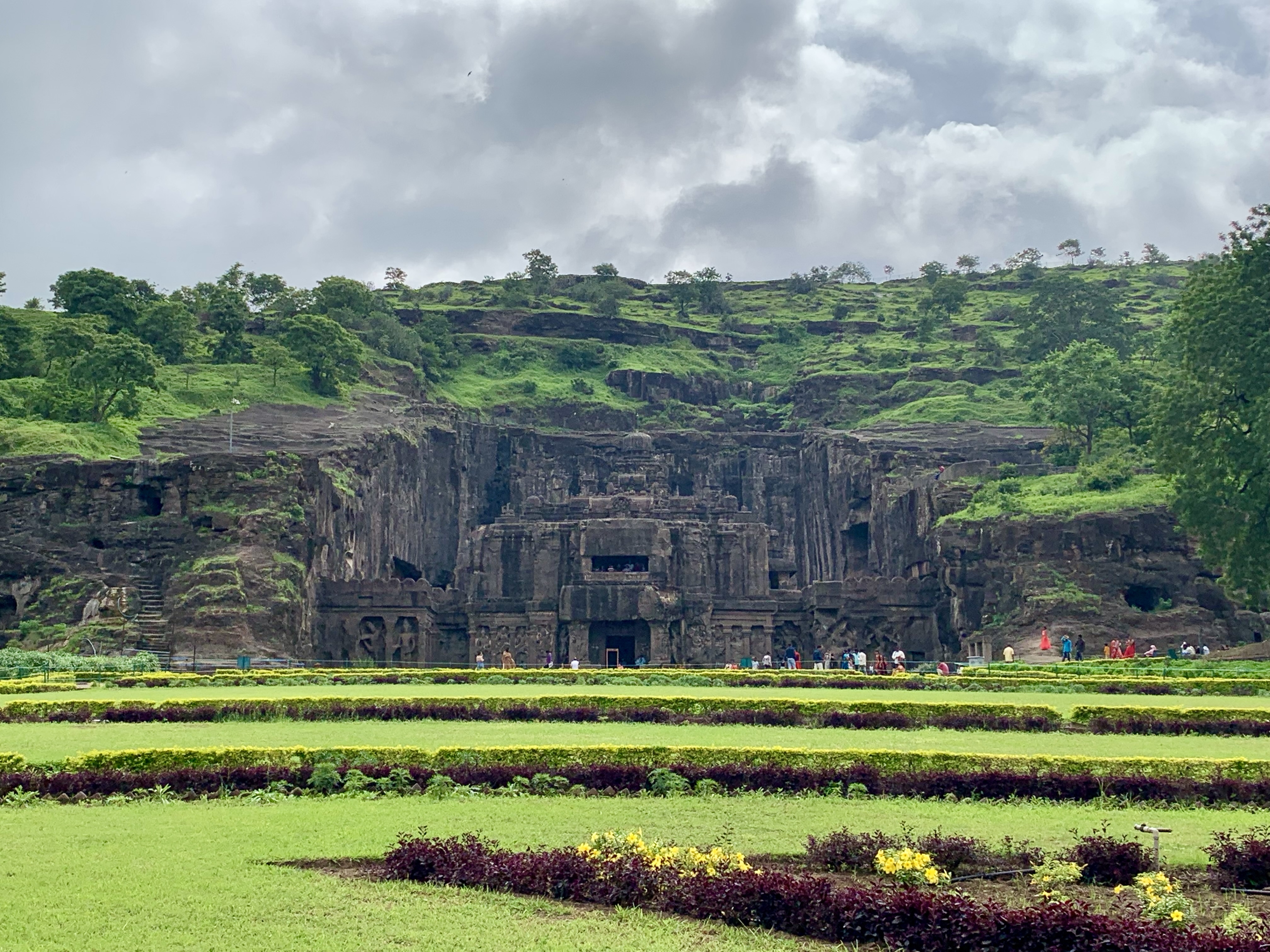
    Cave No 16 of Ellora Caves is also known as Kailasa(Kailashnath) Temple. The temple dedicated to Shiva is world famous for being the largest megalithic structure carved from the cliff face of a mountain. it is considered one of the most remarkable cave temples in the world because of its size, architecture, and sculptural treatment. It has been called as “the climax of the rock-cut phase of Indian Architecture”. According to the historical evidences the Kailasa temple was commissioned by Rashtrakuta Rulers during the 7th century AD. The temple looks very grand from the entrance itself and in my opinion it is the most beautiful structures in the entire cave architecture of India.

    View Of Kailasa Temple from the Entry Gate of Ellora
    Front View of Kailasa Temple from the Inside
    Side View of Kailasa Temple from the Inside

    How to Reach Ellora Caves?

    Aurangabad is the nearest city to Ellora Caves. The city is connected by both rail and road transport from all the major cities in India. There are ample of good hotels available in the city to stay. However I will that one should stay in the resorts nearby to the Ellora Caves. During the monsoon the area becomes very beautiful and there are very good views of the ancient city of Daulatabad. The best time to visit the Ellora Caves is during the monsoon or during the winter season. The area becomes quite hot during the summer time hence wondering around all the caves becomes exhausting during the summer time.

    Ellora Caves are one of the most astonishing rock cut structures in the world. They are India’s contribution to the entire humanity and they showcase the technological sophistication and the advancement of ancient India. Being the citizen of India it is recommended that everyone must visit them to appreciate the advancement of science, technology and spirituality in ancient India.

  • Explore Borra Caves: A 150 Million Years Old Marvel

    Explore Borra Caves: A 150 Million Years Old Marvel

    Borra Caves located in the Araku Valley region of Andhra Pradesh are one of the most famous natural caves in India. These caves are located in the Alluri Sitarama Raju District of Andhra Pradesh and are one of the most famous tourist places in Andhra Pradesh.

    Borra Caves Entry gate

    Location of Borra Caves

    Borra Caves are located in the Ananthagiri Hills of Araku Valley in the Eastern Ghat ranges. These caves are located at a distance of around 120 Km from the city of Visakhapatnam and at a distance of around 18 Km from Araku Valley. Borra Caves are easily accessible from Visakhapatnam both via road and train. The train heading to Araku Valley halts at Borra Guhalu Railways station which is around 5 km from Borra caves. Indian Railways has also attached a Vistadome Coach to the train leading to the Araku valley. Through this coach travellers can enjoy the scenic view of Eastern Ghat ranges.The road from Visakhapatnam is in good condition and one can enjoy the scenic view on the way.

    History and Origin of Borra Caves

    Borra Caves are said to be around 150 million years old. These caves are basically a Karstic Limestone structures extending to a depth of around 80 meters. Located at an elevation of around 1400 meter above the sea level Borra caves are the the deepest caves in India. Gosthani River originates from Borra caves and Borra Caves were formed as a result of the flow of Gosthani River on the limestone deposits which are found in this area.

    There is a popular legend about the discovery of Borra Caves among the locals. According to the legend one day a cowherd found that his cow has fallen in a hole which was around 60 meter deep. When he went inside he found out a Shiv Linga and his cow was alive. It is believed that Lord Shiva saved the cow. Inspired by this event locals installed a Shiva Temple nearby the caves.

    Historically Borra Caves were discovered by William King George of Geological Survey of India in 1807. As per the historical documents these caves were one of the most unique kind of structures in India.

    Entry Fee of Borra Caves

    As per the https://vizagtourism.org.in/borra-caves-vizag the entry fee for Borra Caves is as under

    • Rs 60 per person for Adults
    •  Rs 45 per person for Children
    •  Rs 25 for Phone Camera
    •  Rs 100 for Digital / Still Camera
    •  Rs 100 for Video Camera

    The Caves are open from Morning 10 o’clock till evening. The timings to visit the cave are as under:

    DayTiming
    Monday10:00 am – 5:00 pm
    Tuesday10:00 am – 5:00 pm
    Wedesday10:00 am – 5:00 pm
    Thursday10:00 am – 5:00 pm
    Friday10:00 am – 5:00 pm
    Saturday10:00 am – 5:00 pm
    Sunday10:00 am – 5:00 pm
    Day-wise Timings( Source https://vizagtourism.org.in/borra-caves-vizag )

    There are tourist guides available at the site. I would recommend taking a tourist guide to fully understand the formation inside the cave.

    Major Attraction in Borra Caves

    There are many formations resembling a Mother and Child, Shiva and Parvati and a Crocodile visible inside the cave. If you are taking a tourist guide he will show your all these formations. There is a naturally formed Shiva Linga inside the cave. Hoge crowd assembles to visit the Shiva Linga. Apart from that the cave is just like any other natural cave. Beautiful lighting has been done by the Andhra Pradesh Tourism department inside the caves which makes them beautiful sight to watch.

    While visiting the cave one issue that I noticed was that these caves are heavily inhabited by Bats whose smell becomes annoying at times. The huge flock of bats make many visitors uncomfortable sometimes.

    An Interesting Railway Connection of Borra Caves

    While visiting the Borra Caves I found one interesting plaque installed inside the cave premises.

    The Kottavalasa Kirandul Railway track of East Coast Railway passes from above the Borra Caves displaying the skills of Railway Engineers in India.

    Borra Caves are an interesting place to visit if you are in Visakhapatnam. There are many good local eateries in the nearby area where one can have a good meal. The area around the caves offers a great natural beauty and the caves are a sight to behold.

  • Bhimbetka Rock Shelters: A Unique UNESCO World Heritage Site!

    Bhimbetka Rock Shelters: A Unique UNESCO World Heritage Site!

    Bhimbetka Rock Shelters are a group of Pre-historic Rock shelters in Central Indian state of Madhya Pradesh which have been declared as UNESCO’s World Heritage Site for their exclusivity and portrayal of prehistoric spirituality.

    History of Bhimbetka Rock Shelters

    The origin of Bhimbetka Rock dates back to Palaeolithic(Old Stone Age) and Mesolithic(Middle Stone Age) period. However some of the shelters belong to Historic period as well. The most important historical significance of these shelters is that they provide us with the evidence of evolution of human settlement and culture from gatherers to agriculture.

    Location of Bhimbetka Rock Shelters

    Bhimbetka caves are located in Raisen District of Madhya Pradesh around 45 km from the city of Bhopal. The place is easily accessible by road from Bhopal and it takes around 1 hour to reach Bhimbetka rock shelters from Bhopal. These rock shelters consist of around 750 rock shelters spread over 7 hills and they cover an area of around 10 km.

    How to Reach

    • By Air: The nearest airport is in Bhopal, which is well-connected to major cities in India. From the airport, you can hire a taxi or take a bus to Bhimbetka.
    • By Train: The nearest railway station is also in Bhopal. From the station, you can take a taxi or a local bus to reach the site.
    • By Road: Bhimbetka is accessible by road from Bhopal. The drive takes about an hour, and the roads are generally in good condition.

    Best Time to Visit

    • Best Season: The best time to visit is during the winter months, from October to March, when the weather is pleasant and cool.
    • Avoid: The summer months (April to June) can be extremely hot, making it uncomfortable to explore the site.

    Key Features

    1. Historical Significance: The Bhimbetka Rock Shelters are believed to have been inhabited by early humans during the Paleolithic period. The site provides significant insight into the lives of prehistoric communities in India.
    2. Rock Art: The site is renowned for its extensive collection of prehistoric cave paintings. These paintings depict scenes of everyday life, such as hunting, dancing, and rituals, as well as various animals. The art spans several periods, from the Upper Paleolithic to the medieval period, showcasing the evolution of human creativity and expression over thousands of years.
    3. UNESCO World Heritage Site: In 2003, the Bhimbetka Rock Shelters were designated as a UNESCO World Heritage Site. This recognition highlights their global importance as a cultural and archaeological treasure.
    4. Mythological Connection: According to local legend, the name “Bhimbetka” is derived from “Bhima,” one of the Pandava brothers from the Indian epic Mahabharata. It is believed that Bhima once rested at this site during his travels.
    5. Geological Features: The shelters are located in the Vindhya Range and are part of a natural rock formation that has been shaped by geological processes over millions of years. The site includes over 700 rock shelters, of which about 243 contain paintings.

    Rock Paintings of Bhimbetka

    Bhimbetka Rock Shelters are particularly famous for their rock paintings. The oldest rock painting in India is found in these rock shelters which dates back to 10,000 BC. The typical scenes portrayed in these paintings are hunting scenes, dancing scenes. There are also scenes of men riding elephants and horses.

    Nearby Attractions

    • Sanchi Stupa: About 70 kilometers from Bhimbetka, Sanchi is another UNESCO World Heritage Site, famous for its Buddhist stupas and ancient monasteries.
    • Bhojpur Temple: Located about 30 kilometers from Bhimbetka, this ancient temple is dedicated to Lord Shiva and features a massive Shiva Lingam.

    India is a vastly diverse and culturally rich country. However in this culturally diverse land Bhimbetka Rock Shelters hold unique importance for being one of the earliest specimen of human settlement and Rock Paintings in South Asia. A one day visit to this place is worth doing for a memorable experience of a lifetime.

  • Karla Caves( Lonavala): Grand and Divine!

    Karla Caves( Lonavala): Grand and Divine!

    History of Karla Caves

    Karla Caves are a set of rock cut Buddhist Caves located around 55 Kms from Pune city on Pune Lonawala route. The caves contain both Chaityas and Viharas and are said to have been built around 2nd century BC to 5th century CE.

    Path To Karla Caves

    The path to the caves is little mountanious and one need to do a hiking of around 20 minutes from the base station to reach at the top. The caves are still in well preserved condition and it is a fascinating experience to visit and see them.

    Cave No 8(Grand Chaitya)

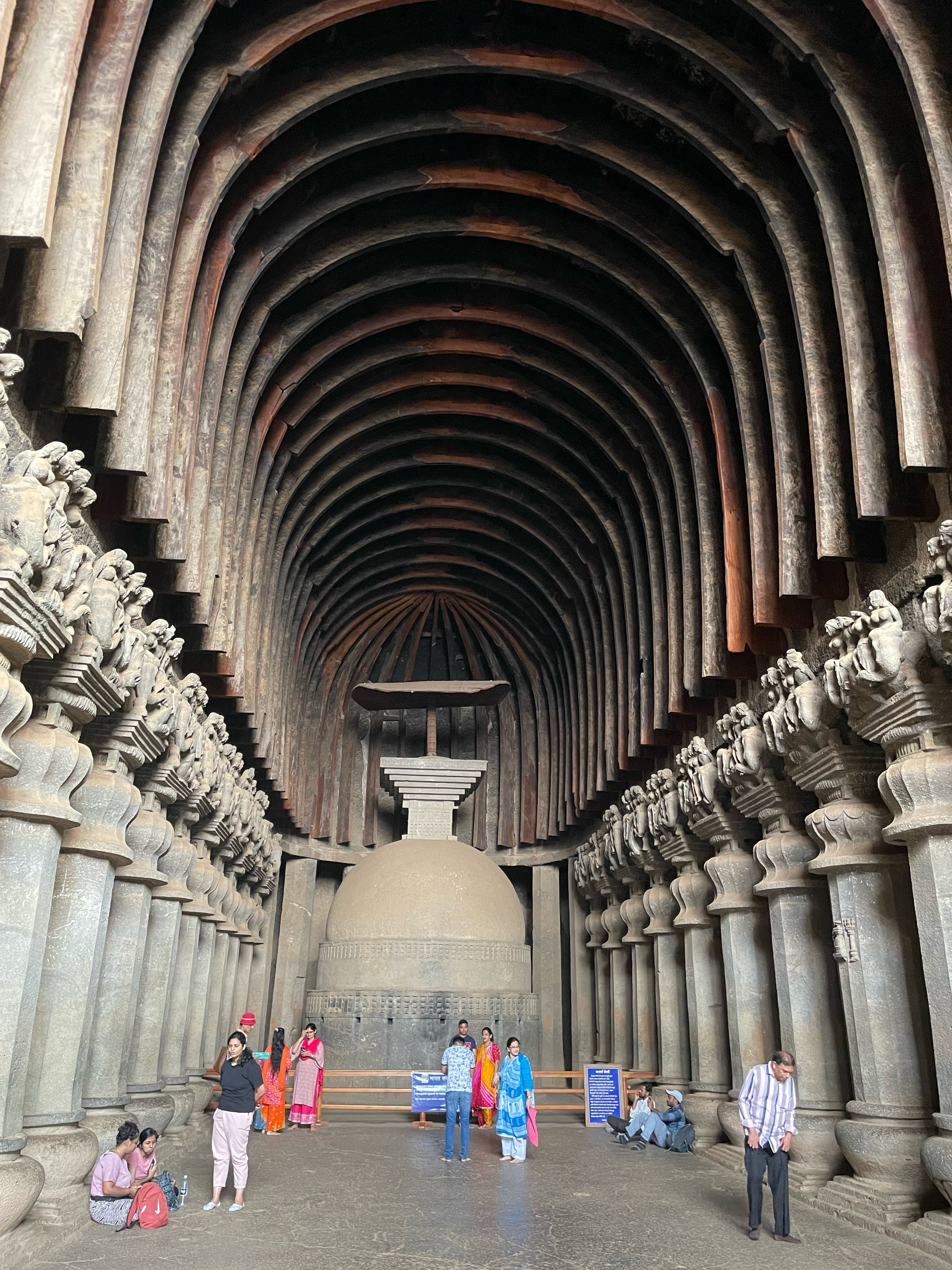
    Particularly famous is Cave No 8 also called as ‘Grand Chaitya’ which is the largest Chaitya in India. The thing that particularly struck me during my visit was the fine detailing at the walls of the Chaityas. The detailing and the quality of carving shows the level of fineness achieved by the Indian craftsmen at that time.

    Cave No 8 (Grand Chaitya)
    Elephant Carvings at the Gate on Cave No 8

    Karla Caves are a must visit place for those who want to go back into the history of India and revisit its cultural heritage. For me it was a rejuvenating experience to visit these caves and see to the Indian cultural heritage through my own eyes.

  • Bhaja Caves: Earliest Rock-Cut Buddhist Monasteries of Deccan

    Bhaja Caves: Earliest Rock-Cut Buddhist Monasteries of Deccan

    Bhaja Caves are located at a distance of around 50 Km from Pune. These are Buddhist sites whose origin is supposed to be from 2nd century BC. These caves are part of “Imprints Of Buddha Global Alliance”.

    History Of Bhaja Caves

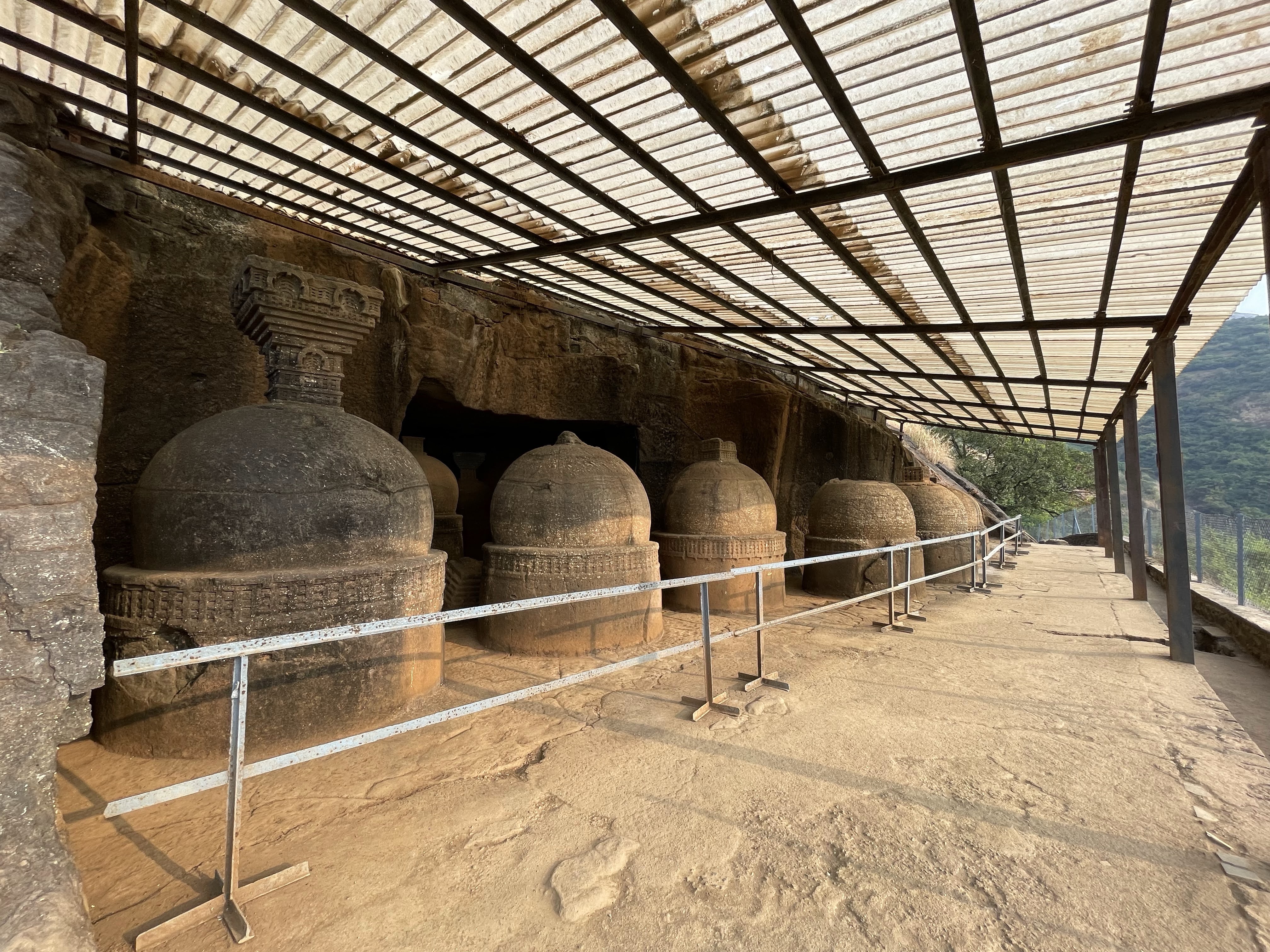
    The caves were built in 2nd century BC when Buddhism was progressing fast in India. The caves are located around 400 feet above the village of Bhaja. The caves are notable for a group of 14 stupas and they are important as they provide for an important clue into the history of Tabla.

    Set of 14 Stupas at Bhaja Caves
    Beautiful Engravings in the Structures
    An Overall view of Bhaja Caves

    If you are a person who loves to explore the cultural heritage of India or who wishes to see the History of Buddhism in India, these caves are an ideal place to go. The place is good to take your kids who can have a look at the rich cultural past of India.